Episode 53
S2EP53-Wendy Weber-The Parrot Whisperer & Down Syndrome Advocate
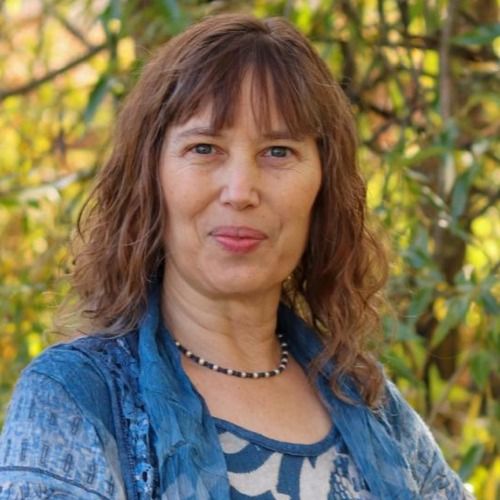
Buckle up because this episode is packed with insights and laughter! Wendy Weber graces us with her presence, and let me tell you, her resume is as colorful as her delightful parrots! She’s a pioneer in the realm of support for families with Down syndrome, having founded the Sharing Down Syndrome parent support group in Phoenix back in 1983. Talk about being ahead of the curve! Wendy shares her journey of advocating for families, revealing how her own experiences as a mother shaped her mission to create a supportive community. We dig into the emotional ups and downs of raising a child with Down syndrome, and Wendy's stories are both heartfelt and humorous. She doesn’t shy away from the tough topics; instead, she tackles them with grace and a sprinkle of laughter. And did I mention her passion for music? Wendy is not just a parent; she's a songwriter who brings her experiences to life through catchy tunes and parodies that will have you humming along in no time. As we discuss the role of therapy animals, Wendy highlights how pets can provide unconditional love and support, especially for children with special needs. It’s clear that Wendy’s philosophy revolves around seeing the person first, the disability second, and this message resonates throughout our conversation. So, if you're looking for inspiration, laughter, and a deeper understanding of the beautiful complexities of disability advocacy, this episode is where it’s at!
Wendy Weber is a vibrant force of resilience and empowerment. A founder of the Sharing Down Syndrome Parent Support Group in Phoenix in 1983, she built community when few resources existed, and she edited the “Sharing” newsletter for a decade to amplify voices and foster connection. Raising her child with Down syndrome shaped her purpose, deepened her compassion, and fueled her lifelong advocacy for families like hers.
With over five decades as a parrot owner, Wendy’s spirit resonates with the colorful personalities of her feathered companions. As an energy healing practitioner, she channels her vibrant energy to support well-being and balance.
A longtime singer-songwriter and lyricist, she crafts parodies and original songs for individuals, organizations, and events, infusing joy and creativity into every note. Her passion for music and love of singing in choir weave harmonies that echo unity. Wendy’s presence reminds us that our unique melodies can inspire, uplift, and create change.
A gift from our guest: Checklist: Navigating the Journey of Raising a Child with Down Syndrome
Please email Wendy at wendy@wendywebermusic.com for the checklist.
Bringing Education Home is an educational podcast brought to you by Kristina and Herb Heagh-Avritt.
If you enjoy the show, we'd love for you to leave a rating or review on your favorite podcast app!
Please let your friends know they can listen for free on Apple Podcasts, Spotify or their preferred podcast app or online at Bringing Education Home.
Sponsored by Vibrant Family Education - creating Happy, Healthy and Successful kids
Follow us on these socials:
Facebook Group - The Family Learning Circle
Facebook Business Page: Vibrant Family Education
Support Bringing Education Home
Copyright 2026 Kristina & Herb Heagh-Avritt
This podcast is hosted by Captivate, try it yourself for free.
Transcript
I now have the pleasure of introducing Wendy Weber. Wendy is a vibrant force of resilience and empowerment.
t support group in Phoenix in:With over five decades as a parrot owner, Wendy's spirit resonates with the colorful personalities of her feathered companions. As an energy healer practitioner, she channels her vibrant energy to support her well being and balance.
A longtime singer, songwriter and lyricist, she crafts parodies and original songs for individuals, organizations and events, infusing joy and creativity into every note. Her passion for music and love of singing in choir weave harmonies that echo in unity.
Wendy's presence reminds us that our unique melodies can inspire, uplift and create change. Welcome Wendy. That is a very, very varied and beautiful resume that you presented here. It is a pleasure to have you here.
Thank you for joining us today.
Wendy Weber:Well, thank you for having me. And I, I have to correct one thing and I really change it on the, on the bio because my parrot downstairs, he says it should be parrot Ease.
Okay, so, so, you know, I, I have to live with him.
Kristina:Exactly right. Oh, and I've seen your parrot a couple of times on different meetings and stuff that we've been on together and that's awesome.
Herb:I haven't been around a lot of parrots or birds. I do know they live a really, really long time though. Usually outlive a couple of owners.
Wendy Weber:Yeah, some of the bigger ones do. Some of the, the green parrots may do that.
Smaller ones, not so much, but they can live longer in captivity, although they really shouldn't be in captivity. And actually I was on a conference. Mexico has some really strict laws about owning parrots and stopping trafficking there.
There's too much going on in this country for that to happen right now over the foreseeable future.
But I only take birds now that need a new home, that their parent, their parent had to go to a nursing home or passed away or one of my parents that has since passed away herself, but her mom became a traveling nurse, so. But you know, pets can be very, very important for children with special needs.
Kristina:Absolutely.
Wendy Weber:Beyond the therapy type is just having a creature that doesn't care what you look like, doesn't care how you talk, it doesn't care how you walk the first time. Layla, who is behind me now, she passed away last Year. So, you know, it still. Still hurts.
Kristina:Oh, yes.
Wendy Weber:But when she was three, there was an event here called oh, boy. It was the equestrian. Something equestrian, and it was for people with special needs. And the horses were horses that could accommodate.
They were very calm, and they had somebody in each side. Unique Horse Show. That's what it was. And when Leila was three, we brought her to that, and they put her on a horse. Now, she had.
She still had low muscle tone because people with down syndrome tend to have low muscle tone. It got better with therapy and just for playing on, especially on the bars. And she got really good at gymnastics.
So they put her on this horse, and all of a sudden she sat up.
There's something about horse therapy, dolphin therapy, therapy in general, but the animals have a special energy that connects, and our special people are accepted for who they are. That doesn't always happen with people, does it?
Kristina:No, it doesn't. But, you know, like you said, that's why animals are so special and so, you know, needed for so many different things.
That's why we're able to train, like our service dogs and things like that. And when those things like equine therapy came along and people started really realizing the benefits of that. Yeah, man, that.
That's something that in my future, if I have lots of money, when I have lots of money, I would love to have a hand in some of that kind of stuff as well.
Wendy Weber:Yeah, I know they have it for veterans and, of course, people special needs. The program that Layla was in, later on, the. She was in the Unique Horse Show. That's where we met these people. But it was called Silver Bullets.
And then people eventually moved to Tennessee, so we found something else for the time being until she was tired, she was not wanting to write, and that was her choice. But she was in at least two Fiesta bowl parades. She wrote in other parades.
And she has some gold medals, some of her behind her picture there from a Special Olympics. So she was like 4 foot 6, and these horses are pretty big. But she learned to handle them. Of course, they were special horses that were calm.
Kristina:Yeah.
Wendy Weber:Not that they never reared, as she did fall off once or twice. And of course, there's a lot of soft dirt in the rings there.
Kristina:Yes. For the arena. For that. Yeah. Yeah.
Wendy Weber:The last time, I think convinced her that was enough. But I made her finish the season because all my kids are required to finish something I started. But she.
I didn't treat her any differently, except she needed a lot more supervision, help and work at home. And that's the thing that you have to remember.
So I have written some articles on Layla and one of the first things is, and it's on the checklist for a mindset for raising your child with any disability, always see your person, your special person as a child. First is a person, it is a child before it is a disability. Always. Some are easier to take care of, some are harder to take care of.
We used to talk about this at the sharing meetings. We had parental meetings every month or two. It's been a long time. So I was doing that. But everybody was so different.
And when we talk about a spectrum, we know that people with autism are on a spectrum. Some are severely involved and can never live a near normal life. And some are the top of the food chain and they actually take care of themselves.
They do their own, take care of their, their household, they make their money, they get degrees. There could be some things that you would recognize with socialization that's more common with people with autism.
Herb:But we have an autistic son and yeah, he can't really hold a job. He still lives with us, but he's still very high functioning.
And yet we actually have, we have a meeting set up later this week and he's going to be meeting another friend of ours, autistic son. And it's kind of funny because we, we talked about it and kind of laughed. It's like we hope their autisms match because.
Because sometimes if you get two autistic people together, they are just going to be oil and water and they're going to grind off each other and it's just going to be a nightmare. And sometimes they really, you know, meld well together. So. Absolutely. All across the spectrum, it's personality. They are individuals.
I'm not gonna like everybody just because they look like me or they have brain damage like me or they're a teacher like her. It's like it doesn't happen that way.
So even within the spectrum, we're all still individuals and we have to be seen, heard and understood to actually feel like we're alive and living.
Wendy Weber:Yeah. And so when we look at the spectrum of people with down syndrome that could also be severe, most of them are in the middle range.
I would say Layla was at the top third. She wasn't the highest functioning mobile. She was pretty high functioning. It took me years. I'm a sibling.
My late brother, who's been gone for almost 40 years, he had multiple disabilities. I was the younger sibling. I became a caretaker and he was a loving person. But Sometimes he would get frustrated and he was stronger than I was.
If I was watching him and he wanted to go out and I had to keep him going out, I got punched a few times. I understand the frustration, but he had seizures and he had to be with somebody, and I couldn't take him out much as I would have liked to.
Herb:Yeah, there was a time where our youngest son came up and said, how come I have to be the older brother to my older brother? So, yeah, that's really heart wrenching at times.
Wendy Weber:Yeah, so that's something I want to touch upon because as the sibling, I had no sibling support. There was nothing. I felt so alone. I took on something they shouldn't have had to take on.
And I didn't know any better, but I was protecting my parents by not telling them how I felt. And that's not a kid's job. Our kids do it to protect parents who are drunks and addicts and shouldn't be on them.
Herb:And, you know, our generation, we. We learned from, again, the generation before, and it was, children are to be seen and not heard. Doesn't matter how you feel. It needs to get done.
It's like, cry later. Finish this now. So where was the space to be able to tell your parents how you felt? There. There was no safety in that. There was no trust in there.
This is part of what we're doing with our podcast. We didn't learn this. We. We don't. Our youngest son doesn't talk to us anymore.
So we're trying to help the younger generation figure some of this stuff out quicker than we did.
Wendy Weber:So when, you know, I probably could have talked to my parents, but I didn't. I didn't want to burden them with something else.
Kristina:That.
Wendy Weber:That was my point of view, because I could have talked to them looking back, but fast forward, you know, I. I actually ran away from disability when I got married. I didn't want to have anything to do with it except take care of my brother. You know, do that. I would have been his guardian if he'd lived.
And, you know, he's very loving, but with my children. Layla was a middle child, the middle of three. My other two children had support because of the Council of Jews of Special Needs, now called gesher.
Gesher means bridge in. In Hebrew, gesher Disability Resources. 40th anniversary is today. And I will be there with lots of tissues because Layla will be in the retrospective.
40 years of working with the parents, of working with the children, teaching the Jewish concepts at the level that they could and we had special needs services where it's called a no shush service.
So it was for the children, but parents would bring their child there and if they didn't understand or didn't get any of it, some of them did and some of them didn't. It's still. They were part of the Jewish experience. So this disability resources. And also there was. There was support for the parents.
We would go and talk to as a group and talk to psychologist, there are physicians, pediatricians on the board. And so we had this support for everybody and we needed it. We got support for.
Through the Sherring down syndrome parent support group, but we didn't have a mechanism to do it for the kids, the siblings. But that's. It's a different world today. And it's so special because look at all the, the psychological need today.
If you, if your children had sibling support, that's less of a need. It doesn't mean they won't need anything later on, but it's. It helps. And especially if you want them to be models for their.
Your child with special needs. I think it's hardest for a child who is a single child.
Who do they see all the time except the people at the day program or at the school or at the whatever event, community event. And that's another thing. Community. Well, even before that is family. Not everybody in the family is going to give you the support.
Not everybody is equipped. Grandparent support is very, very helpful. Aunt and uncle support. But my mother, of course, she had experience and I learned a lot from her.
She was the best supporter of everybody. And when I moved her here finally, in the last couple years or so of her life, she had. She saw Layla a lot. We did all of Layla's things.
We did grandma's things. We did everything together. She got to see her. What a gift that was to Layla and Layla's roommate, too.
And to my mother, to be all in the same place doesn't always work that way.
Kristina:Let's stop right there and go dig deep, Dig deep into that a little bit. Right? Because we had the same kind of experience with our families. Sometimes our family understood our son and sometimes they didn't.
How did you help explain to your family when things weren't going quite right or how they could help or interact? And in a way that was helpful to Layla, help other parents figure out the words to speak with their families so that this is a little bit easier.
Wendy Weber:It really depends on who it is and how comfortable or uncomfortable they feel being exposed to the child in the first place. And especially in the case of down syndrome. Most of them are very loving and they give the best hugs ever.
But to tell them back at the beginning it's a child first, it's not the child's fault. You can help you know your child best. You know what they like to do, what triggers them and what doesn't.
Explain that offer the things that, you know, works and you know, my, my brother would be at family events. But I was very upset that he wasn't at my wedding. And I didn't know he wasn't going to be until right before the wedding.
My parents had decided that without consulting me because they were afraid he would have a seizure. Seizure which would cause lots of problems. You know, incontinence is one with all of the people there.
And I would have had nobody there if I could have my brother there. And so everybody has a point of view and you have to talk about it. You have to ask questions and you have to be non judgmental.
What does judgment mean? Judgment means it's similar to belief. A belief is a piece of information to which you give agreement. It could be a religious belief.
It could be a belief about your house or your, your car or a belief about somebody you work with. That's a piece of information and it's not necessarily real. It is real to you. So judgment is similar.
Only judgment is usually something that is more negative. That's how we see it. And judging needs to be totally even. And we're not seeing a lot of that in our country right now. But.
But that's what it needs to be. And it actually comes from the, the first. The five books of Moses, the Torah, the, the Old Testament.
The first part, actually it was near the end of the first of the five books. So creating a judgment free zone that is free for. Is equal for everybody. To the best of your knowledge.
We can't always be completely equal because we are human.
Unfortunately that this taking away judgment can be hard because if a child makes you feel uncomfortable because it doesn't act like people, you know.
Kristina:Right.
Wendy Weber:The only way to get through that is to be exposed. So let's talk about something that happened.
can see it, but I was back in: it means the Same Thing. Was:I was part of a program to bring children in our school district back to the local school. Layla was in a school that was segregated. She was in a program for two years that was supposed to get her ready to go into a next program.
And she went back into the one that she would have been in anyway with people with children who didn't speak, who many of them couldn't walk, and the teachers. The double was a double classroom, had blinders on.
And I always remember Debarba Miller or Miller Debarba, who insisted she learn phonics and she couldn't learn phonics. It didn't compute to her, right. Well, we were about to sue because they weren't giving her what she needed with the Individual Education Plan or iep.
And what came up was a program through our local state Department of Developmental Disabilities that one of our group 10 who's pilot parent partnerships, which you can find probably all over the country, something similar pilot parents who help people through. I would have to ask you about your area, but she found about a grant and people use it for making a ramp or getting a wheelchair.
And what we did was make a proposal to use it to hire a professor who is experienced in integration, bring her to the local school district and teach us how to do it. So Layla was part of three children at three different schools. Two with down syndrome, one with autism. And school we had four second grade teachers.
So Layla was eight. She was going into second grade.
One wanted her and a mother of another child who was going to go into that same classroom because they were told, wanted to really shut this down because she thought her son wouldn't get the attention he needed. It was a typical child. And we had an aid. Layla had an aide throughout her school years, but she was in with everybody else.
Well, long story short, we, we.
The program went on and at the end of the year, this parent told me, she apologized and she thanked me and she said, I didn't know my son could learn so much compassion. Where do you find typical children who will work with children with special needs?
You find them in the classroom where they're exposed to a child of differing ability. And that's really what they are. They're children with differing abilities.
Kristina:And that goes to, you know, one of the points that I love to point out is that as a parent, you know your child, you know what they can do, you know their strengths. And when you communicate with that educator, when you communicate with that person that is with your child, when you can't be.
Things are so much better. But when you don't communicate right, when you don't share all of those things, then things can go sideways, things can go wrong.
Herb:Right to the point where you have to sue the school district your children paid attention to.
Wendy Weber:Yeah, well, that's one of the points. And by the way, Layla could memorize. So that's how she learned to read.
Kristina:Exactly.
Wendy Weber:And she's third grade level. But that's. That was. They tried everything. So one of my articles is about failure. Layla didn't know failure. We never let her show failure.
The people from the other school thought, what if she failed? There's a dignity and risk. But today I would say there is no failure. There's just things that don't work. That's not on her, it's on us.
Herb:Failure. Further attempts in learning.
Wendy Weber:And the team that we had, the resource teacher, all the therapists, school teacher, sometimes the principal was involved and we had the support coordinator also involved. And me, I was at every, every meeting. What we discovered was you try everything and something works. Most things worked.
Not everything, but most things did. She learned. She blossom. She went from being a visual learner to also being an auditory learner. Because why she was around children who spoke.
Oh my gosh.
Kristina:Yeah.
Wendy Weber:So occasionally she'll learn a bad word. And we explained to her, don't use it.
Kristina:Right.
Wendy Weber:We laughed and explained, just don't use it. So we have you bring up some of the points on here with the disability resources group they had and I advocate this.
Somebody wants to know how to set it up for any religion.
There's a model, it's known around the country, around the world for people who want to integrate or include their children with special needs into their church group, their religious group.
Kristina:Yeah.
Wendy Weber:And they deserve to be part of that. But the Layla had a bat mitzvah. And I knew she was when she was born, I didn't know how we would knew it.
She was going to have a bat mitzvah, which is mitzvah is a command and also a good deed. So she would be daughter of the commandment good deed of the mitzvah. And starting the schedule Disabilities resources.
The Council for Jews with special needs had classrooms, special classrooms at the temple. We then joined and they had AIDS and special needs teachers there. And later on, she was also part of a regular classroom.
The teacher there wanted her to be in the third grade wanted her. And she did music. And Layla responded to music. She had her bat mitzvah. And for the bat mitzvah I wrote a song.
I was really writing a poem, and the tune wouldn't let me go. It's the first original song that I wrote. Was. That was professional grade. So I'll sing a little bit of it.
Kristina:Yes, please.
Wendy Weber:That little girl behind me, whenever I started to sing it or play it, she would say, that's my song.
Kristina:Awesome.
Wendy Weber:I did something similar for my mother while she was alive. Edified her, and it describes who she was. So when I was losing Layla to Alzheimer's, this song reminded everybody of who she was. You are Leila.
You bring a song to my heart. You are Leila. Determined right from the start. When you try and you try and succeed by life you want me. And then it goes on.
Your beauty wells from the side and her spirit takes wing. And the music. I love this one. And the music of your smile always lingers for a while. And then you see rainbows and feel the good in all things. She.
She was colorblind. It didn't matter what your race was, what your color was, what your anything. You're a person, and she liked you until she didn't.
If you did something mean to her.
Herb:Huh?
Wendy Weber:Yeah. That's the bottom line. So that's one of the. That's one of the Layla lessons I write about. Layla lessons, failure.
Kristina:The beauty of our children is that, again, they like somebody until they do something that makes them have a reason not to. Right. So keep fostering that in our children. Keep fostering that love of kindness of everybody around them.
Herb:You know, a friend of mine used to. Used to call it a weakness in me that I gave everybody respect until they lost it.
He made everybody earn respect before he would give them acknowledgment. And everybody got it for me until they lost it. So it was really interesting going.
Going through because he was my best friend for years, and it was so interesting to watch the differences in how we approached life.
Wendy Weber:Well, we learned. We learned to give first and not take first.
Kristina:Yep.
Wendy Weber:We. When we give, we don't know where it's going to come back from or when or how. But we learn to give first.
But what our children, special needs, unless they're in a crisis situation, they give. They give their love, they give their joy.
And our job is to learn from that and encourage more of that, not in just them, but in as many people as we come in contact with. When you walk, I do try and smile. Just walk. I don't know who these people are, but that might be the only smile they have seen all day.
Kristina:Those smiles Yep.
Wendy Weber:Yeah, we had another incident. My, my son, my other two children and my husband, my late ex husband all had depression and they all either talked about or tried to kill themselves.
When my son tried and he did survive, but he was in the emergency room overnight. We didn't know how his liver was going to turn out. You know, don't OV on acetaminophen.
Kristina:Not good.
Wendy Weber:Yeah, that's exactly. We shouldn't take it at all because it changes the brain, right? But I came home, somebody had neighborhood, met Layla and was at the house with her.
And then that night, I mean, I, I was very upset. I didn't know how to get through the night. I said, layla, I. I don't know what to do right now.
And she said she had a cassette of Jewish songs by a Jewish folk singer. Everybody did the four reform camps knows your songs. And she said, why don't we pray? Now here's a young lady who did not have a concept of God.
It's too abstract. Why don't we pray?
So I got out her cassette with these songs on it and there's one called the Misha Bear up, which we now sing every Friday night at temple as reformed people do. And it's a song for healing. It wasn't our prayer book yet. This is a long time ago. And so I played it over and over again and wrote it down.
Some of it was in Hebrew, some of it was in English. And then we sang it and I was able to get through the night. But this came from Layla. You never know what wisdom our special people have.
Do not discount it, treasure it, pay attention, be listening. Because you don't know when a nugget's going to come that you can use.
Kristina:Absolutely.
Oh my gosh, Wendy, this has been such a wonderful conversation and I love how you're pushing and helping people realize that our special needs children are down syndrome, autistic, etc is needing to be out there for all of our families. Can you give the details of information how people can get a hold of you if they found some value in this and really want to explore more with you?
Wendy Weber:Sure.
And I have a whole checklist prepared and since I have had techie issues, I couldn't do a landing page, but this information would have been on here anyway. Email me at Wendy at Wendy Weber with One B Music.com WendyNieweberMusic.com I will get that. You want a copy of the checklist, let me know.
Do you want to have a short conversation with me about something? Let me know Just want to tell me a story. You want to get off your chest and see what I think. Whatever it is.
I'm proficient with people with down syndrome, but disabilities are disabilities. My brother did not have down syndrome, and so I saw his life and still miss him today.
And I have a great picture of him kissing Layla when we were visiting back in Chicago. And they didn't know each other was special.
They just loved each other because with niece and uncle, and I look at this picture and I cry because it just moves me so much. So. So if you want to talk about something like that or share a story that. That really moved you.
I don't know how great I am at giving advice, but I certainly can. Can maybe.
Kristina:I think you have a little wisdom that you've shared around today as well. Thank you so very, very.
Wendy Weber:Just a little bit. Just everything's a song. I love it.
Kristina:I love it when you break into songs. Again, thank you so much for all having me and.
Wendy Weber:And thank you for your leadership in leading me in the right directions. I really appreciate that. That's what makes you so good at doing these podcasts.
Kristina:Thank you so very, very much.
Herb:And I would love to have you back because there are several things that you said that sparked questions about the disability, about down syndrome that I think other people would like answers to or maybe just they haven't even thought of it. So love to have you back at some time.
Thank you so much for being here because there is so much information to be shared out there, and, you know, nobody can have all of it. So we need to reach out and we need to talk to people. And even the ones that have. Have weird stories, those are the best ones.
So thank you for coming out and sharing your story today. It was a pleasure having me.
Wendy Weber:Yeah.
Kristina:Awesome. All right, audience, you know what to do.
It is time to like and review and share and let Wendy's story and Layla's love spread out all over the place and help families who need that little bit of extra boost to find the beauty in everything we do. Until next time. Bye for now.
Herb:Bye for now.