Episode 65
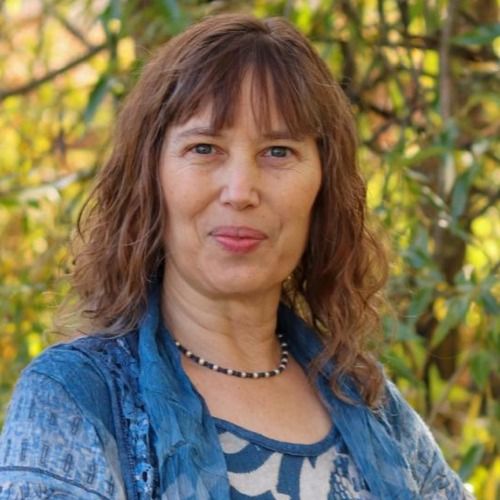
S2EP65-Cheryl Wilson-Unlocking Learning: How to Help Your Kids Ace Elementary School!
Imagine diving deep into the world of education with our special guest, Cheryl Wilson, a powerhouse with over 25 years of experience under her belt. Cheryl’s journey, starting from the classroom to launching her business, I Can Learn Anything, is nothing short of inspiring. She's here to spill the tea on the challenges faced by low-performing students, especially during that awkward transition to middle school when kids often feel lost. Trust me, you don’t want to miss her insights on executive functioning skills, which are like the cool secret weapons for kids to take charge of their learning! We’ll explore how Cheryl empowers parents and educators alike to foster those vital study habits that can transform a child’s academic journey from “meh” to “wow!” So grab your headphones and get ready for some enlightening conversations that will have you saying, “I can learn anything!”
A gift from our guest: Growth Mindset Resources: ideas, videos, and posters to help your child develop a growth mindset, improving the confidence and motivation to learn
As an educator, author, and instructional coach with over 25 years of experience, Dr. Cheryl Wilson has witnessed firsthand the challenges low-performing students face, particularly during the transition to middle school. After retiring in 2020, she launched her business, I Can Learn Anything, to address these challenges head-on. Her focus is on building executive functioning skills in elementary students, empowering them to take control of their learning journey. She works closely with parents, caregivers, and educators to develop effective study habits and self-management essential for academic success. She is very passionate about fostering an environment where every student believes in their ability to learn and grow.
@CherylWilson7208 on Instagram
Bringing Education Home is an educational podcast brought to you by Kristina and Herb Heagh-Avritt.
If you enjoy the show, we'd love for you to leave a rating or review on your favorite podcast app!
Please let your friends know they can listen for free on Apple Podcasts, Spotify or their preferred podcast app or online at Bringing Education Home.
Sponsored by Vibrant Family Education - creating Happy, Healthy and Successful kids
Follow us on these socials:
Facebook Group - The Family Learning Circle
Facebook Business Page: Vibrant Family Education
Support Bringing Education Home
Copyright 2026 Kristina & Herb Heagh-Avritt
This podcast is hosted by Captivate, try it yourself for free.
Transcript
I now have the pleasure of introducing Cheryl Wilson Wilson. Cheryl is an educator, author and instructor coach with over 25 years of experience.
ool after retire. Retiring in:Her focus is on building executive functioning skills in elementary students, empowering them to take control of their learning journey. She works closely with parents, caregivers and educators to develop effective study habits and self management essentials for academic success.
She is very passionate about fostering an environment where every student believes in their ability to learn and grow. Welcome Sheryl. It is a pleasure to have you here today. Thank you. Thank you so much for joining us.
Cheryl Wilson:Oh, thank you for giving me this opportunity to share what I've learned with an audience of parents, caregivers and educators. I really appreciate you for that.
Kristina:You are very welcome. We are so glad you're here.
Whenever I started setting up the show, it's one of those things like, you know, a lot of people focus on those middle school and high school years of executive functioning and things like that. And one thing that was really curious, like you said, no, we need to start earlier. We need to start in those elementary years.
And I know we both come from that education background and elementary was my space. That's where I lived and taught for so many years.
And so this is going to be a great conversation to really help parents and those caregivers, like you said, even those educators bring those functions down a level. Right. We don't, we don't do it in middle school. They need to have the basis before that.
So thank you for joining us and helping us learn a little bit more about this. Start with your primary pivot. What happened after your teaching career, after your education journey that you really want to start this business?
What was it? Was it a single student? Was it a problem you saw? What was it that created this I can learn system?
Cheryl Wilson:Well, the primary pivot is that. And I retired, I was able to go and read by the ocean and got just do whatever I wanted to do.
And it was during COVID and there was such a huge need for guest teachers or substitute teachers and, and so I responded to a need at a middle school where I had the best do nothing job in the world because I was a roving sub. I could work with special needs students.
As a matter of fact, I'm still in contact with one student and I could be a guest teacher in the classroom if that teacher was absent What I saw is that the joy in learning in many students. But I also saw that, say, for example, I was in charge of this classroom. The teacher had done a wonderful job of putting together the PowerPoint.
And each of the students, eighth grade students, they had their Chromebooks. And this was before the election. And I really wanted to get them talking and discussing critically thinking.
So I asked them to debate between the electoral college and the popular vote.
And before I could really start the conversation, one really studious girl, she raised her hand and she said, Miss, Ms. Wilson, can we just get through the PowerPoint so I can get my points? And the students looked at me and that's what they wanted to do.
Because during that time, the entire time while I was at that middle school, what I constantly heard was, and again, it's not anything against teachers, but check your books, I mean check your, check your grades. Have you looked at your email? Did you get this assignment done?
This is where we are in terms of what you need to do and how you need to make up assignments. School had become so much about completing a project.
And what I also observed is that when I went to the promotion ceremonies, many of the students who were in the remedial classes, all they had to do was to turn in some homework, do some assignments, come to school periodically and not be too much of a behavior problem.
And these students, because they came in from elementary, low skilled and you're in middle school and you're in medial class and you don't necessarily want to say I really want to learn because I don't understand this, or admit that you can't read or do math and so they're promoted to high school.
Herb:Yep.
Cheryl Wilson:Just trying to make so hard.
It's so hard because their, their parents are in the audience and they're so excited and they're happy because their child is being promoted from middle school, but they don't know that their child doesn't even have the organization that the child doesn't understand what they need to do for their future self, that their child doesn't even have a backpack or a bedtime or a place where they study. They, that is those things that promote the lifelong learning or allow a person to have life skills. So that was a huge turning point for me.
And I also took a course about how people learn, which is another story.
However, it was really watching children in middle school coming there low skilled and remaining low skilled and more to their detriment, not having the skills to project what they need for, for high school and what they're going to need for college.
Herb:Yeah. To kind of expand on that. That. Yeah. The. I hate it when I start off with that and it slips away so easily.
Kristina:Well, one of the things I was going to say is that what you were just saying was one of the reasons I left the classroom as well. I couldn't bear the teach to the numbers about teaching to the test anymore.
Herb:Less than half of graduating seniors across the United States. Right. Are at or below a sixth grade level, and that's the level going into high school.
So if you're behind in sixth grade, then when you get to the next level and it's so much less different, less individualized, then you get. Then you just have to learn how to fill in the numbers and fill in the circles and do what the teacher says.
And you don't get the language skills, you don't get the learning skills. And then the next six years of your education is pretty much wasted and you're in your. And your imagination and creativity.
Creativity are squashed because you're wasting six or eight hours a day doing what you're told to do. And there is no life in that for most of the people other than the chaos between classes.
Cheryl Wilson:Yeah. And so the students who already have the executive functioning, they know how to do school. Now are they learning? I doubt it. Can they talk about.
Well, say, for example, I did interview a student when I was at the middle school as the roving sub. And I noticed that it was in the math class and she's sitting there and she's got this notebook and so I'm really curious about what's going on.
And I said, tell me about your notebook. And I interviewed her later and she explained to me that she was taking notes and.
And in one corner these are the words that she didn't understand, and another corner, these are the problems that she needed to work out differently when she got home. And this occurred when she was, you know, she did come from a very privileged background. However, the point is that when she was.
They were living in England for a year and when students took notes, the notes had meaning.
The notes were used so that they could have like Socratic interviews or you had to get up and you had to summarize, you had to talk about what you learned and. And you had to justify it. And so when she came back to the States, she kept her notebooks.
And so when I'm thinking about, you know, her, she was really driven and whatever else.
But in elementary school, what is so important at that second on upgrade level Is that there's a lot that can happen to help them to teach themselves to be learners. But that's why I'm really working, looking with parents, because I believe that I know that teachers are doing the best they can.
But a parent needs to be able to understand what's going on with their child so they can advocate for their child. Again, kids who already have it, they're going forward whether they're learning or not.
But the children who may or may not have an iep, the child who may have attention deficit disorder or may be on the autism scale, those kids, they're so frustrated, fragile. And that's again, why I want to work with parents. Because, you know, some parents, they don't, they don't know.
And then some parents, it's frustrating and they're, they're, they don't know that they have power, they don't know that what executive functioning skills are. They don't necessarily know how their child learns. And so that's my big push.
I mean, I'm getting up in age and I've got these last 10 years to try to connect with families, to help them in terms of the structure a child needs. So I work with a child again who has ADHD and periodically drives me insane because we'll spend five hours on his homework and it's.
And he doesn't turn it in.
But, but having a backpack, a backpack that you clean out every day, having a regular time where when you get home, you get to just debrief you, you, you need brain breaks and then you have a organized space where this is where I get to do my homework. I take out my planner, I have my calendar.
I know what is due my parent who may be working at one hour or whatever else, but periodically are checking with, in with me. They don't have to sit down and do it. But did you get your homework done? It's implanting again.
My child and I are working together because I want to help them for their future self. So I could go on and on if you have any questions, but there's one thing I want to point out later in the phrase so that, yeah,
Kristina:there's three very, very important things right there.
Everything we talk about when we talk with parents is that your child's success in school is dependent, not just optional, it's dependent on your involvement. What do you know about what's going on in the classroom? What do you know about the testing?
What do you know about your child learning and how they're interacting in the classroom? It is dependent on you as an adult to show that, that interest and to actually do something about it. Right.
That doesn't mean you're going in the classroom and getting in the teacher's business, but you're in there asking questions and knowing about what's going on.
Herb:And that's in all cultures. In all cultures. And that's, that's, that's been studied.
So that's not just a Western, Western education philosophy that has proven that the more involved a parent is in the raising and education of their children, the, the better that that is going to be for the child.
Cheryl Wilson:And I just want to highlight. I know that every parent wants to do the best for their child. I know that there's no parent who necessarily has these two or three children.
They think, oh, whatever happens, happen. No, they want the best. But if they were parented, say for example me, my parents got a divorce when I was like maybe 7 years old.
My mom has to raise five children. We're moving around from place to place.
And I remember that she's working and though I'd have siblings, getting me enrolled in school in a timely manner was whatever because I remember maybe it was probably end of second grade or third grade whereby I'd still be playing outside and kids coming home from school and this kid said, when your mama gonna put you in school? And it's not, wasn't her intention.
However, I do come from a generation whereby you're going to do the best you can, you're not going to be a problem at school, you're going to do your homework.
Kristina:You.
Cheryl Wilson:But the structure I didn't have. And for me I was fortunate. I even asked to go live with a different relative. And it was that stability. This is where you do your homework.
This is, these are the skills that you need to make sure that you master when you got your test scores.
We know what do we need to do differently if you're, if you are not prepared for school or if you're not prepared to take a test or whatever else, this is, this is the discussion we need to have.
But what I mentioned before, this idea so that I've been taking this course that I want to provide for parents and what happens in school is say for example, the student I'm working with in middle school now, he gets an assignment and you do the assignment and that's all you do. And when I'm talking about this course, the course really talks about if I am, want, want to work with you.
Whatever I want to do, I am say for Example, providing courses, or I'm providing support for families who struggle with their child who is not learning. And it can't be. That's what I do.
I do that so that that child and that parent knows how to support their child, so that that parent's stress and their frustration is minimized, so that their child has the confidence. I mentioned. So that. Because in school, children take notes, but there's no. So that I'm taking notes like the girl I mentioned.
I'm taking notes because I need to remember what I'm learning. I'm taking notes because I want to be able to apply it.
I'm taking notes because I really do want to create a project or I want to write about what I learned. But so much of it is that just do the assignment, fill in the blanks, turn it in, get your score, and there's no feedback.
And I think, you know, the whole idea of so that is in life, I'm doing this podcast so that parents can think about what they need to do differently. And again, to me, it's like I said, it encompasses just being a person. But in school, there is no.
I mean, I taught elementary, and I'm not trying to put down teachers, but my kids knew why they were doing what they were doing.
Kristina:Me too. My classroom is set up pretty much the same way.
Herb:There's also a lot of mindset in there as well.
And so you're talking about people with the particular kind of mindset, but there is a large portion of the population that doesn't have that mindset and doesn't understand the learning and the growth, and they're not given that opportunity due to education and monetary and environments in which they live. And so that growth mindset is incredibly important to have. But not everybody can.
Can get there even easily because of environmental trauma, family history, what they. What they call tradition or institutional whatever, trauma or.
Cheryl Wilson:Yeah, I.
Herb:Historical trauma generate generational trauma. Yeah, so that does impact people's behavior because you're born looking like your parents, but you die looking like your decisions.
And if your parents don't have the capacity to assist you, then that's not something. That's something that people can very, very rarely develop on their own.
And currently in the public education system, that development isn't part of the process. It's just, this is what you need to know. There is no. This is how to start learning. So that's.
That's kind of a flaw in the system a little bit, which is something that we also kind of talk about. But it Also kind of softens a little bit about what you're saying is like not everybody, everybody can, but not everybody can naturally.
Cheryl Wilson:And that's why it really. I think when parents are most engaged, it is in those early years, you know, you. Some do a good job at zero to five.
But that kindergarten, first, second grade that those parents are the parents I need to be able to reach.
Herb:Right.
Cheryl Wilson:Can't wait.
Herb:And again, there's. There's that group that, that have been in that. And so they want to. But it's like, oh, no school is for. Or the kids go to school.
I don't have to do with that. And they don't. That's part of what. That's. That's part of. That's part of that mindset.
And so it's like those kids have less of an option because no matter what you do, their parents won't get involved because that's the school's responsibility.
Cheryl Wilson:So that that mindset has to shift because that's why thinking of doing outreach, going to a. There's a couple organizations that work with families who are homeless. And because some of them live in shelters, it's not.
You can't readily get inside the shelter. But there are systems whereby I did do some tutoring at a.
At facilities where yeah, the parents were homeless or it was in a recreational center, but the parents come afterwards and those parents come afterwards and they are hungry for books.
And just to be able to have that conversation that says, like you mentioned something like this before, that just because I'm in this situation, my child, their future self doesn't have to be in this situation.
The way the system, the, the way the what I've been born into, whether it's poverty or high income, whatever else, my future self teaching that parent that their child can have a better future self than they did. That is really what I want parents to understand.
Herb:I mean that should be the core of public education. Because if you want more, you should be able to go get more. But if you can't have more, you and you have to have public education.
That is what they should be teaching. Not facts, not, not just stuff, but how to learn how to grow, how to be human and how to be more than you are.
Because that is so much more important that creates that love of learning so much more than teaching them stuff.
Cheryl Wilson:Well, I agree with that. And the struggle is right now they teachers have standards. Oh gosh, I don't want to go with the federal government. They're doing education.
However, parent I really want Them to understand that if they want a better future for their child, it is, to a degree, in their hands. And it's like it's not do what I say, but do what I do. Parent. When I come home, I have a structure. Whether I work two jobs or whatever I do.
There is a calendar. We plan ahead. I just want parents to start there.
Kristina:Yeah.
Cheryl Wilson:What do you know about what your child can do now? And what do you want for your child to do? Can your child write a sentence? What do you want? What can your child do now?
What is within your control and within their control? You know, it's a bedtime. Even if your child.
There's very few clothes, but putting out the clothes they're going to wear for the next time, for the next day. It's. My backpack is always in the same place. I clean it out when I come home. It stays by the door.
I know in my backpack I have my homework ready to go and I have a folder that has a calendar and, and, and it's where my teacher puts my homework. I know that as a parent, you're working a lot. There has to be some time, whether it's three days a week or four days a week.
This is when we have family time. And I talk to my child. I talk to my child about their strengths.
I, I want to know what they're interested in and I want to convey to them that whatever they do, it can always. They can always do it better. They have the capacity and the potential to reach their highest potential.
But it is up to that parent that, that, that praise that, the support in their words. And like I said, I'm putting a lot on them, but nothing's going to change if they're not willing to change. And it just can't be.
That's the way I was raised. Or so what? Or I might send my child to school.
No, there's too much evidence that says just sending your child to school and not knowing what's going on with your child at school, not knowing that your child is failing, not knowing that your child can barely read. Not knowing that your child starts to hate school. If you don't know that, then we need to talk because it's crucial.
Don't allow whatever situation you're in to be the situation that your child is in when they are 18, 19, and 20 and you're confused about what happened. I know I'm preaching, but I can't.
Kristina:Yeah.
Herb:If you don't know that, those parents probably already don't care.
Kristina:Yeah.
Herb:So that's that's a hard, that's a hard audience to reach our audience.
Kristina:Hard.
Cheryl Wilson:But you guys, somebody has to do it. You know, I, I can't believe that. I know that they're overwhelmed and maybe that's not. They were the way they were raised.
But voices like mine have to be out there.
Herb:Yes.
Cheryl Wilson:You don't, you don't. I don't want to see you on, in, in the street or protesting here or whatever else.
I don't want to see your tears about what happened or in the justice system. I want you to think about what am I doing to make sure my child doesn't get there. And I know many children are raised where they're. There's gunfire.
I mean, I taught or I was a principal in an area like that. Yes, that does happen, because that does happen. What do I need to do differently to protect my child? Because I want them to have a future.
You know, life does throw curves. It does.
Herb:I live out in the middle of nowhere. I live in a little tiny town. There's 600 people.
When I graduated from the local school, there was 55 people in my high school, there was 11 people in my graduating class. Very, very close community.
And even within that school and in that community, there were kids who, who could not, would not get there and try and their parents could not, would not get there and try. So yes, we, we somehow need to get to these people, but it's also, we can't force them. And it's not, it's not always a bad environment.
It's, it's, there's, there's deeper levels to that that have to be addressed and massaged and work to bring these people up. Because we need to bring them up. We do. I'm not saying leave them alone, but we have to work in a way that we can reach them effectively.
Cheryl Wilson:Yeah. And it is pretty much like any relationship. I don't want to come in there and just tell you whether you're a bad parent or whatever else or.
You don't know this, you don't know that. What do you want for your child?
Kristina:Yes.
Cheryl Wilson:What is, what are we doing? What are you doing? How, what support do you need so your child has a future? What's. What support. This is.
Kristina:Yeah.
Cheryl Wilson:Your situation. You know, maybe you're unemployed parent. Or maybe to get support for you is what resources are available.
However, even if I am an unemployed down and out person, it doesn't mean that what I communicate to my child is how horrible life is or how depressing it Is, or why you, you're not going to be able to excel. All of that negative self talk. If you're telling that to your child, then what do you expect for your child? You know, again, yeah, it's hard.
Herb:And that's such a high level concept. I mean, I've been working at it for years, years, and I'm still working at it.
Cheryl Wilson:So well, I can't give up.
Kristina:Yeah. But, yeah, that's why we are here on this. Right.
Is because we're getting these messages out to parents and we know some of those parents who might be down in the dumps. Right. And if you can give them this podcast, this inspiration, this hope. Right. And those strategies that you were just talking about.
I was just going to ask you, what are one or two things that our parents can do?
Herb:Oh, you gave us a whole bunch.
Kristina:And you gave us a whole list. The backpack, the bedtime, the routines, all of that stuff. Which is exactly why I want to point that back out again.
Because the people who are listening and the people who are saying, oh, what can I do to help somebody else give those gentle hints to those parents. You know, when you see a parent who is like, I don't know what to do, my child's not well, hey, you know, we do this in our family.
And have you been able to do that in your family? Would that help? Right.
And just that inspiration, just like you were talking about, can give them that little bit of a boost to move up to that next level. Yeah, yeah.
Cheryl Wilson:And even if they're struggling, do you have, as a parent, you want the best for your child? Do you have a relative? Do you have, do you have an advocate? Do you have somebody that can help you help your child if it doesn't have to be you?
There's a cousin, an aunt, a neighbor, somebody. Regardless of your situation, you've got to be open enough to say, I need this kind of help and I'm willing to buddy with this parent.
Or I am, or I'm going to talk to the school, because this is what I want for my child. What resources are available? And I can assure you part of the reason that the child that I work with is, is that, yes, I have more time.
However, I am in contact with those teachers, I will send in. You know, I'll send an email or I'll go to the school.
But you have to be able to advocate and find if I can't do it, what help is available and who can help me.
And so when I, you know, go and work in These organizations, where the organizations primarily serve the needs of low income families, then it's that conversation. What do you need and what resources are available? What are you willing to do? I'll partner with you. But there is a way.
And it just, it does, it is a mindset because, yeah, I remember talking to a parent and he was so surprised.
He got on the school site council where they make the decisions about the budget, and he said for his African American man, he says, you know, before, I just thought you just send your child to school. And whether that's evident to parents or not, that that's not all they have to do, it may not be, but that message out there, this is your child.
You know, whether you like it or not, I hope that you understand that your child's future is in your hands and there are some things that you can do. No child should come here and feel hopeless because of that situation that they're in.
The parent has to change that mindset, whether it's through words, whether it's through a hug, whether it's just through a conversation. But they have to instill their child, I am here to help you reach your highest potential, to be your best self.
And they have to know where their child's strengths are.
Kristina:Yeah. And those are the messages that our experts, like you, that come on the show are all about.
That's what we're about when we go on different podcasts and things is that same kind of message. There's no blame, there's no shame as long as you are doing what's best for you and your child to move forward. Right.
If you're not doing what you need to do, then, yeah, there's a problem. But if you're doing what you need to do and you're asking questions, there's no blame, no shame.
There are so many people saying, my hand is right here, take it and let's move together for you and your child. So that child has such a bright, bright future. Absolutely, yes.
Cheryl Wilson:Just want to say this one thing.
I've been saying it again and again to people when I taught first grades, even in first grade, I had the students complete the statement, to achieve my goal, I need to. And Andrea said, in first grade, to achieve my goal, I need somebody to hold my hand. And I think that's what we all need.
Kristina:Okay, that's beautiful.
Herb:I gotta jump in because you guys are talking teacher language again and you're talking perfect world scenarios and the way things could and should be. And I, I want to bring it back to Our audience in a, in a realistic fashion. I was really hurt. I was really down and out.
I could have done this, I could have done. They were things that in the word, your words is, I can do these, but I couldn't do them. Okay. It wasn't that.
It's like, I can do that, but you saying, I can do that, it's like, that's not a possibility. We have a friend who, very smart, very intelligent, loves her kids, very, very involved.
She got in a down and out situation for a while and for a couple of years drug her youngest child through a lot of very difficult situations. And we reached out to her, says, we know you love your kid, we know it's important, but can we take her while you're in this position?
And she couldn't do that. She couldn't do that because her child was her anchor to reality. It helped her keep going.
So she kept her child in a down and out situation when she can have let her have us for a couple of years or so. So I want to keep that out there. Yes, you can do it, but sometimes you can't. But it's still out there.
And as a parent, you have to let go of that blame because in that moment, you're doing what you can, you're doing what your mental capacity is allowing. There are mental illnesses that, there are mental breaks. There are. So you have to allow an account for that because it's not a perfect world.
It's not a. Oh, yeah, you can do that. Just go do that. Or you can do that. Here's a hand.
Cheryl Wilson:You have to, you have to be with that hand.
Herb:That even with that hand up, they might start pulling you back instead of.
Cheryl Wilson:Absolutely. But for me, it's just, this is non stop work.
Herb:Yes.
Cheryl Wilson:It's, you know, you have to keep
Herb:going after that perfect world. But our audience needs to hear something besides that a little bit, to reframe a little bit.
Cheryl Wilson:Again, I am in my role. I have to always believe and be able to foresee that there's possibilities. There are possibilities for me and I know the possibilities for the other.
For the other people.
Herb:Yes.
Cheryl Wilson:The young person that I work with, the mother, has mental health problems. And it just so happened in our relationship that I've known her since she was a child, that I'm able to be a support person.
And even again, when you're, you're down and out, I can imagine this person saying, gosh, if I give my child to them, what does it say about me as a mother? And so there Is that social, emotional part that the parents.
Attachment to their child may get in the way, may feel like they're, they're, if they, if they put their child for adoption or, or if they don't take care of them, how are they, how does that mean? What does it say about them as a person?
Herb:Because they're not capable of putting their child's needs first because of their capacity.
Cheryl Wilson:Yeah. And maybe that's not the parent I'm going to reach, but I would, but
Herb:I know, but don't stop trying.
Cheryl Wilson:Yeah. I know that there are many more parents who are in situations where they're challenged, but they do want the best for their child and how to get it.
And whether I put out a big blimp in there that says, you know, there's a way, there's a way, you know, but it's, it's understanding. And gosh, even people in situations, they don't feel that there's any way out and someone has to help them.
Whether support says yes, there's another way out, it's not going to happen overnight. It takes time. It takes patience. Like I mentioned before, I'm working with this child as adhd. I feel like, oh, God, he's gonna get things together.
But my heart and my knowing that I'm not going to be able to correct an adult's behavior where they've been on the planet for 20 or 30 years, where they felt downtrodden or whatever else is going to change overnight. But there's got to be that somebody who's driving, someone who says, okay, I'm willing to hold your hand because who's at stake here?
What do you want for your child? Send them to school? You don't care that. Is that working for you?
I mean, really, the reality of what they want for their child, for me, has to be the center. And understanding that there. I know that Reverend has said children are like their, their parents, like their heart outside their body.
Well, you got this heart outside your body. Are you going to allow it to pump and survive? Be able to pump and survive on its own?
Feeling that the child has the confidence, the skills and the drive to achieve whatever they want to achieve. Please don't say no to that. So that's kind of my message.
Kristina:Yeah.
And that's one of the reasons when I was talking earlier, I said, you as a parent who do maybe have it put together, reach out that olive branch to those kiddos who are struggling. Reach out that olive branch to that mom or that dad who is struggling.
Give Them gentle suggestions, give them that gentle hope of, you know, here's some support. And there's, you know, I'm not doing it to, you know, say that you're doing it wrong.
I'm doing, I'm saying what I'm saying so that you can see that maybe if you do just what's one little switch, like get your backpack near the door, set out the clothes at night, that you and your child can have a better relationship, you and your child can have that better education relationship as well and move forward. Right. Exactly. What all of our coaches, all of our experts that we have on this show want for these families is to have that support.
Herb:There are so many stories of children who have reached out to other families and have succeeded tremendously. And the all of that is someone realizes that they could be more and they could do more. And if you squash that, that's where a bigger the problems Bl.
But if you can see that at any age someone's willing to grow and try, that's when that hand is so appropriate and is so needed and is going to be appreciated and reciprocated. So, you know, when, when you see that I need some help.
Kristina:Help. Yeah.
Herb:But if it's like, if it's, yeah, if it's struggling and they don't want it, you know, wait, wait until they need it because then it, then it becomes counterproductive.
Cheryl Wilson:Yeah. I mean, you know, they don't know how to help, but they need that there's somebody out there who can plant
Herb:the seeds, give them possibilities. But no.
Kristina:Yeah, yeah, exactly. Yeah. So was there anything that you wanted to talk about today that we didn't quite get you, that you had?
You know, I really wanted to give this strategy or this tip to families. Is there something else that you had that you wanted to talk to us about today?
Cheryl Wilson:I can't think of anything else. What I want, anybody who's listening to this is that it is the routines, it's the structure, and it is the words of confidence.
How I instill that into my child every day, even though they're making me feel, gosh, really frustrated. How do I rise above to say, I know that things didn't go well today, I know that I responded in a negative way to you, but I believe in you.
I just, if they can just project on a daily basis how much they care for their child and how much that care is means that I want your self worth.
I, I, I'm asking you to take out your clothes or I'm asking you to do chores because that's going to help you be the person who can take charge of your life. I just want them to start there. And of course there are more resources, there are other people who can help.
But just if you could just show the interest through patience and doing. If I ask my child to have a calendar, we sit down and calendar together.
If I think that my child has strengths or I want, I see that they need to be motivated. Motivated. You know, maybe I can get some.
They can free draw or we can dance together, some music together or maybe whatever we're watching on YouTube. They can post their own YouTube. But really building on their strengths.
So the child again, building their self worth and helping them see themselves as a person who's capable and who has talent and who can use that talent to excel. Just right there. Care, compassion and love. And then from there. Yeah, it's the organization. It's a place to study. It is checking in with them.
It is making sure before they go to middle school. This kid I work with has no idea about email. But what are those, what are those skills?
Transitional skills that you want them to take on to middle school.
Herb:So in a design language, you create the structure that helps define the actions. So
Cheryl Wilson:easier said than done, but right. Yeah.
Kristina:Giving up.
Cheryl Wilson:It's a good fight.
Kristina:Yeah. And I love that. You know what you're also talking about at the beginning of that is that you are the role model.
If you're having a bad day, admit it to your child. I was having a bad day. I made a mistake. I was too harsh when I was talking to you. Build that relationship back when those things happen. Right.
And again, go back to that. I may have handled that, you know, not very well. And I still love and care about you.
And part of the reason I'm hard on you sometimes is because I want you to be successful and you need these skills. Right. So you know that role modeling, that conversation around what's happening is so, so important.
Herb:Discipline shows that you love someone you're. Because it's like you want the best for them. And at some points that requires discipline to get them in and moving in the right direction. It's not.
Cheryl Wilson:And the success is you're successful because you put your clothes out. Success is just not academic. You're successful because you, you able to cook your own breakfast.
Kristina:Yes.
Cheryl Wilson:You're successful because you, you got up on time. It's those baby steps. Yeah. School is, is a huge part of it. And educating yourself. You're successful because you.
I only ask you to do that two times and you did it that third time. Those little areas that show that they're taking, that they are improving, but it doesn't have to be just academic or whether school it is.
How am I becoming a person who has self worth and who's confident and who can finally take care of some of my basic needs as the effort
Herb:instead of the definite destination? Yes.
Cheryl Wilson:Yeah.
Kristina:Yeah.
Cheryl, if you have, I want you to make sure that you say out loud how our audience can get a hold of you, because I know there are people who are going to resonate with your message and want to get a hold of you and explore more. So would you please say out loud right now? And of course, everything will be in the show notes, so. Well, how do they get a hold of you?
Cheryl Wilson:I do have a website. Www.Cheryl. i mean, no, excuse me, Cheryl. Improving learning outcomes.netCheryl. c H E R Y L I'm improving learning outcomes.net.
so I'm also on Facebook doing really stories about my kids if they ever want to see that. But yeah, cheryl@imisinglearningoutcomes.net Beautiful.
Kristina:Thank you so very much. We have enjoyed this conversation and it got fiery for a little while. But you know what? Sometimes we need that.
We need to start those fires under people and really get them moving forward. So thank you so much for sharing your wisdom and your passion and those tips and things that really will help parents move forward.
Herb:Yes. Thank you for being here. What you're doing is so important and you are following the hero's journey.
You went out and you fought your battle and you got this information and you're coming back and you're sharing it with the community. But not only that, you're continuing to fight that dragon because the battle you have ahead of you to bring this is. Is again.
So it's like a double hero, and you're pushing through and it's important to you to get your message out. And so thank you for being a hero. Thank you for doing.
Cheryl Wilson:My pleasure. I believe in families. I'm never giving up.
Herb:What you're doing is keep doing it. Thank you for being here.
Cheryl Wilson:I will thank you so much, too.
Kristina:You're very, very welcome. All right, audience, it is time to make sure you're hitting that, like, hitting that review, helping us get that message out.
And Cheryl, oh, my gosh, I gotta thank you right here on the show as well. There is a tipping button, right?
If you, if you are encouraged by our message, if you are encouraged by what we're saying, and the people that we're bringing to share with you as families, there is a way to support the show as well. So thank you for your tip. We appreciate it very, very much.
And don't forget that by loving and liking and sharing this podcast, you not only help yourself, your family, but those other families who need it. So take care and we will see you on the next episode. Bye for now.
Herb:Bye for now.
Cheryl Wilson:Bye.
Kristina:Thanks.