Episode 72
S2EP2-Roger Bequette-Financial Freedom: Roger Bequette's Guide to Smart Saving!
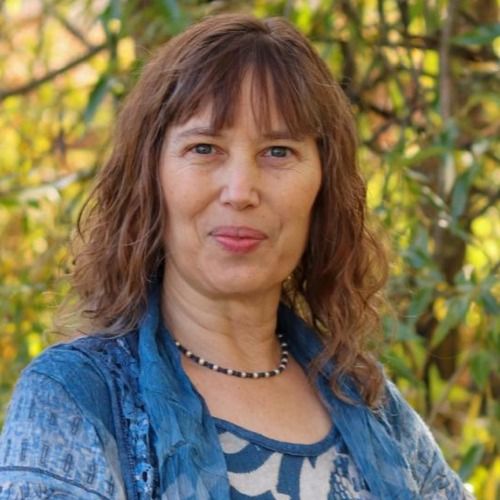
Diving headfirst into the world of finance with our guest Roger Bequet, who's as real as they come with a journey that's nothing short of inspiring. Born and raised in St. Louis, Roger's life has been a whirlwind of experiences, from serving 22 years in the U.S. Navy to becoming a CEO and entrepreneur. He’s not just crunching numbers; he’s on a mission to transform financial literacy for families, especially veterans. We explore the common pitfalls when transitioning from military life to managing personal finances and how understanding money can be a game-changer. Roger shares his humorous yet poignant anecdotes about budgeting with sailors who had no idea how to allocate their hard-earned cash. Spoiler alert: golf isn’t free!
We delve into Roger's new ebook, which breaks down financial concepts into digestible nuggets that even kids can understand. This isn’t your run-of-the-mill finance book; it’s more like a financial pep talk that arms families with the tools to take control of their financial futures. It's all about using money as a tool, not a burden. Roger emphasizes the importance of teaching children about savings and investment early on, transforming them into savvy money managers before they even hit their teens. We also discuss how financial education can alleviate some of the stress that comes with unexpected life events.
By the end of our chat, you’ll be ready to tackle your budget like a pro! We wrap up with practical tips on how families can start saving, including the importance of understanding interest rates and savings accounts. Roger’s message is clear: knowledge is power, and it’s time to take charge of your finances. So grab a snack, kick back, and get ready for a fun and enlightening conversation that could change the way you think about money forever!
Guest Bio: Roger Bequette is a TRUE native of St. Louis as the Bequette’s, in the Louisiana Territory, can be traced back to the 1720’s and are one of the 13 Founding Families of the city of St. Louis, MO in 1764.
He graduated from Lafayette High School and after high school joined the Navy. While on active duty he earned his Associate of Science degree in Electronics from Excelsior University
In 2002, Roger retired from the Navy with 22 years of active service and 8 years of Reserves. He had served on 2 shore commands and 8 ships and completed both Western Pacific and Mediterranean Cruises to include the Black Sea.
After Retiring from active service, Roger developed a consulting company for weapons research, became a Real Estate Agent in Virginia and Texas, a Real Estate Investor, a serial entrepreneur developing multiple businesses and is currently the CEO and Founder of Advisors Commercial Capital LLC.
Roger is involved in various charitable organizations as he raises awareness and funding for Rotary International, the Alzheimer’s Association, Veteran Organizations and other causes.
Current Community Involvement: Executive Committee Chair, Rotary and Veterans, St. Louis Walk to End Alzheimer’s (24/25), Alzheimer’s and Dementia Rotary Action Group (ADRAG), Missouri State Ambassador Alzheimer’s and Dementia Rotary Action Group (ADRAG) Ambassador for Rotary District 6060 Past President, Rotary Club of West County (MO) (24/25) Various Veterans groups
Bringing Education Home is an educational podcast brought to you by Kristina and Herb Heagh-Avritt.
If you enjoy the show, we'd love for you to leave a rating or review on your favorite podcast app!
Please let your friends know they can listen for free on Apple Podcasts, Spotify or their preferred podcast app or online at Bringing Education Home.
Sponsored by Vibrant Family Education - creating Happy, Healthy and Successful kids
Follow us on these socials:
Facebook Group - The Family Learning Circle
Facebook Business Page: Vibrant Family Education
Support Bringing Education Home
Copyright 2026 Kristina & Herb Heagh-Avritt
This podcast is hosted by Captivate, try it yourself for free.
Transcript
I now have the pleasure of introducing Roger Bequette. Roger is a lifelong St. Louis native with deep roots in the city's history and a career shaped by service and leadership.
After graduating from Lafayette High School, Roger joined the U.S. navy, serving 22 years on active duty and eight years in the reserves with assignments across multiple ships and global deployments.
Following his military career, he became a serial entrepreneur with real estate, professional and consultant, and is now the CEO and founder of Advisors Commercial Capital llc. Roger is also deeply committed to giving back supporting causes such as veterans organizations, Rotary International and the Alzheimer's Association.
Welcome, Roger. It is a pleasure to have you here today. Thank you so much for joining us.
Roger Bequette:Thank you so much for inviting me. It is something that I have been looking forward to for a while now.
So yeah, I'm very, very excited to be here and talk with you and talk with the people on that you broadcast out to.
Kristina:Thank you so very much. I want to start with thank you for your service.
We very, very much respect our veterans and we appreciate those who have served us and then have come back and are serving yet again like you're doing now. So thank you very much.
Roger Bequette:I have to admit on that I give my wife all the credit.
Kristina:Huh?
Roger Bequette:She is the one who kept the home fires burning. I just went out and played in the water. Yeah.
Herb:So I also have a lot of respect for the veterans.
I hurt my head and during my recovery I ended up at a facility that helps veterans and I went through a treatment process with a few other veterans, even though I'm not one. And the plight and their story and the week that we spent together doing that work really brought home a lot for me.
And the fact that, that it really was a place where for veterans to go that they let me in, you know, very great honor. And so, so yes, thank you for your service. And a lot of what we do is also to try and help that community as well. So thank you.
Roger Bequette:The Speaking of veterans, one of the things that I try and do in the financial education aspect is to help the, especially the younger service members when they are getting out. And there's a time frame where they have money, but they just really don't know what to do with it in a constructive manner.
They know how to spend it. I knew how to spend it.
Oh, I really knew how to spend it, which is why now I know how to acquire it, which is in is a big word for you're using the money as a tool. So one of the things that I'm trying to do with My ebook is have people understand that if you use your money as a tool, your money can make money.
And that's called another income stream. So that is really what I'm trying to do right now along with my companies.
But I'm trying to present in a very, very, very informal way how to make your money work as a tool. I'm not trying to make you rich. I'm not telling you how to do it.
I'm just showing you the tools that you can use to develop your very own plan for the future.
Kristina:I love that. And thank you for saying that because that was kind of.
The next thing I was going to say is like, okay, so we have this advisor's commercial capital, this finance guy. What does he have to do with families and money? And why is he on the show? Right, and that is exactly why.
Herb:And you know, we also said that we were going to ask you how you got started. How did you go from the military into getting in the money? You said, oh, I like to spend it.
Where was the point that happened that it's like, oh, I have to learn more than just spending because a lot of people hit that and don't, don't switch, don't switch. So where was that switch for you? Why was that important and, and how did that work for you?
Roger Bequette:While I was still on active duty on one of my ships, There is a program to help sailors who get in financial difficulty. Let's say that they're doing okay, but tires on their truck blow out. They need, they need tires.
They don't have the funds to go out, buy four brand new tires and still pay for baby food, this, that and the other thing. So I was the representative for that financial endeavor and I had to develop budgets with these young sailors.
It is a very, very, very unique in that people will talk about their most intimate secrets before they will talk about money. So it was a matter of getting to break down that ice.
But also when I was developing a budget, when I was working with them, I had to explain to them, if you're going to play golf three times a week, that has to go in the budget. You're gonna do it anyway. If you don't put it in the budget, you're just gonna, you know, ruin your budget. So the budget is basically real.
And that was basically the starting point. Wow, this is real. This can really help people.
When I got out of the service, I formed a company and it was very interesting and I made good chunk of money. And when I walked away from it, I basically had enough to do, very little. I spent it. I had a great life. I have a great life.
But the point is that I didn't save properly, okay. Formed another company and that company failed. That company blew up. So now I am at the bottom, looking up.
I got into real estate as an agent, and all of these people required capital to buy the house. Okay. Then I started working for investors again. They needed capital to buy their investment properties.
So I'm sitting there going, wow, all of these people need capital, but they don't understand what they're asking for. So it was a determination at that point. I really want to help people get smart about finances.
It is not a matter of, you know, if you do this, you're going to be a millionaire. I can't predict that if you do it fully on you. If you don't do it, you might still end up as a millionaire. Good luck in the lottery. So it is. But the.
But the knowledge part is what I can bring, and it comes from years of watching and looking and seeing what other people stumble on. And so if five people stumble over something, that means that they need to learn how to get over that.
And so that's how I got to where I'm at now, actually doing an ebook. And before we go further, I just want to explain.
This book is basic, very basic, because most of the talking heads and most of the gurus, they start in the middle. Oh, if you buy these bonds. Oh, if you do this fund. Oh, if you do this, you do this. Well, that's wonderful. But how do I get there to do that?
So that's where I start at the bottom. In my chapter on savings, I start with money and a mattress because that. That gets people looking at. Go. Yeah, my dad used to do that.
He had a little tin can.
Kristina:Yeah.
Roger Bequette:So that's when I say when, when I'm start with the basics. That's what I mean. We're really talking about the basics. And you can tell this to your children. You can actually use this in.
If you homeschool, you would be able to use this to explain finance and savings and interest rates to your kids. Financial knowledge is financial power.
Kristina:And that's exactly why I wanted you on the shows, because we wanted to talk a little bit about this, you know, in the family kind of mode now. I mean, you're so knowledgeable for the veterans, for the business, etc. But you also really have a heart for family.
And you wanted to say, you know, hey, families, let's talk about these things really quick. And make sure that you know where you're going. So what's one tip that you can give to our families right now?
Where can they kind of start to understand and then maybe turn that into help us to help me turn it into kid language.
Roger Bequette:The very first thing that they can do and I'm going to a page here if I may, is smart and what it is is the way to actually do savings. Uhuh. At the end of the chapter I have a worksheet and to self evaluate what they are currently doing and simple questions.
Where do you currently have your savings? Some cash at home, traditional savings, etc. Etc. Do you know your current APY? Yeah. See there's the look on the face. What is apy?
It talks about it inside the chapter. The APY is your annual percentage yield when your interest is being compounded on your savings account at the end of the year.
The money that is your annual percentage yield. The APR is the annual percentage rate. That's just what it is.
Herb:Yeah.
Roger Bequette:The APY depends upon how much money you have and there's like five or six different steps that I explain. So it is a matter of you're going to be able to look at this and go, there's things in here I need to know.
Do you know which banks or credit unions in your area have the best interest rates? Yes. No. Find out.
Kristina:Does that mean go on the website? Does that mean make phone calls? What does that mean?
Roger Bequette:All you got to do is go online. Literally if you type into a search engine and you put on there who has the highest ary in the greater whatever area, it's gonna tell you.
Kristina:Cool.
Roger Bequette:With regard to the smart savings plan, make your goals specific, measurable, achievable, realistic and time bound. How much do I want to have in savings by this amount at this time? And then work backwards. But you gotta be realistic.
Kristina:Yeah, yeah. Because it's something that families can do, right.
Mom and dad can sit down and do it and then they can bring the kids in and say, hey, we're planning for this vacation. We want this much in the account to go. Let's work it backwards, right? How can we save a little bit each month to hit that goal, to get there in time.
Herb:And you know, we've had a business fail before and it was doing well and then it wasn't.
And as it stopped, we kind of stopped paying attention and doing a lot of the money stuff because we knew, we knew, we knew we were in trouble, but we didn't have a way out of it. So there is this avoidance aspect of it, too.
So there's a lot of people who know that they need more financial help, but there's also this, like, that's really painful. I don't want to have to look at it, and I'm kind of making it work. But it's a real struggle. How do we get to those people? Because those really are.
It's like they just need a little bit of help and a little bit of focus, and really they'll be able to start taking control. But they have these blinders up, been there, done that.
Roger Bequette:And that's one of the reasons why the. The name of this book is Knowledge is Power. When you are in a space where everything is coming at you, everywhere you look, that's what you see.
And everything seems like it's about that far away from you.
Kristina:Yeah.
Roger Bequette:One of the strangest things in finance, most of the biggest and most successful businesses have been born during times of financial difficulty. If you look at them, they're just like, oh, I didn't know that. Really. They did that because you have to be able to. And this.
This is the experience talking. You have to be able to look past the. I call it the oh, shucks moment.
And you have to look past that, because if you can't look past our shucks, that's all you can see. I have to be able to stop and go, what is on the other side? Where do I want to be?
When you know where you want to be, then you can start developing ways to get there. But getting past that, aw, shuck is just. It's tough.
Kristina:Yeah.
Roger Bequette:But it's tougher to not get past it. So for the people that are, you know, in a tough spot, and right now, trust me, there's a lot of people in a. In a tough spot.
I'm not going political, but there is a lot of people in a tough spot right now. So being able to get past that to look at. Okay, let's look at our finances. We know it's not pretty. We know that. Okay. We acknowledge that.
Now what do we do? Do we call up the bank and tell them what's going on? Yes, every time.
Kristina:Okay.
Roger Bequette:Do we call up family and friends and say, hey, listen, I'm in a bit of a pickle? Yes. Every time. You can't get out of a hole without a ladder.
Kristina:That's true.
Roger Bequette:So if you're behind on payments to a bank, call up the bank, tell them, let them know they don't want your house, they don't want your Furniture. They don't want any of that stuff. They want to be able to get the money and they understand that they might not get all the money at once.
So that in, in answer to your question, how to come across to the people that are going, it's tough right now just being able to stop, look over the aw, shucks, figure out who is being affected by your not being able to pay and work with them.
Kristina:I think one of the main things there is not only, you know, working with the banks and the institutions and things like that is, but to also get over it because it's also harming your family. We unfortunately did it right when we were having difficulties. We hid it from our kids and they could tell, they knew something was going on.
They didn't know what it was. We were grumpy, they were grumpy back and forth. It's like, but if you can have a age appropriate conversation in the family, you know. Yeah.
Things aren't going well and we're going to work on it. It gives everybody that brighter future, that next step forward.
Herb:Right.
Kristina:And it's not easy to do.
Herb:Yeah.
Kristina:We didn't do it and we should have.
Herb:Yeah.
And the stuff you're talking about is every psychologist, every therapist, every, every coach, every life coach is basically going to give you some of the similar, same advice. It's like if you turn away from your problems, they're going to bite you in the butt. It's the whole, it's the whole bison thing, the buffalo.
You turn and you walk into the storm.
And that is so difficult again in the psychologically, psychological realm is because so many people match their identity with how much money they make. And they think, and they think that I am this money instead of, oh, this money works for me. It's like, no, I am this.
And then when that goes away, they feel less than. And it's hard to look at yourself when you feel responsible for going bankrupt like I did. I hurt my head. It all went away, totally made sense.
I still buried my head in the sand and lost so much of my identity because of that. And now it's like, money is a tool. Money is not who I am. And how much I make or don't, doesn't. It doesn't really. It affects me.
It, it still does, but it doesn't change me. It's not really part of who I am.
And even years into this, I'm still at that edge and probably always will be because that's part of also the human condition.
Roger Bequette:There is one thing with what you just were talking about, in a family where the parents are in a difficult situation depending upon the age of the children, that would be a pretty good teaching tool. Kids, mom and dad are at a point right now where the things that we were buying, we can't buy at this point. And I want to show you why.
And actually break out the checkbook and the bank statements.
Most of the time, the people that do get into trouble do not know what their bank statements say, because that's a pretty good leading indicator of, okay, I make a thousand dollars, and I wrote $1,200 worth of checks. That's a pretty good indicator that something is missed. And you can show that to your children. And then you can also.
As you are building a business model, every family should think of themselves as a business. You have money coming in, you have money going out, and what is left over is profit. That'll save you a lot of trouble right there.
But the point is that you're showing your kids responsibility. Guys, this is what we did, and this is the cause, and this is the action.
And then you're showing them how you're planning to get past it and get on the other side. They're never going to forget that.
Those kids aren't going to be going, you know, I. I remember mom and dad talking about something, but here I am, and I'm behind. They're never going to forget that.
Kristina:And that's exactly why these kinds of shows, we. We have people like you on these shows. Right. Because the more people listen and hear and think about this and they let that sink in.
It's like, oh, yeah.
Not only am I being a good role model for my family, for my children, it's also giving me the tools to step out of this situation that I'm currently in.
Roger Bequette:Yeah.
Herb:That kind of reminds me of a Kathy Bates movie where she has a bunch of kids and she kind of walks into a store out in the middle of nowhere and is like, I. I want to live in that house, and I'm going to work in your store, and my kids are going to sweep and do this, and we're going to feed you and we're going to do your laundry, but we're going to live in that house and we're going to do all of this. And she built the life and. And it's like, it was hard on her. It was hard on the kids. The kids had to do all the work. But that. Is that.
That character, that role model? It's like, no. When you sometimes have to do what you have to do.
And she did that in front of her family and the family came up and it's like a really, really strong story. And that's something that most modern Americans, it's like we are so far removed from that now.
There are so many things that are so easy that when it comes time to put forth that it's time that, that they don't, that they don't have it, they don't know how. And so being able to build up to that gradually is very beneficial.
And so, you know, starting young, showing your children that sometimes you do have to face this and you do have to move forward and, and sometimes it's not pleasant, but you got to do what you got to do and face it. And again, we didn't have that. We didn't, we didn't face it as good as we could have.
We made it through and one of our children doesn't talk to us anymore. So did we really make it through?
Roger Bequette:One of the things that I do in this ebook is it is written on a 5th grade reading level that is not to play down anyone. It is so that you can use it to teach your children.
Kristina:Love it.
Roger Bequette:Yeah, the, the ability to maintain their interest. I mean, these are kids that got everything at their, at their fingers, actually their thumbs.
So it is a matter of how, how could I make it so that they would go, oh, I never thought about that. That's how I did it.
Herb:Funny. A funny, not so funny thing is less than half of American people can read at or above a sixth grade level at this time in history.
So writing your book at a fifth grade level, you're going to reach a lot more people who could probably actually use that information. Because if you can only read at that level, then your financial knowledge isn't probably all that great either.
So in a way, writing it at the fifth grade level is incredibly appropriate to reach the people you're most trying to reach.
Roger Bequette:For a while I lived down in Southwest Missouri. Southwest Missouri is poor. There is no other way to put it.
They have a lot of hunting and fishing, but you go a mile from those lakes, it's not pretty.
And my business, that's one of the reasons why my business failed is because the people down there, even I had a business where it actually, the service was paid for by the government, came out of taxes. And these people are so poor they don't pay any taxes.
So, so that's another reason why I, I was trying to get it not as an insult to anybody, but As a way of. This is important enough where. Let's make it. I mean, it may bore the heck out of YouTube. Well, this is. This is so simple. Yes.
And it's that way for a reason. Because the people that need it most and the being able to teach their children. That's what I'm trying to get for.
Herb:So there. There is a story of a famous football coach. And I want to say it's Vince Lombardi, but I don't know.
But every year at the start of the season, he put all of his players and he took them out onto the football field, and he's like, this is a football. It's this many inches long. It's this round. This is the dimension of the football field. This is the. And this is the. The upright.
And every year he would go through the basics of football. He's like. Because if you don't know the basics. He had people in his program for years.
And every year at the beginning of that, he went through the basics because they don't change. And if you get too fancy, that can fall apart and you have to go back to the basics.
Roger Bequette:Yeah.
Herb:That's how you win games. That's how you win at life. That's how you win at money.
Once you win at the basics, then you get to play and hopefully don't have to go back to the basics, but you probably will a couple of times. So just life.
Roger Bequette:One thing I tell people is I'm not smart. I'm not. I cannot tell you the speed of a baseball on the moon. I cannot tell you the distance between here and Timbuktu, because I don't care.
But I'm very clever. I can see things and I can go from point A to point B.
And that's what I'm trying to do with this ebook is go from point A to point B. I don't have to impress you with the big words. It doesn't matter.
You know, if you're skipping over it, that word may be very important, but there's other ways to describe it that still get the idea across and what it is and what it accomplishes. So that is the way that I look at it. This is for people that just want. Knowledge is power.
Kristina:So at the beginning of our conversation, you talked about finances and money as tools. Right. And a lot of people are really into savings.
Can you give us a couple of different tools that families can use to save and maybe get past these parts where. Where they're kind of stuck?
Roger Bequette:The very first one is what do you trust. I'm trying to make money and you're talking about trust. Yes, I am. Again, people talk about very personal things before they'll talk about money.
So if you, in your heart of hearts, don't trust banks, then that's not where to put your money, because you're not going to do it right. So once you figure out who I trust, if you don't trust banks, figure out who do you trust. Grandma. My grandma. I trust her with everything.
Give her $25 a week, have her hold on to it, because you know she isn't going to spend it.
Kristina:Right.
Roger Bequette:And you're still saving. Now, you're not getting interest and your money is not guaranteed, but it's out of your pocket and it's being accumulated.
So that's the very first thing. Trust. Second, I trust banks. All right, there we go. There are formal savings accounts that are fdic. Federal.
Herb:Federal Deposit Insured Corporation.
Roger Bequette:Yes, there we go. Federal Deposit Insurance Corporation. If you are in a credit union, which I strongly recommend, National Credit Union Administration.
Both of those are very, very good. And your bank and your credit union belong to them.
Remember, we're talking about trust here because of the fact that they are actually insured by the federal government. Your money in there, not your interest, but your money in there is guaranteed. If the bank defaults.
If the bank defaults, you will get your money up to $250,000 per account. That's one of the things people don't understand. They think, well, it's 250,000. I got more than that. Well, then put it in a second account.
Don't be silly.
Kristina:I was gonna say start making different accounts. Once you hit that 250, make another account.
Roger Bequette:Oh.
Herb:At that point, you should have your money out of the banks anyway. That's a whole nother story. If you got $250,000 just sitting in cash in a bank. This is not your conversation.
Roger Bequette:Remember, we're talking about trust.
Kristina:Trust, yes.
Roger Bequette:So on. And you were asking me, what is a way to start? The easiest way, quite literally, is just a formal savings account. It's got liquidity, it's insured.
You have easy access to it. You go to the bank, pull it out, get on your phone if you've got the app.
Kristina:Yep.
Roger Bequette:And suitable for emergency funds and specific events. A savings account like this is perfect for being able to save enough money to. My car is not the newest thing on the face of the earth.
And I know that I'm going to have to put new tires on it this year. So put some money into the savings account, how much the tires cost, you know, and divide that by your number of paychecks.
Now the cons are low yield. Current interest rates are 0.01 2.2%. It's not real high. You're not making a lot of money.
Herb:And actually, and with inflation, the numbers the way they are, you're losing money at, at, well, inflation.
Kristina:You're doing the advanced calculation. Okay, hang on there.
Roger Bequette:I have a whole chapter on inflation explaining what it is, how it affects you and how to beat it. But yeah, that right now we're just talking about the pros and the cons of savings accounts. So no checks and fees at some institutions.
That's what this ebook does is it gives you the pros and the cons. Like I said, I'm not trying to tell you how to be rich. I'm not telling you how to do your money. I'm just showing you the pros and the cons.
And that's the basic. Now they have another one is the high Yield Savings Account. Most people have never heard of that. They don't know, they don't even know it exists.
I have money in a savings account. I opened it 40 years ago and you know, I take money in, I take it out, I take it in, I take it out. A high yield savings account, usually online.
So this is one of the cons is that you have to have a computer access to really make the best of this offer. And dramatically higher interest rates due to lower overhead costs and very competitive. Your money is still insured, often online only.
Pros, much higher returns than traditional savings and no minimums at many institutions. That right there is a wonderful thing. You mean by doing absolutely nothing different, I can get a higher return.
Herb:So usually for those, if I recall correctly, you have to lock your money down tighter so it's not quite as liquid.
But so, but, but if you are saving for something that's actually beneficial to make it slightly more difficult for you to get at it, it doesn't mean it's, it's gone. It's just like you maybe set it aside for three months where you can't reach it or six months where you can't reach it.
Roger Bequette:Well, that's a different savings account. To get that what you just said, I want to put it aside for three months and I want to earn a higher. That's a cd.
By using a cd, you already know that you're not going to get your money back before X time. But guess what? There's A CD that you can get your money back at any time.
Kristina:Cool.
Roger Bequette:So the cons of this is it's not offered the high yield. The cons are it's not offered at all. Banks. Rules and requirements difference at each bank. This is part of the knowledge thing. What.
What do I need to know to do this? This is different at every bank. So you go to your bank and you ask them, do you have a high yield account? Yes, we do. Are there rules? Yes, there are.
What are they? But if you didn't know about it, you didn't know to ask.
Kristina:Right.
Roger Bequette:Knowledge is power. And.
Herb:And the banks don't want to pay you higher interest rates. So it's kind of security by obscurity.
Kristina:Yeah, they have it, but they don't.
Herb:Let you have it quite so way.
Roger Bequette:Well, when I. On the chapter on interest, the very first thing that I explain is how you get interest in your savings account. Where it comes from.
It doesn't fall from the sky. Yeah. When you put money into it, the reason why you get interest is because the financial institution is lending that money out.
Now this is the strange part. When you get a bank loan, you may be getting your own money back.
Kristina:I haven't thought about that that way, but you're right.
Herb:Yeah. And the bank keeps the arbitrage, so. Oh, another one of those big words.
Kristina:Another one of those big words.
Roger Bequette:Arbit.
Herb:The difference in interest rates. They're two, they're getting seven, they're keeping five. Five percent is what's called the arbitrage number.
The difference in interest rates where the profit is made by the bank.
Roger Bequette:Banks are a business. They are there to make money.
Kristina:Yep, they are.
Herb:And so are private lenders and other.
Kristina:So there was one other special savings account that we wanted to talk about for families that a lot are aware of, but then they kind of forget about. It's like a student savings account. Something you can start with your. For your littles.
When they are just getting, you know, right after they're born. And then you don't have to worry about like the big college bill and things like that.
Roger Bequette:I have. Oh, that's why I have. Because you asked me about that and I have added that into the chapter. There are different flavors for different ages.
And because of the fact that they are different, once again, knowledge is power. Power you are. By understanding what it is. If you're wondering what I'm doing, I'm trying to get that information. Saving.
Kristina:Yeah. Sometimes this is at a state level, sometimes it's at a bank level.
Herb:And now the now to the out of the box weird thinking that I do. Knowledge is power and money. Knowledge is power about money. And that's why they do not teach financial literacy in schools.
They don't even teach financial literacy in college anymore. If you want financial literacy, you have to do it on your. Go get Roger's book somewhere.
Roger Bequette:So.
Herb:Because why?
Because if you have knowledge about money and you are able to take that control of that power in your life, then you're not going to be dependent on the banks, and they don't like that.
Roger Bequette:The, the thing that I have found with regard to people making money and people spending money, if you have a knowledge of what you're spending, you are 90% ahead of everyone, including the banks. Well, how can that be? Because you know what you're spending. I have this amount that I have. I am spending more than that.
And I don't know how that happened. That's realistic. I don't know how that happened.
If you have this amount and you say, okay, it doesn't matter if you put it in a mattress, put it in a bank, put it in a jar, I would recommend a bank. But it doesn't matter because you're going to have money. You're going to have something for a rainy day because you are spending less than you make.
Kristina:Yep.
Roger Bequette:Until you get to that point, you know, you, you can say nasty things about everybody, but you brought it on yourself.
Kristina:Yeah.
Roger Bequette:Now, there is times where medical, my gosh, I'm making all this money, but I, it's all going towards medical. You didn't bring that on yourself. That was nature. But there are ways out of that.
You know, there are things that are beyond your control, but you have to control what you can control. And if you're looking to make money by somebody else not making money, that's called a win lose. And that's not a good way to work. Right.
So, you know, I just, I work on a win win. I, I figure that's just the best way.
Herb:Yeah. So again, that's another thing that's happening in schools is the entrepreneur is getting such a bad rap and the rich guy is getting such a bad rap.
And it's like, but you're buying that coffee, you're buying that stuff. They're not taking your money from you.
Kristina:You're making choices.
Herb:People are like, oh, I hate paying tax. You know what? I love paying taxes. I want to pay millions of dollars. I want to pay $1 billion in taxes like Elon Musk did. You know why?
Because that means I got a lot of money to pay a bill.
So this whole idea and understanding and relationship with money with people really needs to change because it's like, oh, I hate it, I don't want to do it. It causes all these problems, like wrong attitude. And if you keep thinking that way, you're going to keep getting those same results.
Kristina:So we're going to let them figure out now how to get Roger's book, the name and where to get it, and how to get a hold of you so they can keep more of their money and have a better relationship.
Roger Bequette:My name is Roger Paquette and to. I am offering the first chapter of my book, Financial Knowledge is Financial Power.
If you email me at Info Info at Advisors A D V I s o r s-cc.com send me your information, your email address, and I will send you this chapter. And it, it basically just describes all of the various forms of savings in the United States. Because if I get something from England.
I'm sorry, but I'm not an expert on the English financial system and their nuances.
Herb:But if you read the book, you'll probably understand how to ask the questions you need of institutions that are there.
Kristina:Yeah.
Roger Bequette:Yes, but that is knowledge. You know what to ask. Okay, real fast.
Kristina:Yes.
Roger Bequette:People blame the Fed for interest rates. Guess what? Fed does not control the interest rate of your loan. Not in any way, shape or form.
They have nothing to do with the interest rate on your house loan or your car loan. That is all determined by your bank. When you know that, now you know.
Well, if they're determining it, let's see, you know, let's see if I can kind of bid this out. Let's go to this bank. What do you offer? Let's go to this bank. What do you offer?
Because now you know that you can't blame this big thing up in the sky. It has no, no concern. The only thing that the Fed is there for is to ensure that the United States of America does not go bankrupt.
That's the only reason it's there. And when you understand that, now you can say things. Okay, you offer this one, but they offer this and they offer this.
Can you match that or even beat it? Yeah, it's a little bit of work, but it's there. People just don't know it.
Herb:Yeah. And it's a pain in the butt to change banks, but every once in a while you got to shop around, see what's out there.
Kristina:Roger, this has been an excellent conversation.
Thank you very much for your tips, your Help and your knowledge that you've shared with our families who are listening, is there anything that we didn't get to or that you really wanted to say today that I didn't. That you didn't get a chance to say?
Roger Bequette:Nothing that I didn't say. But I would like to reiterate.
The sooner the family can get that financial understanding, get that financial warm and fuzzy and get that financial knowledge and get that to your children. It doesn't matter if your children are 3 years old or 30 years old.
If they're doing something that is harming them, then that's a lack of financial knowledge. The biggest thing is make yourself smarter, make yourself stronger financially, and knowledge is power.
Kristina:Thank you so much. It has been a pleasure having you here today.
Herb:Beautiful message. And again, so many people bury their head in the sand.
And you took that, and instead of burying your head, you brought it out and you are helping other people. And so you took this dark subject, you fought the dragon, you got the knowledge, and now you're trying to share it with the world.
That is the hero's journey. So what you're doing, trying to help people, it's like you are making the world a better place.
And, you know, sometimes when you're in the grind, it doesn't necessarily feel like it, but you are a hero, improving the world. So thank you for being here today and thank you for doing what you do.
Roger Bequette:Thank you for inviting me. I greatly, greatly appreciate it.
Herb:And real quick, before we go, what's your brother's full name?
Roger Bequette:My brother's. Yeah. Dennis Allen.
Herb:Yeah. What's his last name? Right. That's what I was getting at.
So even within the family, it's like, so thank you, Mr. Bequet, and your brother, Mr. Beckett. So just, I just kind of wanted to bring that up. It's a nice little chuckle at the end for our guests.
Kristina:We had a fun chat about names.
Herb:Before the show because we have a weird one and. And I had to know how to pronounce it. So thank you again, Roger, for being here. It has been a pleasure.
Roger Bequette:Mine too. Thank you.
Kristina:All right, audience, thank you so very much for being here today. And don't forget, we drop a brand new show every single Friday. Come back to bringing education home at your favorite podcast platform on YouTube.
You can find us there as well. Come help other people find by liking and subscribing. Until next time, bye bye for now.