Episode 89
S2EP89-Denise Allen-Unlocking the Secrets of Sight: How Vision Impacts Learning and Confidence
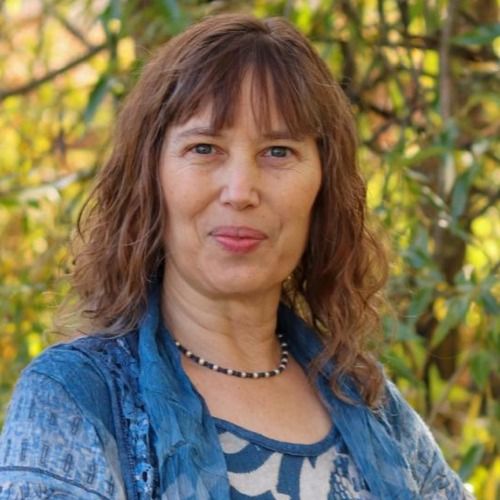
Denise Allen, a passionate podcaster, educator, and mother of six, joins us for a delightful chat about her incredible journey from stereo blindness to gaining depth perception! Imagine seeing the world in 2D and then suddenly, BOOM! You're living in 3D! Denise shares her personal healing experience and how it ignited her drive to help others, especially parents struggling with their children's vision issues. She dives into the impact that vision has on learning, behavior, and confidence, and how many kids are misdiagnosed with learning disabilities when the real culprit might just be their eyesight. It's like trying to read a book with the pages stuck together - frustrating, right? So, buckle up as we explore the fascinating world of vision therapy, the importance of proper eye exams, and some fun tips for parents to help their kids see the world more clearly! Spoiler alert: it involves less screen time and more outdoor play!
Denise Allen is a podcaster, educator, and mother of six who shares her journey from stereo blindness to gaining depth perception through her podcast Healing Our Sight. With a master’s degree in music from George Washington University, Denise has spent decades teaching piano and early childhood music and movement, giving her a deep understanding of how children learn and develop. Her work now focuses on helping parents recognize how vision impacts learning, behavior, and confidence. Denise recently taught English in China and is passionate about giving families hope and practical insight when traditional answers fall short. She is also a proud nana to eleven grandchildren.
Bringing Education Home is an educational podcast brought to you by Kristina and Herb Heagh-Avritt.
If you enjoy the show, we'd love for you to leave a rating or review on your favorite podcast app!
Please let your friends know they can listen for free on Apple Podcasts, Spotify or their preferred podcast app or online at Bringing Education Home.
Sponsored by Vibrant Family Education - creating Happy, Healthy and Successful kids
Follow us on these socials:
Facebook Group - The Family Learning Circle
Facebook Business Page: Vibrant Family Education
Support Bringing Education Home
Copyright 2026 Kristina & Herb Heagh-Avritt
This podcast is hosted by Captivate, try it yourself for free.
Transcript
I now have the pleasure of introducing Denise Allen.
Denise is a podcaster, educator, and mother of six who shares her journey from stereo blindness to gaining depth perception through her podcast, Healing our Sight.
With a master's degree in music from George Washington University, Denise has spent decades teaching piano and early childhood music and movement, giving her a deep understanding of how children learn and develop. Her work now focuses on helping parents recognize how vision impacts learning, behavior, and confidence.
Denise recently taught English in China and is passionate about giving families hope and practical insight when traditional answers fall short. She is also a proud Nana to 11 grandchildren. Welcome, Denise. It is a pleasure to have you here today. Thank you so much for joining us.
Denise Allen:It's my pleasure. I'm so happy to have this opportunity to share.
Kristina:When I first saw your topic and what you were going to talk about and how hopefully the depth that we get to go into, I was like, oh, my gosh.
This would have helped so many of my parents when I was in the classroom, when we were trying to figure out what and what was going on with their kiddos. Right. Because I was doing everything I could educationally.
They were doing tutors, they were doing all this stuff, but something just still wasn't clicking. So where does the passion come from?
I know you, part of your bio said you healed yourself and you've helped other people, but what was is like, okay, I'm going to actually start a podcast. I'm going to actually talk on other people's podcasts. What was that pivot point is like, I've got to get this out there.
Denise Allen:Yeah. The pivot point came after I had gained my 3D vision and I really was looking for a more powerful vehicle.
I had my little blog that I wasn't doing much with. I wasn't feeling passionate about it. I wasn't getting any engagement. I think the engagement piece is important for me personally.
And it wasn't happening. And so I was getting some high level coaching and my coach said, what is it that you want to do? And she couched it in a way that was really powerful.
I could. I couldn't even repeat it if I tried. Right.
But there was a process to it and, and I just had this thought pop in my brain that said, you should start a podcast. And I had no idea how to start a podcast, but she pushed me. Right.
And so I figured it out by the next week and started sharing my story and other people's stories because I think that personal piece is so crucial to people understanding that there's possibility.
Kristina:And that's why? We love having people like you with us and on the show. We love having parents who are sharing their journey through this education.
You know, mess at times is like, I don't know what happened, but then we finally figured it out kind of thing. So all of that is just so very, very important. So, yeah, thank you for being here. But we're talking about eyes today.
We realize that our eyes do so much, but at the same time, we don't realize how it impacts so many different things. Let's start there. What are some things that you've learned about some of the things you've noticed?
What does it impact in a child who is trying to learn?
Denise Allen:Yes. I think the thing that always stands out to me is that we all believe we understand our vision. We think everyone sees like we do.
And so it's almost impossible to understand that it looks way different for someone else, you know? And when I say to people, hey, now I see in 3D, they're. They're like, well, do I see in 3D? Well, does everyone see in 3D?
You know, that we don't even understand that piece. And that's like the building block, right? And so if a child is not seeing in 3D, there's. It might not even just be that piece. It could be.
They can't track. Well. It could be just a processing problem in their brain.
And unless the child is tested on a really deep level, it doesn't necessarily come to light. And I. I lived that because my own daughter was one of those kids and my young, my youngest, and she wasn't even struggling in school.
She seemed totally fine.
But I knew there had to be something going on because her eye turned in like mine when she was three and we put her in glasses, just like I was putting glasses at that age. And the glasses tend in that type of esotropia to straighten the eye out and make you think that everything's fine and it's not necessarily fine.
It doesn't give you 3D vision. It doesn't teach the eyes how to work together. And so she compensated. She did great. She was a straight A student.
I had no clue that anything was going on with her until I started reading a book called when youn child struggles by Dr. David Cook. And that's going to be in my. My gift that I'm offering later, the list of the resources so people don't have to write it down.
They can just get that later. So I was reading this book, and the reason I was reading it was because I was Substitute teaching.
And, and there was a child in my classroom who was really struggling. He was in resource. He was a problem in the classroom. He didn't get his work done, all of this stuff right.
And, and I thought, I gotta figure out what's going on with this child and others that are not doing as well. And so he had a checklist in there. And one of the questions that he asked was the.
Ask your child, if you, if you're looking at the words, do they ever do this when you're reading? Because it's really hard to visualize what it is to see double. And. And I did that with my daughter. She was 9.
And, and she said, oh, yeah, what the words are double when you're reading, you know, and she didn't know it wasn't that way for everyone else. So I took her right to my eye doctor and I had her tested. And, and he said, yeah, she's mini. You exactly like me.
But because we did vision therapy with her when she was 9, she was able to gain 3D vision in a matter of months, where I had to work at her for years.
Kristina:Yeah.
Herb:So how, how. Well is it rude to ask how old were you when you figured that out? And what was the, what was the revelation in there? Because I'm. I'm 56.
Last year I learned that I think differently and there's a word for the way I think. And so people say, oh, you're a visual thinker, or you think in pictures or you think in words. It's like, I don't think either of those things.
And so just, just recently I found out how I think and it, like, has changed a whole lot of how I view life and my early childhood. So when did you learn that you.
Denise Allen:Were.
Herb:Stereo vision instead? Stereo blind instead of 3D? Because, I mean, that. That doesn't relate. I can't. Again, I can't relate to that. I don't.
Except through the way that I think.
Denise Allen:Right. And that's a great question. I didn't have a word for it. I.
But I did know I saw differently clear back when I was about 10 years old, because I would go to the ophthalmologist every year to get my eyes checked and get my new prescription because of course, you know, changes every year. And they had a machine in the office that they would have me look into to do the testing where. And maybe you remember this kind of.
They don't do it, this type of machine as much now in the same way, but you'd look in the machine. And on one side there would be a picture. And. Well, in this case, it was music lines.
Kristina:Okay.
Denise Allen:And I was learning to play the piano, so I related to that. So there were the five lines on one for one eye, and on the other eye there was a note. And the.
The assistant said, which line or space is the note on? And they had done this every year, but I think every year prior to that, I had guessed.
And this time I. I looked at the person and I said, do you want me to guess? Because I see the lines on this side and I see the note on this side, and. And she said, oh, you can't do that one. We just won't do it anymore.
Kristina:Interesting.
Denise Allen:Does that make any sense?
Kristina:No, you can't do it. There's something going on.
Denise Allen:Yeah, but they weren't in a position or mindset to do anything about it. I think for most ophthalmologists, they accept the fact that you can't see in 3D, and they give you your glasses and they send you on your way.
And if it's really bad, like with my brother who was born cross eyed, they will say, oh, your child should have surgery. And they'll do the surgery. They'll straighten out the eyes so that they look nice, but they don't address the. The actual function. Yeah.
Kristina:I just want to really pinpoint this to parents. Right. Because they think they're doing the right thing. They take their doc. Their child to the eye doctor, they have their vision checked.
But unless the doctor is really paying attention, like if it's your regular general practitioner and they're just looking across the room, that doesn't tell them if the eyes are working together the right way.
Denise Allen:Exactly.
Kristina:So if your child is struggling, like you were just saying, you have to go to a special eye doctor to get this really looked at.
Denise Allen:You do? Yeah. And there are lots of opinions about who that right doctor is for a.
Herb:Lot of people, you know, so I'm still curious. Do you. Do you have. Did you have depth perception? No, I can't. In the stereotype. So you couldn't.
Denise Allen:I did not have depth perception.
Herb:So, so and so, like reaching for things, like at the dinner table, reaching for your fork, reaching for your glass. Was that awkward?
Denise Allen:So I think we have a little bit of misunderstanding about how all of that works too, because we compensate for everything, you know? So a person who doesn't really have great depth perception will. Will figure out tricks.
One of the people that I interviewed on my podcast was a girl named Jillian. And. And her. And her mom wrote a book. I can give people all the lists of all the books if they want. There's a whole bunch.
But she would stick out her pinky to pick up the glass because that helped her locate it.
Kristina:Okay.
Denise Allen:And. And there's variations of how much of a disability you have in this regard, too.
And I actually had 3D ability about this far out from my face, about a foot out. So things that were close were familiar and comfortable.
If I was playing with my peers and in a ball game of any kind, it was a struggle because I didn't know where the ball was.
Kristina:Right.
Denise Allen:So those. Those games were not fun for me.
Kristina:Yeah, yeah. And then it goes into all the behavior stuff around that, too. Oh, well, she can't catch the ball. She. I don't want her on my team.
All those things that really, like, tear a child down and they don't realize that it's because their eyes aren't working the way they need to work to be able to play the game.
Denise Allen:Yeah. Yeah. So I just appeared to be clumsy. And, you know, if I tripped on something, it's just the clumsiness. I. My knees were always skinned.
Kristina:Yeah.
Denise Allen:But we did have some of those more dangerous playground equipment items.
Kristina:Oh, like a merry go round.
Herb:Yeah. Step too early and you miss it. That's. That hurts. Or if you don't get it and you stub your toe, it's like, yeah, that. That's incredibly uncomfortable.
So, yeah, that would be. That would be hard. Yeah, that. I'm still trying to deal with that internally and myself.
So in college, it's like, I'd started wearing glasses in high school, and I hated it. And every year, they would increase my prescription. And in college, I'm like, how come the eyes are the only part of the body that don't.
That doesn't heal itself? And so I stopped wearing my glasses altogether. I refused.
It became kind of important when I was snowboarding, so I would wear them when I was snowboarding. Contact lenses so that I could see a little bit clearer.
But as soon as I was done snowboarding, I would take them out because it's like, I refuse to believe that my eyes could not heal. But the current ophthalmology is like, no, you have to go in and get your prescription changed. Every year it's going to keep getting worse.
This is what they told me. So when I stopped wearing my glasses, they got tremendously better. And some days I can see perfectly clear without any problems.
Some days it's still really blurry, especially if I Pick up my phone early in the morning, then my vision is gone throughout the day. So the, the. The ophthalmology world right now, to me is backwards.
They should be helping people recover what they lost instead of just putting a crutch on it. And now we get into your healing, your stereo vision. You said it took you three years. It took your daughter a couple of months.
What was the process that they used to help bring back your vision?
Denise Allen:Well, and I don't know if I said three, I said years, but it actually took me six years.
Herb:Six years.
Denise Allen:Yeah. But,.
Herb:Wow, six. Thanks for sticking with it.
Denise Allen:Yeah, well, I, I did take some time off in the middle of all of that, you know, when I was helping my children heal their sight as well. But because we got to a point where my doctor said, I don't think you're going to get what you want unless you have surgery.
Kristina:Oh, wow.
Denise Allen:So because my eye had turned in for so long and had it just. There was so much tension in there that I finally went in and I did have the eye muscle surgery in the middle of my journey.
Well, actually, it was at the end of my journey because once I had the surgery and my eyes were lined up, then all of the exercises they had been teaching me worked, right.
Kristina:Yep.
Denise Allen:And so it was a matter of months after that that I just fine tuned it because all of a sudden I could see in 3D. But when they do that surgery without any of the brain training, it's crapshoot. You know, you may or may not figure out how to do it correctly.
And they call the surgery, the eye muscle surgery, a success if your eyes are straight.
Kristina:Yeah.
Herb:So when, when you. What was it like to. When you started seeing in 3D, what was it like? Oh, I. It's happening because it. It's not. It doesn't.
Did it just open up and suddenly it was there or did it like happen in stages? A little bit here, a little bit, and then lengthen in time? Was it like putting on the.
The colorblind people, putting on the glasses and seeing color and then just breaking out in tears? What was it like to see. See 3d for the first time?
Denise Allen:It. I think it was more gradual because I got some ability before the surgery, you know, but then when I.
It was a virtual reality game that we were playing a vision therapy, and I had, I had played it before, and then I. The week after my surgery, I went back and played it again. All of a sudden, oh, I can actually see where that thing is.
I can actually reach out and touch it and move it and whatever, you know, when you're doing the virtual. And. And it was like, wow, this is awesome. But there. There were certain pivotal experiences that happen, you know, that you don't necessarily expect.
And it just kind of is magical, you know, And. And a story that I like to tell is when one day my daughter and I went to a 3D movie.
We liked to do that, to just call it vision therapy plus a fun outing, that kind of thing. And so we had gone to this 3D movie, and we were on our way home, and it's.
And it started snowing, and the snow was just coming straight out the windshield. You know how it gets that way. And. And the trees were moving on the side, right. And so we get all of this visual motion and coming at us and.
And my daughter and I just both looked at each other and went, wow, this is the coolest thing ever. Because we could tell where the snow was in space, where before it would have just been a flat sheet.
Kristina:Wow. And people take that stuff for granted that, you know, people who can see it all the time, they. They don't got it.
But then when you get the ability and you can see it and do it.
Herb:Same way with breathing.
People breathe all of their life and they think they know what they're doing, and then you start teaching them how to breathe, and they're like, wait a minute. Where does all of this? So, yeah, it's amazing that. How much people will take their eyes for granted.
And again, yeah, it's like, oh, doesn't everybody see this way?
Kristina:Doesn't everybody breathe this way?
Denise Allen:Yeah, exactly.
Kristina:Let's jump back to the kiddos who are struggling because one thing, you know, we understand kiddos who, you know, they can't read because their eyes aren't lined up or whatever, Right. But there's other things that they manifest or present when their eyes are bothering them.
Tell us about the other things you might see in your child besides just like, reading difficulty.
Denise Allen:There's a lot of misconceptions about what the problem is for the child.
And I think that what I wanted to hit on was the misdiagnosis piece of that, because a lot of times parents will say, well, my child can't hold attention on this. This task, not realizing that the reason they can't hold their. Their attention on is because it's so very difficult to do it.
And so they'll go in and they'll get diagnosed as attention deficit, and they'll try and deal with it in other ways. With, with, you know, medications or whatever else, other coping strategies that never address the underlying issue.
And so you'll see, you know, add, just maybe anxiety, headaches, dyslexia, you know, all of those things can be misdiagnosed because we're not understanding that it actually is the child's eyes that are the issue.
Herb:Different behavioral issues. Yeah, the, the kid's acting up. He doesn't want to be here. It's a. Behavioral issues, like, yeah, yeah,.
Denise Allen:He doesn't want to be here because it's hard. He doesn't want to put attention to it because it's hard. And, you know, and there's a lot of different underlying visual issues.
They're going to manifest in different ways. And so we can't put our, you know, one size fits all answer to that.
Kristina:And that's one of the things that I was very fortunate about, is that whenever I was a young teacher, I was introduced to a lot of what you were saying about the vision therapy and things like that. And so I would have second grade parents come to me and say, oh, my child is completely adhd. They can't focus. Whatever, whatever.
And one of the very first questions I was able to ask them, have you had your child's eyes checked? And they would always say, oh, yeah, at the doctor's office, like, no, no. Did you get a deeper. And I was able to explain some of this to them.
And some parents really took it to heart, and then they went and found that ophthalmologist who could do the deeper tests and things like that. And some of them found out that their child really wasn't adhd. Right. But then others were like, no, we're just going to put them on medication.
But if you think about it, you try medication and it doesn't work. And are they really ADHD or is there something else going on?
Denise Allen:Well, and when you said you have them go to the ophthalmologist, it's, it's not necessarily an ophthalmologist that's going to find the issue. I, I tell people they need to go see a developmental optometrist.
Kristina:There we go.
Herb:Okay.
Denise Allen:And there are some, you know, organizations that will help qualify the optometrist so that, you know, you're really dealing with someone who has that kind of training and background.
Kristina:Yeah, we were fortunate because I actually, the college that we went to, that I got my education degree, had that vision training at the school, they, that they were, you know, that's why they were producing the ophthalmologists who could take care of it because in our area they were at the school for that kind of training. So. Yeah, but I love how you're changing the name is a little bit different because it's probably changed over the years since I.
Denise Allen:Well, yeah, but ophthalmologists are the ones that are going to do surgery. Optometrists are not going to do any surgery.
Kristina:Right.
Denise Allen:So that's why I clarify too. It's an optometrist that you want to see and you want the one that's going to do all of those tests, you know, there.
You're going to be in there for an hour, a couple hours doing all of those in depth testing.
Kristina:Exactly. Oh, my golly. So what kinds of things did you and your daughter do to help bring your vision back?
Is there anything that a family could maybe just kind of play around with if they think their child's having a vision issue that might help a little bit just to see if they're on the right track?
Denise Allen:That's a really good question. There's a lot of self help stuff out there that people will find, you know, and some of it can be helpful, some of it's not so much.
And I hesitate to say, oh well, try this exercise or try that exercise, because again, it's just not a. Everyone should do this kind of a thing with a lot of it.
You know, I think normal activities that take visual processing skills are going to be a safe bet. Right. I'm really into natural vision improvement and so more recently that's what I focus on.
So one of the big things that cause vision issues is just the tension. Right. So if you can relieve the tension in your eyes, that's going to be a great thing to do.
And so a simple thing everyone can do to help their eyes feel better. Should we do it together?
Kristina:Yes, please.
Denise Allen:Just rub your hands together.
Kristina:Okay.
Denise Allen:Get them all nice and warm. And then we're just going to cover ours like this. And you want your palms to not touch your eyes at all. Right. We're just. It's called palming.
And if we're doing this for. We would want to do it for a length of time. Right. So that you can really tell the difference when you take your hands away from your eyes.
I don't know if you did it long enough to be able to tell. Yeah, we can play peekaboo here.
But that's a really great exercise for just, even just relieving the tension that we all get because we're sitting here staring at the screen Right now. And so I love that.
There's also relaxation type of thing that I like to encourage where you're looking out into the periphery and just really getting that side vision going. Right. So we can just wiggle our fingers out here and kind of relax out to where we're looking at that rather than focusing close up.
Can you kind of see your fingers out there and kind of wiggle them around, up and down and around. And you can feel where your periphery is ending. Right. And if we can expand that out, that also relaxes our eyes out.
Kristina:Oh, that's cool. I like that because. Yeah, you're right. I. I'm almost always focused in here. We rarely. You know, one thing, I like to.
Herb:Go outside and walk around backwards at times without turning my head to force that as well.
Denise Allen:Nice.
Herb:Yeah, that interesting. So, and also the palming in the. Going out in the early morning with the sunrise and then palming and then sunning your eyes at the same time is. Is.
See, because I had a lot of tricks is when I decided I'm not going to go to get more glasses and stuff.
There's also, like, massages where you can, like, rub certain parts of your eyes, like, like a finger, wrist right here on the bones and then the nose. So I was doing lots of those things that helped bring my vision back after I stopped wearing glasses. So I never got back to 44. Well, 20.
Kristina:2020.
Herb:But I brought it way back. So. And it's kind of funny, I don't wear my glasses, but I still would see the optometrist once in a while.
ike, well, you're reading the: e, wow, your vision is really:And so I still get a crack out of that. But sometimes I can just see better than others as well.
Denise Allen:Well, that's true of all of us. And when you go in and you get the glasses and they tell you wear them all the time, you're locking your vision into that.
And so it's actually perfect that you don't wear your glasses. And my. One of my daughters did that very same thing. She just didn't want to wear glasses. So she didn't.
And the doctor told her the last time she went in that that's why she really doesn't need glasses anymore.
Kristina:Yeah.
Herb:Right on. My mom used to have, like, Coke bottle glasses, and when I stopped wearing mine, she stopped wearing hers around the house. And then a little more.
ar, and her vision was in the:But it took years of not wearing glasses and struggling around the house, but her eyes corrected that much back.
Kristina:Yeah.
Herb:And so she blames me for that.
Denise Allen:That's amazing. Yeah, I love that. Well, and my daughter only wears hers when she drives at night.
Herb:Yes, I. I will.
Denise Allen:Sometimes you can.
Herb:Especially if the road's wet.
Denise Allen:Yeah. When you can feel. When you need that little bit of extra help. And I think that that's what we all should be becoming more aware of driving for.
Kristina:Yeah.
Herb:If you break your arm and they put you in the cast, if you wear that cast for the rest of your life, when they take it off, you're going to have no muscle mass. Yeah. Your arm will. Might be. But glasses are like casts.
They should be worn sparingly when you need specific work done, but then let them off and so that your eyes can recover. Yeah, yeah, that's.
Denise Allen:That.
Herb:Not to get on my soap right now.
Denise Allen:I love that soapbox because that's. That's what I'm doing now.
Herb:But I did it. I did it without professional help. So it's like, I've never known. It's just like, for me, it was anecdotal.
So hearing somebody who's actually been studying and worked with the doctors saying, yeah, that's a pretty good way to do it. Like, okay, I got something right there.
Kristina:Yep. We never advocate for doing anything that would harm a child. Right. You always want to get that checked out.
You always want to do the best thing you can for them.
But at the same time, if you can see improvement by them, going out and playing without them for a while is an indicator that maybe you can do things a little bit different than the prescription.
Herb:I talked with a dad. His kid always fell asleep at movies, and then they got him glasses.
In the first movie he went to, he was riveted and watched the whole thing and loved it. He's like, well, you always fall asleep. Like, I get bored because I couldn't see what was happening.
So he fell asleep in movies because he actually couldn't see. And his parents really didn't know that or didn't understand enough to be able to take that into account. So. Yeah. So interesting things that.
That your children do could be indicative of visual issues. So.
Denise Allen:Absolutely. Yeah. And we just don't always notice that.
And that's another thing that when I asked my daughter what she was doing visually, she told me that she always read in bed with the pillow covering when I. Which is another one of the questions that were, you know, on that checklist in the book. And.
And then when she turned the page, then she would flip over to the other side and. And have the, you know, the other eye covered. And it just made it easier for her to read. She didn't have to fight the double vision thing, right?
Kristina:Yeah, exactly.
Herb:I sometimes do that just for fun, just because I wanted to. So that. That's interesting as well.
Kristina:So it's fun. Make a game out of it with your kiddos. Right.
Have them cover one eye and describe what they're looking at and cover the other eye so that they can start noticing, oh, it does look a little bit different from one eye to the other eye. And get them in tune with their vision by playing games with them. And then if something goes wonky, guess what?
They might be more able to tell you about it.
Herb:Yeah. And I got serious bad headaches when I. I worked at a computer. I would get really bad.
So I had ended up getting computer glasses because what I saw up and down was at a different depth than I saw right to left.
So when I was reading words, my eyes were battling doing this, giving me, like, intense headaches, because up and down is a different depth than right and left. So sometimes when I'm. When I know I need to be at the computer for a long time, I will put those on just to keep the eye strain down a little bit.
Denise Allen:Yeah, that's.
Herb:And I'm not sure how to fix that part, so maybe I should look that up.
Denise Allen:Well, there's a lot of natural vision things that are really safe to do, but there are also a lot of other resources that. That you can try. It's just helpful to have guidance for some of them.
Herb:You don't want to make natural vision therapy. Can you describe that a little bit?
Denise Allen:Did you say natural vision therapy?
Herb:Yeah. Isn't that what you. Natural.
Denise Allen:Well, there's vision therapy at a doctor's office, and then there's natural vision improvement. I. I wouldn't couch it as therapy per se. There's. There's a lot of natural vision practitioners. I've talked to several of them on my podcast.
So you kind of have to look for the one that works for you. And I've. I've talked to somatic yoga teachers and I've talked to people who are into all kinds of different therapies that help your vision.
And really, it's a matter of trusting your own intuition and looking for the resources that work for you, because it's different for everyone.
Kristina:And one other thing I wanted to make sure we touched on, we touched on it already, but I wanted to get a little bit more is for our children who are on the autism spectrum, for our ADHD kids, a couple of people like kiddos like that, there's something that parents should really be looking at for talk about that a little bit more. And what are we noticing for those kiddos particularly?
Denise Allen:Well, we notice in the autism community that the prevalence of vision issues is much greater than it is in, you know, the non autistic society. Right. They, they just have more vision issues. And we can't really say that autism causes one or that, you know, the vision issue causes the autism.
It's, you know, which came first. Right. But there's just a lot more of that kind of an issue.
And if we can teach the child to see better, then a lot of those symptoms are going to go down. And one of my guests was Patricia Lemmer, and she wrote a book called I Actually have it right here. I was looking at it, the Total Load Theory.
And she talks about how all of these different childhood challenges, you know, whether it's ADHD she has in here, adhd, ld, spd, mental health, and autism right there, it's all part of a big old issue. You know, it's hard to divide them, right, because they overlap.
And if we can make some of those loads lighter, then we're gonna, you know, have a better, happier child and happier life as we grow up. So, you know, talking about nutrition, movement, outdoor time, you know, all of those things are going to help.
Herb:And I was going to bring up nutrition and ask if you wanted to talk about nutrition at all because that nutrition and eyeballs, sometimes food, you know, you are what you eat. And some foods tend to be bad for your eyes. So do you. Can you talk about that or is.
Kristina:That something you cover?
Denise Allen:Well, I have talked with people who we've, you know, we've discussed nutrition. Yeah, for sure. And if you want healthy eyes, you want healthy body, it all goes together, right?
You're gonna have better mental clarity, your eyes are gonna work better because, you know, vision is in the brain, it's not in your eyeballs. So all of that is helpful. I find that I don't see as well if I eat sugar, you know, if I.
Herb:If I have had a lot of sugar specifically. But as you say. Yeah. When I eat a lot of sugar, I don't see well at all.
Denise Allen:Yeah, yeah. So eating healthy has a huge impact on our vision.
Kristina:Awesome. Denise, this has been a great conversation. I love where we've gone. What we've looked at, you know, is not necessarily a behavior issue.
It could be an eye issue. Is maybe not a reading dyslexic problem. It could be an eye issue. There are so many different things that we've connected to. Not today with the eyes.
Right. So parents, be aware and dig a little bit deeper.
Don't necessarily go with the first remedy or the first diagnosis, especially if you try something that doesn't really work. Listen to Denise, check in with her. Check in with, you know, your mom or dad. Intuition. No, that doesn't sound right.
Could there be something deeper going here?
Herb:Oh, that's a good question. Yeah. How does vision affect dyslexia? And what's the number one dyscalcula? Can vision.
Kristina:Can't.
Herb:Can some of these, like dyslexia, be softened with. With eye issues?
Denise Allen:They can.
Kristina:Yeah.
Herb:That. That's. That's amazing. So again, if you have a child with dyslexia, look deeper than just the dyslexia.
Kristina:Yeah. Awesome.
Denise Allen:Yeah. Because if you think about it, if you're seeing double and the. And the words are doing this, you know, where is the letter?
Kristina:Yeah.
Herb:Or the numbers.
Kristina:Or the numbers.
Denise Allen:Sure. Yeah.
Kristina:Yeah.
Denise Allen:And lining things up this way, too.
Kristina:Yeah. Perfect. Will you tell our audience how to get a hold of you? Because I bet there's somebody who's going to listen to this. Like, you know what?
I need to know more. How do I get a hold of Denise and how can she help our family out? So please share that information with our audience.
Denise Allen:Sure. I have website. I. You can get to it, but by either typing in Healing our site or Healing my site. It's. I've got both of those.
Kristina:Okay.
Denise Allen:Healing, healing. Healing our site.com and the podcast is Healing our site.
Kristina:Beautiful. And you said you had a free gift that you're working on attached to the show notes. What's that going to be?
Denise Allen:It is. Could it be their vision? And it's got a checklist of seven things to look at.
You know, if you've checked a couple of them, then, you know, it's probably a good chance that it's their vision and that you should have that looked at. Awesome. On A really deep level. Yeah.
Kristina:Thank you so very, very much.
Herb:Thank you so much for being here. So many people, you know, don't even think about this, and you. You share your story, you're being out there.
And you know, in some ways, you know, I kind of bash the. The. The oncology or not the. The optomal optometers. At the same time, it know what they know and they teach what they know.
And so this information is so revolutionary and new and disruptive in ways. So be sure to do your homework and. And if you're working with a doctor and. And you know, you don't like their opinion, get more opinions.
And so thank you for being out here. Thank you for sharing this information. You opened my eyes. I didn't know some of this stuff. I learned a lot. So very good day for me. So thank you.
Thank you for being here. Thank you for sharing. And what you're doing is you are actually making a difference in people's lives, and that makes you a hero.
So thank you for being on our show.
Denise Allen:Well, thank you for having me. It's been a pleasure.
Kristina:Beautiful. Thank you again. So, audience, this is the time for you to do your job now, right?
Not only have you listened, now you're going to put something into practice or you're going to share this episode with someone else because there's somebody else in your life, in your sphere of influence that might need this information. So do do your job next, like review, share all those kinds of things.
Herb:And if you share, do the AT and put their name in the comments. So that way there's a comment and a share and they'll come in and check it out.
Help us get the message out more because we need more people knowing this,.
Kristina:And that will help us all raise our happy, healthy, and our successful kids. Until next time. Bye for now.