Episode 98
S2EP98-Mayra Clay & Marc Krusin-Meditation Duo: How Mayra & Marc Brighten Family Life!
We’re diving into a delightful chat with Myra and Mark, a dynamic husband-and-wife duo who are all about bringing joy and presence into family life through meditation! Myra, originally from Mexico, has been teaching meditation for over a decade, while Mark has spent 25 years helping folks find peace and happiness through the Bright Path Ishaya's ascension techniques. Together, they share how these practices transformed not just their lives, but also their relationships with their two amazing boys. We'll explore their journey filled with laughter, challenges, and the lightbulb moments that come from learning to be present. So, buckle up for a fun ride as we uncover how to sprinkle a bit of mindfulness magic into our own family adventures!
A gift from our guest: I would love to give away 5 books. Please send an email to: mayra@mayraclay.com
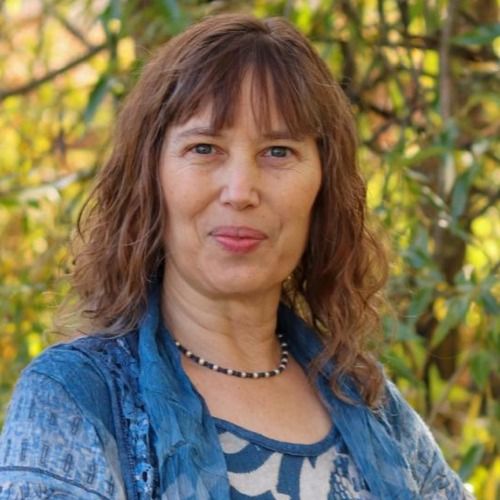
Mayra Clay is Mexican who has lived in the UK since 2010 with her amazing husband and her two fantastic boys. She has been a Meditation Teacher for The Bright Path Ishayas since 2011 and worked as a Teaching Assistant for several years at a local primary school near her home in London. Marc Krusin is a dedicated husband, father and designer based in London. He has been practicing and teaching The Bright Path Ishaya’s Ascension for over 25 years, during which time he has helped hundreds of people live happier, more fulfilling, and more present lives. Marc is always inspired by people who are committed to waking up. In addition to teaching Ascension, writing and designing, he loves mountains and skiing, sea and sailing, food, and great company.
Bringing Education Home is an educational podcast brought to you by Kristina and Herb Heagh-Avritt.
If you enjoy the show, we'd love for you to leave a rating or review on your favorite podcast app!
Please let your friends know they can listen for free on Apple Podcasts, Spotify or their preferred podcast app or online at Bringing Education Home.
Sponsored by Vibrant Family Education - creating Happy, Healthy and Successful kids
Follow us on these socials:
Facebook Group - The Family Learning Circle
Facebook Business Page: Vibrant Family Education
Support Bringing Education Home
Copyright 2026 Kristina & Herb Heagh-Avritt
This podcast is hosted by Captivate, try it yourself for free.
Transcript
Mark is a dedicated husband, father and designer based in London, and he has been practicing and teaching the Bright Path Ishaya's ascension for over 25 years, during which time he has helped hundreds of people live happier, more fulfilling and more present lives. Mark is always inspired by people who are committed to waking up.
In addition to teaching Ascension, writing and designing, he loves mountains and skiing, sea and sailing, food and great company. Welcome, Myra and Mark. It is a pleasure to have you here today. It is such a. Such an interesting thing to actually have two people to talk to.
Mayra Clay:Thank you. It's. It's a pleasure to be here. Thank you for inviting us.
Marc Krusin:Yeah, thanks. It's great to be here.
Kristina:Yeah, you are very welcome. And I, I'm excited about this because, like Herb just mentioned, you know, we often have only one person on the other side of the microphone.
And the fact that there's two of you, a husband, wife, team. The two of us, Husband, wife, team. I bet we will have a lot to talk about to help encourage families.
Just really look deeper and help them their families blossom and grow. So why this passion? We're going to start with Myra first and then we'll jump in with Mark. But why this passion?
Sharing about the Ishayas and the Bright Path.
Mayra Clay:Go ahead.
Kristina:Yeah.
Mayra Clay:The passion comes from my own experience about how meditation changed my life in so many ways. Fears, healing myself and then healing my relationships with my family, friends, and now especially help me with my relationship with our sons.
We have two sons, so it's been a big, big transformation in the sense of the quality of life, my quality of thinking and. Yeah, it helps in every sense of my. Of my life. Yeah.
Kristina:Excellent. Thank you, Mark, Go ahead.
Marc Krusin:Yeah, I. When I began to practice this meditation, I didn't think I needed anything. I thought I was already doing great. I thought it was already perfect.
But I kind of. Actually, Myra's mom kind of forced me to take this course. So I kind of ended up there basically.
And I just didn't stop practicing because I recognized that it was a valid teaching.
And I could see it almost immediately have transformations in my work life, the whole dynamic around me, the clarity with which I saw projects, my colleagues, my bosses, completely changed and at the same time, people were much more drawn to me and less afraid of me. So obviously that has repercussions. Right. You know, I was given projects that I wanted and got new clients and so on and so forth.
And, and then, yeah, as, as Mario was saying that that kind of then transformed in every area of my life. So every area just blossome.
Kristina:Absolutely love that because, you know, oftentimes we will do a course or a study or something and if we don't see the results right away, Right. It kind of falls off or we don't keep going. And then sometimes we get a little bit lax.
We say, oh, well, I've done this and it made improvement and now I'm going to stop.
So talk a little bit more about that transition from what you were seeing before with your family, what you're seeing now and why you keep practicing and why this is still such an important part to give us a little bit more myra about. Yeah. What happened within the family.
Mayra Clay:Yes. Wow, I love that question. Yes.
Well, I grew up with psychologies, doctors, courses of self courses because my dad was alcoholic and my mom worked a holic. So. And my mom was very worried about us. We are four siblings and she was worried about us growing with so many problems inside the house.
And so, yeah, so she used to take us to every single course that it was there. So seeing. Yeah, like I mentioned psychologists and everything, but it was not profound. It was not.
It was, it was okay for, for a few days, maybe you felt okay. All right. And actually I, I stopped looking for something at after university when I moved to, to Milan, to Italy, where we met.
My sister was living there and I met Mark through my sister and I moved there after university and, and after few months after my mom called me, say, look, I find this amazing teaching, you need to try it. And I was like, at that point, I say, I remember very clearly. I say to her on the phone, please don't tell me anything.
I don't want to hear anything about any course, meditation, anything, please. And I say to her, I'm living completely happy at the moment.
And I was lying to myself, not just to her, I was lying to myself because we were going through quite difficult times in her relationship. So it happens that after a few months I went back to visit my family on my own. And she surprised me with a course there.
She organized the course especially for me to attend. And in that moment I recognized something that I never, never experienced before. So I experienced so much peace, but with myself.
And they also, they Were talking, the teachers that, who taught this first course, they were talking only about their own experience. They were guiding this course during the weekend, but they were talking only about experience.
And that's what I find is so fascinating about this teaching. We don't have to believe. We don't have to. Yeah. To sit in a certain position to, to, to really practice this or, or do this meditation. So I, I, I.
Something inside me felt very resonate with my heart and, and after so many months, after I recognize also that I was God for something bigger outside me. I was very Catholic. I was, I grew up in, I went to the whole university to a Catholic schools. And I recognized that actually God is inside me.
This is where it comes from. So it feels, so, yeah, the connection, it feels immense and it's still. Yeah.
Herb:So Mark, did you want to answer that as well?
Marc Krusin:Yeah, sure. I, I saw what a difference presence made in our relationship.
First of all, the fact that we weren't, you know, there's, there's often a dynamic between people that are close to each other, that love each other, that, you know, tensions just naturally arise. And often you create a conflict because the other person not living up to your expectations or whatever.
And then you try and hurt and hurt the other person, you know, in a, in a psychological way somehow. And, and the whole dynamic is just toxic. In our case, it was toxic anyway.
But, but once we had both learned this meditation and so become a bit more present, the whole dynamic changed. You know, we were much more present. It wasn't about me being right or Myra criticizing me.
It was, it was now, it was about two people sitting in front of each other, one trying to understand the other and trying to understand how the dynamic or how the relationship could be improved. You know, who, what, what's your problem? I want to understand it. What can I do? What's your problem? What can I do? Do you see?
It's very, very different. And then that's what we found straight away. I think.
Herb: Maya's been teaching it since:But I've done a lot of meditations over my life.
I, I really like the yoga nidras, the body scan type of meditations, some of the transcendental where you just kind of disappear into yourself, the other. So lots of different kinds, but I haven't had the kind of experiences that you're talking about.
There are times where I get closer to God in them, but I haven't been able to stick with a particular modality because they don't. It changes over time. How is it that this is different and that you're seeing these things?
Because some of the stuff that you're talking about, they talk about how that's a potential, but it's not easy to get there. And it sounds like this is kind of the focus. Focus of the Ascension, of the Bright Path, or the Ascension. Can.
Can you describe some of the differences in what you guys are actually doing in, in the Bright Path and in. In your Ascension meditations?
Mayra Clay: e became qualified teacher in: d by qualified teachers since: Kristina:Yeah.
Mayra Clay:This teaching is. Is based in phrases that you repeat in there, basic in love, gratitude, compassion and appreciation.
So they are very, very simple techniques that, that take us completely to the part of the stillness where you can connect completely with your heart.
And actually it is a right bird because I remember when I was younger, I remember moments that I felt completely present, completely full in this moment. And then obviously something happens.
And this teaching for me, what is done than that is just to remember these moments, just completely be full of this. What is happening right now. Because, yeah, it's where, where we come from. But obviously we are. We are dealing with our thoughts. So.
Yeah, so these, these amazing techniques are really basic in, in this, these attitudes of love, compassion, gratitude and appreciation. Maybe you want to say something? Okay.
Kristina:Yeah.
Marc Krusin:I just say it's. I mean, I suppose, you know, you say what. What are we doing at the Bright Path?
It's really the focus has, is and has always been just one very simple thing. And that is the purity of this moment unobstructed by our filters and our thoughts.
Herb:Right.
Marc Krusin:Which are so, so obviously, like initially people that have never experienced meditation, you know, have a lot of thoughts and are constantly thinking. But, but, but as we become more presence in, in my experiences, the thoughts, the thought patterns get subtler and subtler.
And what, what we do is just what the teaching does is just moves beyond even the subtlest thoughts. So it brings us to a state of ever more present reality without really, you know, the techniques kind of do that automatically.
So they take us to a place of stillness.
And then because we've recognized that stillness and we continue to recognize it, then that stillness becomes more of a reality than the thoughts or the mental activity. That, that's I, I would say the difference.
Herb:So it just. For our parents out there and people who might become new at this or decided to do this and they're new.
Like at first you're probably going to fall asleep a lot. So it gets quiet, you get bored, you fall asleep a lot. Some of my meditations had a little bell at the start and at the end.
And if I fell asleep asleep, then the bell wouldn't wake me up. But there were some times where that bell, I would suddenly be back in the room and I would thought I was asleep, but the bell wouldn't wake me up.
So there is that point of disappearing where you think you're asleep and not asleep. So falling asleep in a meditation is a phase that you go through. It is absolutely normal. You are not doing it wrong.
Kristina:We'll see if Mark and Myra agree, but yes.
Herb:Yeah, well, I saw her laughing. I saw her laughing and was like, oh yeah, I fell asleep a lot. And then one time and then once you will not.
You will actually be conscious through that whole thing but think you were asleep because it goes through. So that is a slow awakening process that happens. Is that part of, of your process as well?
And I know I saw you laughing, so I probably already know the answer to that. What do you think about that?
Mayra Clay:I laugh because a lot of people who come to these courses, they feel guilty to fall asleep. That's why I laugh. But that's the thing because unfortunately we don't allow that body relax during our life or busy lives. So.
So with this teaching, I fell asleep the whole weekend when I was doing the first course because I didn't realize I was carrying so much stress. So if your body is asking you just to relax and you are allowing your body to fall asleep to feel hungry, whatever is there, it's okay.
Is nothing that you have to fight against. So this is very, very the teaching us allowing. Allowing what is there also for you.
Because when your mind relax started to relax, your body started to relax. So it started to a movement to. To the healing of your body and mind. So it's. Yeah, it's.
It's amazing that people fall asleep because at the end of the. So this course starts on Friday evening and it goes Saturday and Sunday at the last day on Sunday.
It's amazing the faces to see is sometimes we Want to take pictures of people who come to do this course?
Because on Friday we come so with so much stress and on Sunday, which is like our faces clearing because we allow to just to, to relax and, and allow everything, anything that comes to, to you during those days.
Kristina:Beautiful. Let's take this into a family level now. So did you do this? Did you teach this to the boys? Do you help other families teach this to their children?
Because we really want our children to know these skills earlier than later. So instead of fixing trauma at the end, what if we can release some or make it so they aren't traumatized through some of life events instead.
So talk about your family experience and.
Herb:How old were your boys when you started? Did you, did you have them before you started?
It's like, were they born into this or is this something that they didn't experience and suddenly mom and dad are doing it, now you guys have to do it too. So what was the dynamic in there?
Mayra Clay:Yeah, they were.
Marc Krusin:No, we started before they were born, but we never really, you know, kids aren't the problem.
Generally in my experience, Us adults who have gone through a lifetime of stress and formulating and, and so on, we're really much more of the problem.
So, so the fact, and I've seen this, you know, from a personal standpoint when, when our boys were born and as they were growing, I would find myself just repeating stuff that my parents had said.
Obviously, like we all recognize that as parents, but it was crystal clear to me that so much of what I was doing or my tendency to do was, was just literally a kind of, you know, it was a program that I was rerunning. And so, you know, when I saw that it was like, it was immediately, it was a wake up call, right? I'm going to come back here.
And only from here can the true action that's really necessary for my boys become, you know, come forward really only from here, not, not from ideas from past programming, from some idea of how being a parent should be or being how a dad should be or how kids should behave, you know?
Kristina:Right.
Herb:So as, as meditators and teachers, were you actually teaching your kids to meditate? Was that part of their routines or did you leave that up to them?
Mayra Clay:So we just going back a little bit so we decide to do train for, to become a teachers. We decide. When we had our first son, Isa, he, he's now 17 and he was six months, if I'm not wrong. Can't remember more or less. Yeah, six months.
So, so we went to Spain and grabbed him and did all the course with him. So that was an amazing experience. And then we continued to go to Spain because that was still the base of that teaching, what is our teacher there.
And then the second son came along, we grabbed him and go to Spain for at least one month.
Kristina:So.
Mayra Clay:Yeah. And now. Yeah, and Now Isaac is 17 and Emilio is nearly 14. And we know, we never told them to learn these techniques.
It was at one point when Isaac, the older son, was going through some stuff during primary when he, he didn't ask, but he was curious. And so we just gave one one of the techniques, I think it was love, I can't remember now what, what, what technique it was.
So we just say to him, if you want to do it, do it and do it very, very simple in a fun way when you remember when to do it. And so sometimes during the night he used to do, just to do it and relax him. But, but we never, never push him to do it, to do, to do meditation.
Because for us it's about our example. If we constantly being in this present and constantly open up ourselves and be the most honest person that we can be with them.
Not hiding, if we are feeling angry, not hiding, we're feeling sad, not hiding anything, just be completely open. They learn how to be like that also. They learn from you.
So for us it's very important that first we are completely grounded and then from there just take the dance with them. And there are moments that we still like the dance. You know, especially for me, sometimes I just bring patterns from my past, from my family and.
But I stop and I stop and I think, okay, what are we like here? How can I change it? And we talk a lot with them and I think to now it's really helping the balance in the family.
And like Mark mentioned before, if it's something that we have to say and if something that they don't want to hear, but we have to say it, it doesn't matter because it comes from a space of pure space, not from the ego, not from the mind. So that's the difference. They receive it completely different. So yeah, it's been a lot of fun experience with them in this.
And we still go for weekends or 10 days retreat and they come along, they still come along with us and have amazing time too.
Kristina:Yeah, that's one of the things that we love talking with families about is like, you know, you don't have to set up strict rules and routines. Right. Just by your example, just by sharing the benefits and how you're feeling different and things like that.
Like you said, kids get curious and they're like, okay, well what did you do there? Or how did that happen? Right.
And the fact that you take them traveling with you is just a whole nother complete bonus because they get to see different parts of the world and different ways of living and, and other people interact. And so when they have those experiences, it really sinks into them what the benefits and positive are of all of that. So, Mark, what about you?
Did you find a time where you saw the boys, like, maybe practicing or doing something? You're like, oh, hey, they're picking up on this, or they asked you a question or something about it?
Marc Krusin:Yeah, both of them have asked questions. I, the eldest one used it,.
Mayra Clay:You.
Marc Krusin:Know, in a, in a very, in a very humble way when he was sort of struggling a bit at school and he saw, he absolutely saw the benefits and I think it had a permanent effect on him because he's still very, very clear on, you know, he still see things very, very clearly. And, and the Angus one too, in certain moments as well. He, there were periods in which he was using the techniques too.
We only taught them like one technique, but just because they, they were curious.
Mayra Clay:Yeah.
Marc Krusin:And we talked like, as Maya was saying, we talked to them and from our experience what the difference is and, and they get it, but there can't be any pressure. But I, yeah, I, you know, to sort of answer your question, I see them both as being very, very clear and very present already.
So it's almost as if they're our teachers a lot of the time as well. To be honest. I, I would hope that we're, you know, humble enough to, to allow them to teach us as well.
And I think children have a lot to teach, to be honest.
Herb:Yeah, absolutely. Adults have a lot of baggage to let go if they don't learn presence early.
And so by modeling that for your kids and allowing them that presence early, they don't need as many tools to survive the stuff that we didn't know we needed.
Mayra Clay:Right, exactly. Totally, totally.
Kristina:So how else do you share this process, these techniques with the world? I believe, Myra, you have a book as well that you have, have created and share with children and families now.
Mayra Clay:Yes, yes.
When I was working in nursery because the, in, in the primary, the boys primary school, I started to, to volunteer in nursery and then after working and it came really, really strong. That feeling, though, oh my goodness, I, I wish I can help more here with the kids because I saw that some kids came with, with Stuff from home.
And I thought at the beginning it was something more because of being obviously nursery. The separations from family, new environment, new things. So I thought it was normal.
But after certain periods you just notice that, no, there's something here that is not quite right. So in our work finish when they go back home. So I thought, oh, my goodness, I would like to do something more here.
And the pink light is a very ancient technique that also I discovered with the Bright Path, with Ascension. And it helps me together with my meditation. It helps me to heal the relationship with my father. Especially with my father.
I was very angry towards my father. So I thought, oh, my goodness, I would love to do something like that for the kids that they understand the pink light in for. Yeah, for. For them.
For kids. So I came back and with idea and the boy in the pink light came and we did it. And it's a very, very simple technique, but very powerful. Yeah.
Just to make it fun for the kids. And actually it's not just for the kids. The tigers are for parents.
I say for kids, but yeah, it's mainly for parents in the sense that they can also connect with the children in a very beautiful way and they can do this together and they can be open about talking about feelings because I was not never allowed to talk about feelings when I was younger. So for me, it's so important for us that they. Kids, our sons open about their feelings. Sometimes they don't want to. Sometimes, yes.
Whenever they feel like. So, yeah. So it's the connection that you bring the boy, the pig, like, brings the connections with parents and children.
Kristina:Beautiful. Yeah. We talk so often that, you know, we talk at our kids instead of with our kids. It's like, you know what? Let's.
Let's actually get on that communication level. Now. That doesn't mean that your kids get to talk back to you or they get to, you know, tell you how to run the house or anything like that.
But just having those conversations, like maybe through a family meeting, maybe through a quiet time where you just kind of breathe and relax together. Maybe it's the walk in the park. Right.
Where you can just say, technology is off, things are put away, and we're just here to be present with each other for a little while. I think that's one of the reasons we love family vacations because we really try to focus in more.
But having those daily practices, or at least weekly practices is so very important for those families. Yeah.
Herb:And you know, something is we do have to give our parents a lot more Credit because we didn't know how to talk about feelings. You had to go through this before you could learn how to talk about feelings. Our parents didn't have the Internet. They didn't talk about feelings.
So, so many people say, oh, we weren't allowed to talk about feelings. And most of it is the parents didn't know either. They didn't know how to. So it wasn't that we weren't allowed.
It's just that there was no understanding of how to do that in my family. My family actually probably was.
Was a little better at it because they, they tried a little bit, but still it was, it was for when you were feeling sad. But it's like, don't pat yourself on the back, you'll break your arm. Don't talk about things that you're doing that you're having fun.
It's like, whether it was good or bad, it was like, you know, turn. Get back to this, to this quiet, blank state. And, and not. Don't raise the energy, either good or bad.
So, so that is like, we do have to kind of again, give our parents a little more credit than is like, oh, we weren't allowed to because they didn't know any more than we did.
And we're fighting tooth and nail to get this understanding both to ourselves and to our kids, which is part of why we do this, because it's like, you don't know what you don't know and to like, oh, man, my parents were awful because they didn't know this. It's like, yeah, let's give them a little more grace as well.
Mayra Clay:Absolutely. I.
Now, I appreciate so many things about my parents also, because you don't know what they went through, how they suffer when they were younger or the situation that they have to. To deal with. So it's so important to, to also see that part of, of your parents is, is. Is very nice to recognize that too.
And I, and I, I did with the time I did. And, and, and I'm very grateful for that. Yes.
Herb:And the second part of that is, is just because you don't know doesn't mean you shouldn't learn. So if you're hearing this and it's like, man, I don't talk about feelings. Let's figure out how to do that.
That's because that is important for being human. And it's, it's improved your life through the meditations that you were doing. And so the people at home, if you was like, oh, I don't need this.
This isn't about me. Well, then that makes it even more especially important for you, which is. But again, you also have. Still also have the option not to do it.
But consider this. It's like if you don't. If.
If what we're talking about is like, oh, no, no, that's an indication that that's probably a really good thing that you might actually want to take a look at.
Kristina:So, Mark, if you had a perfect routine kind of throughout the day to either kind of integrate meditation or breathing or. Or whatever, how often would you tap into the processes and things that you have?
When would be most critical to bring them forward throughout your day? Help our families understand how this integrates throughout family life?
Marc Krusin:Yeah, I would say any meditation practice, do it in the morning, wake up a little bit early before the house gets crazy, and just do it. Then it's because it changes the day. It makes such a difference. Then I would say another one or two times a day.
So ideally one other time when you're.
It could be when you get in from work or when you get in from school or whenever you have the opportunity, basically in the middle, like somewhere in the arc of the. The day, and then just at nighttime before you go to sleep. And that can be like sitting up in bed or whatever. But they're all like our practice.
For example, there are techniques that you can use with your eyes open too. So as you're going around your day, you can just use them, which helps bring a little bit more presence into any moment when you happen to remember.
Herb:Can you give us an example of one of these techniques that's real simple that might help bring presence back for a moment?
Marc Krusin:I can give an example, but I can't. We don't. We don't teach the tech. We only teach the techniques in person, face to face. But it's.
It's actually the same techniques that we use eyes closed. And you can just use any one of them with your eyes open at any point in the day when you remember.
And whereas eyes closed, you would use them, you know, more or less continually, not like a mantra, but you would use them continually for 20 minutes. Let's say eyes open, you can just think one, any moment when you remember, at any time. And you, you know, and that's just.
It's a great way to just bring a bit more presence back into the day, especially if you're interacting with people especially.
Herb:It sounds like concentrating on a mantra or a saying to bring presence back.
Marc Krusin:Yeah, it's a very simple thought, actually. It's just A very simple thought. It's not even a mantra.
It's just a very simple thought which could be as simple as I've got my hand in the air or I'm feeling hot. It's that level of simplicity.
But the phrases are constructed in such a way that they, they work very efficiently and they bring a kind of automatic presence about.
Herb:Yeah. So talking about the reality of the moment is, is very grounding.
It's like I can see that, I can touch that, I can feel that it brings you so into the body. Yeah, very much. Okay.
Kristina:Beautiful. Awesome. So how, if our families are interested in learning more, they want to find the book, etc.
How can they get a hold of you and how can they, you know, reach out and find out more about all of this?
Mayra Clay:Well, you can visit if you wish, the. My website, myraclade.com and if you want to know more about this teaching and meditation is to visit the website.
The bright path, you're going to find information there. And it's actually everywhere in the world. There are T shirts everywhere and it's. Yeah, it's amazing. Yeah.
Marc Krusin:Oh, and yeah, you can also like Message Myers, her website, if you want, you know, a little bit more exploration or whatever.
Mayra Clay:Absolutely.
Kristina:And of course, all of that is down in the show notes as well. So, you know, if you can't quite remember, go check it out. It's always there on the website and stuff for you. Exactly. Beautiful.
So is there something that we haven't talked about today that you're like, oh, I really want to make sure we mention this as we're having our discussions.
Marc Krusin:I think we've covered pretty much everything.
I mean, yeah, the, the thing that's wonderful for me is just presence within the family and the difference it makes, you know, when we're not in our heads trying to be right, prove a point, force or control someone to do something.
You know, presence kind of puts a stop to all that, but at the same time it allows, you know, if a stern word needs to be said, then, then it comes out as well. But it's not from a place of frustration or anger. It's because actually you're hurting that child or friend or sibling or whatever.
So I need to tell you to stop, for example, and I need to make sure you stop, but it's not from a place of anger.
Mayra Clay:And why are you doing that?
Marc Krusin:It's a very different, um. It's just a very different way of dealing with the situation. So I love. Yeah, I love that. And I think we've covered it, so that's cool.
Mayra Clay:Yeah, yeah.
Herb:So our little dog likes to sometimes chase this motorcycle that runs up and down the road. And we get angry with or we get stern with him because it's like, we don't want him to get hurt. He's a dog. He's gonna bark, he's gonna run.
That's not the problem. But when it's after motorcycles, like, he could get hurt is like, oh, stop. So that's when. So, yeah, I get it. It's like stern, but there's no.
It's not angry. It's. It's a concern kind of. So lovely way to put that. So thank you for sharing that.
Kristina:Yeah, beautiful. Well, thank you so much for being here today and audience.
I hope that you have, you know, picked up a few ideas, a few nuggets to take into your family and think about how can we become more present? What can we learn that will help us bring this connection to our families?
Myra, Mark has given us some wonderful examples, and I hope that you take this knowledge and bring it into your family and let's make sure that we are raising those happy, healthy and successful kids. So thank you, Myra and Mark, for being here.
Mayra Clay:Thank you so much, so much. That's lovely to be here.
Herb:And meditation has been one of the biggest game changers in my life. When stuff starts to fall apart, I go back to my meditations and that helps so much. I don't have a particular brand. I just like.
And then so sometimes it's like I have to shoot through the different kinds that I know to find something that works for me. But, but it is so very helpful. And more people need to hear about this and know about this.
And so I would also like to thank you for being out and spreading the word and sharing your message because again, more people need to hear about it. I need to hear about it because it reminds me to keep doing it when, when I get off because again, I'm not as consistent as I could be.
Brain damage is a, is a awful thing. Protect your head. But. And yeah, so thank you for so much for being here today.
And if, and if any of our listeners has a friend or family member write a comment in the thing and at them so that they get this message, it increases our, our reach because people are interacting with us and it gets your, your comment out to the person who wants to hear it. And so more people need to hear us help us spread this message, help us get Myra and Mark out there so more people can hear their medicines as well.
And so thank you for joining us.
Mayra Clay:Thank you so much.
Marc Krusin:So much.
Kristina:Bye for now, everybody. Thanks for being here with bringing education home and vibrant family education.
Herb:Bye for now.