Episode 9
S3EP9-Sarah McDavis-We Solved Reluctant Reading: Sneaky Science, Storytime Yoga & Octo the Investigator
We jump right into the big idea: play, movement and improv are the secret sauce Sarah uses to lure reluctant readers into actually wanting to read. First, we unpack practical tactics — one‑word‑at‑a‑time stories, yoga-play that has kids acting out characters, and the simple “paper window” trick so a kid only faces one line at a time — little hacks that reframe reading as fun instead of frustration. Then Sarah delights us with her chapter‑book world where an octopus investigator (yes, tentacles and all) solves mysteries, sneaks real animal science into stories, and gives kids a curious hook to push through the tough bits. We also get real about homeschool wins, eye checks, audiobooks, fan fiction, and the value of reading aloud or letting kids read short illustrated chunks until stamina builds. I loved how we weave the pedagogy with playful practice: meet the kid where they are, scaffold success, and slowly stretch their reading muscles. If you want approachable, evidence‑friendly ways to make stories sticky in your house, we serve up strategies, laughs, and a stack of resources that actually work.
A gift from our guest: Beyond the Page resource which are activities to inspire thinking outside the cover. https://sarahmcdavis.substack.com/
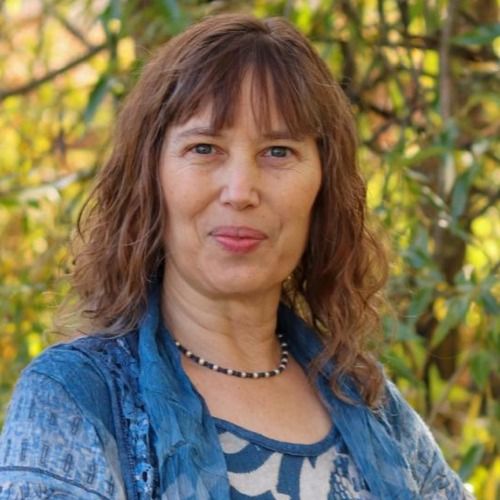
Sarah McDavis likes to do a lot of different things. Sometimes that causes problems, but usually it keeps her the right amount of busy. Sarah is a children’s author, illustrator, digital presence educator, book coach, kids yoga instructor, improv comedian, and founder of Wonder Creek Media and the Start Effect in Pittsburgh, PA. Her chapter book series for emerging readers set in a world where Finding Dory meets Zootopia and an octopus, Octo, P.I., solves mysteries
@sarahmcmarvelous on Instagram
Bringing Education Home is an educational podcast brought to you by Kristina and Herb Heagh-Avritt.
If you enjoy the show, we'd love for you to leave a rating or review on your favorite podcast app!
Please let your friends know they can listen for free on Apple Podcasts, Spotify or their preferred podcast app or online at Bringing Education Home.
Sponsored by Vibrant Family Education - creating Happy, Healthy and Successful kids
Follow us on these socials:
Facebook Group - The Family Learning Circle
Facebook Business Page: Vibrant Family Education
Support Bringing Education Home
Copyright 2026 Kristina & Herb Heagh-Avritt
This podcast is hosted by Captivate, try it yourself for free.
Transcript
I now have the pleasure of introducing Sarah McDavis.
Sarah likes to do a lot of different things.
Sometimes they cause problems, but usually it keeps her the right amount of busy.
Sarah is a children's author, illustrator, digital presence educator, book coach, kids yoga instructor, improv comedian, and founder of Wonder Creek Media and the Start Effect in Pittsburgh.
Her chapter book series for emerging readers is set in a world where finding Dory meets zootopia and an octopus octopi solves mysteries.
Welcome, Sarah.
It is a pleasure to have you here today.
Thank you so much for joining us.
Sarah McDavis:Thank you so much for having me.
I'm really excited to be here.
Kristina:I am super excited because as you were saying in your bio, you're into so many different things.
And then when we talked in the pre show about how you weave all of those together and still inspire parents and kids and everybody to read and things like that, it's just like, yes, let's have this conversation.
Welcome, welcome.
I'm so glad you're here.
Let's start with passion.
What.
What is kind of like the.
Through passion, what kind of hint to do it already, but with all these different things that you do?
Why?
Sarah McDavis:It's a great question and it's a big question.
So I, I love the power of play and the continuation of curiosity, and I love to just be able to kind of weave those together, whether it's for kids or adults.
Sometimes adults need to play even more than kids do.
And I really just kind of thrive in that space just trying to help other people be creative and inspire creativity through the things that I do.
Kristina:And that is so, so important that play, like you were saying.
And you know, especially when we get to like, our reluctant readers or our emerging readers when they don't quite have a handle on everything, but they want to, but then they get shy and then they're like, well, am I really connecting to all of this?
And one of the things that we talked about was that sometimes you help with your improv and your movement, help parents connect those.
Those readers and the book.
Can you talk about that a little bit?
Let's start with some really strong strategy and then we'll go back into weaving the rest of the story.
Yeah.
Sarah McDavis:So some of the things that I really enjoy putting together are those movement pieces with learning.
Because I think that there are a lot of times that we may be thinking that, nope, we just have to sit down and we have to lock in, as my kids say.
But sometimes it's helpful, and almost always helpful to get into your body doing something and one of the things that I love about improv is you're supposed to make mistakes.
You're supposed.
Like, the idea is to push yourself to just not have to think so hard and be all up in your own head about things, which is hard for people to get started with because we're so used to being in, like, in our own lane.
Kristina:Right.
Sarah McDavis:So improv really helps with that because you, for example, if you're doing what's called a one word at a time story, you only have to think of one word and that's it.
And it doesn't matter what the word is.
The story may or may not end up making sense, but the idea is to just start generating that creativity, little bit curiosity piece in your brain and make it spark.
Yeah.
Did that answer the question?
I feel like I got really excited.
Kristina:No, no, that absolutely answers the question because, you know, whenever we have those connections, we start creating those.
Yeah, the connections to the book.
I got excited there too.
And, you know, then the reader's like, oh, wait a minute, I'm gonna read about this.
And it was just related to that story, that thing that we just made up and had fun with then.
It really brings that love of learning and that want to find out more into it.
Sarah McDavis:Yeah, yeah, that's.
I know there's something else in there.
My.
I love doing yoga play, basically, that is interacting with characters in my book series.
So I will.
One thing that I love to do and do a lot because it's easy to do, either very short or very long.
I have a character, a place, and an item.
And so together, while we're doing this yoga story, we will have to go through some different animals.
I have them all on cards and place them upside down, so each kid gets to pick one.
And the ones with the stars are the ones we're looking for.
So we're also kind of getting into a little bit of that mystery and trying to figure things out aspect also, which is really fun while moving around and figuring things out.
Herb:So I was a very avid reader as a young person.
Kind of grew up in the middle of nowhere, so opened up the world to me.
So I don't understand reluctance to reading so much.
Sarah McDavis:How.
Herb:How do we get reluctant readers?
What is it about reading that some people just take to and some people don't care for it very much?
Sarah McDavis:Yeah.
Well, I think those of us that are kind of those voracious readers and were like readers as kids, it can be really difficult to remember how hard it was to actually learn to read in the first place, and that's where a lot of the reluctance begins, is after, is that step directly into reading on their own.
Because sometimes it may be that they're given a book that has too many words, it might be that they're given a book that's too hard for them.
And so they're just constantly met with, well, I can't do this.
Well, I can't do this.
And if you can't do something over and over, it's not fun and you don't want to keep doing it.
So there are different things that we can do to really help those kids that are just like, no, I not into it.
And giving them a space that they can succeed quickly and easily is a great place to start at.
Kristina:Yeah.
So you know parents, as you're working with your youngers or even your older, because every once in a while when a child is learning to read, they skip something, they miss something, and that one little block can be a big block in just a couple of years.
Right.
So if you have like maybe a third grader that's still doing that struggle is like, reading isn't very fluid, Reading isn't very fun.
You know, play with it like Sarah was talking about.
And then also try to just backpedal a little bit and see if you can find that missing chunk that once it slips in there, it really, really makes sense.
Herb:Or you could call somebody like Christina, who is an absolute expert in teaching reading and in a very short amount of time, adults, children, any age working through that, she can help pinpoint some of these things that you missed.
So I think a lot of times right now, less than half of the people graduating from high school can read at or above a sixth grade level.
And nationally, I think it's even less than half of a, a percent of adults that can read at or above a sixth grade level.
So they're missing something.
So if they, if they find that missing element, so in your play, in your yoga, before reading, how does that help them find those missing elements and suddenly learn to love reading?
Sarah McDavis:So one of the things that I try, really try to do is kind of, especially with reluctant readers, kind of meet them where they are and help them to understand that I understand that they, that this isn't currently something fun.
So let's start with something fun.
Let's start with something that you are interested in and then slowly introduce the book piece.
Because if we can get them hooked on a story just like anyone else, if we get hooked on a story, we want to know more and so that is my big goal, is to find a way to make the movement, fund the play and hook them into the story so that they want to push through that struggle that is going to be a struggle to learn more and to get that story for themselves.
Herb:I said, so hint for parents is read to your kids.
Because that's what did it for me.
My mom read to us a lot, and she would stop reading and say, go to bed.
And it'd be like, no, I want to.
So sometimes I would grab the book and I would pretend that I would be reading.
And then one day I realized I wasn't pretending anymore.
And so I could actually read before I got to school because I wanted mom not to finish.
I wanted to keep going, finishing the book.
And then sometimes she would read a book over like, oh, yeah, this is the part.
And I'd be pretending to read.
Then I was like, wait a minute, I'm not.
I'm actually reading this.
So for me, reading wasn't a struggle.
Learning English and all of that stuff, after I learned to read that, that wasn't fun.
All of the.
All the pieces and the dangling participles and the.
Yeah.
All the weird.
Sarah McDavis:Yeah, yeah.
Herb:But read to your kids.
It's amazing.
And then stop at the good parts and make them want more.
Sarah McDavis:Yeah.
One thing that I also recommend doing is taking, like, taking turns with pages and letting them have the page beginning with the page that has the illustration on it.
For example, like in chapter books, there's a lot of different places to start, but if you start with one that has an illustration every couple pages and you're only asking them to read this small part to you while you are reading the longer part, that can also kind of.
You're.
They're getting in that practice, but they're also getting really hooked into what's happening.
Kristina:Yeah.
And one of the other things we kind of talked about is that a lot of parents think that once they become a reader, you don't need to read to them anymore.
But actually, they love it when you sit down and read.
I mean, even to my boys, teenage years, there were times, some summers and stuff, that we would sit and read out loud as a family and talk about the book and things like that.
Herb:So we took a long road trip.
I had a sabbatical.
Nine and a half weeks.
We were on the road for nine and a half weeks.
We drove from Oregon to Southern California to Florida to New York and then back across the northern 35 states.
Sometimes we had places to get.
And I was driving And I would get tired, and Christina would read.
She read books to the boys when she was re.
If she could read for 12 hours, I could read 12.
I could drive for 12 hours.
As soon as she stopped reading, we had to stop.
I couldn't drive no more.
So Even as a 40, 50, I love listening to my wife read out loud.
That's why people listen to books on tape.
It's like.
Kristina:Exactly.
Sarah McDavis:Yeah.
I just heard this morning that audiobooks are now outpacing ebooks.
So people are getting more into audiobooks than ebooks, which I thought was a really fascinating piece, but I. I mean, sorry, that was.
I get that a lot.
My kids are like a writer.
How come you don't know words?
I'm like, because I have too many to choose from.
Herb:And it's like multiple choice.
And I got the.
Got.
It's like, well, let's do those three.
Sarah McDavis:Yeah.
It's like, what was I. Yeah.
Oh, well, now that left me.
So if it comes back, I'll let you know.
Herb:Those of us with many words, right?
Kristina:Yeah.
Yes.
Sarah McDavis:Yeah.
Kristina:Well, talk to us a little bit about your experience, because I'm.
Of course I know, because I talk to you.
But where did some of this come from?
And how did it work with your kids when you were helping your kids learn?
Sarah McDavis:Yeah.
So I started thinking about writing kids books as a career when my kids were really tiny, because I was reading a lot of them already, and I was like, oh, I have.
I have ideas.
I have thoughts.
And so some of them we would work on together.
Some of them I would.
Would be things I, like, would play around with while I was telling.
Getting them to bed at night or at.
For nap times.
And it just kind of grew from that space.
And what was really wonderful is that as they continued to grow, they became more involved in their own stories and were able to think about different pieces and start writing their own things.
But one thing that was a struggle for my youngest is he had a hard time, a very hard time with a full page of words.
Like, he would just look at it and just be like, nope, not into it.
Not having any of it.
And so our fate.
One of our favorite things to do was that reading page for page.
But we also would take two pieces of construction paper so that he could only see one line at a time and created just a little window.
And there were some days that we had to shorten it to just every word, and we would just move the window along, and it really helped him be able to figure out how to read on his own.
And now he is almost 13.
Oh, dear.
And a voracious reader.
So.
Yeah.
Herb:And so did.
Was there anything going on with his eyes?
Did you happen to, through this time, get his eyes checked?
Because there's a lot of times some people's, oh, it's dyslexic or word things, but sometimes it's like maybe the.
Your eyes aren't focusing.
My.
My up and down letters focus different than my.
Right.
So my eyes focus on things going this way at a different depth.
So it's like if there's an up and a down, it's like weird stuff's happening.
Sarah McDavis:Right.
And it just looks blurry and it.
Kristina:Yeah.
Sarah McDavis:When he.
We had been going to the eye doctor for years and he never said anything until about two years ago when the eye doctor came out and was like, well, his eyes are slightly.
They're not like straight, so they're just slightly off.
So everything has been slightly off for him his whole life.
Yeah.
I was like, oh, okay, great.
I'm.
I'm glad you finally told someone.
And yeah, so now he has glasses that fix that.
So.
Which was very helpful.
Kristina:It's just one of the things that, you know, as an experienced reading teacher, I was able to ask parents.
Oftentimes it's like, have you had your eyes, your child's eyes checked?
And they always go, oh, yeah, they're a regular visit.
It's like, no, no, no, no, no.
We need to go to a eye doctor that really understands the eyes and how they line up and shift and focus and things like that.
Right.
So, you know, even if they're checked out at their general practitioner as fine and they're still having troubles, check into it a little bit deeper.
Because every once in a while.
Yeah.
And the kids, because that's all they've.
Herb:Ever lived with and children should learn, should love to read.
Children, no matter what personality type, if they're into numbers and they're boring as hell, they're going to love boring as hell books.
You know, if they're into horses, they're gonna love if.
If they're into the Romans, which boys are into Romans, eventually at all points they'll read books on.
Sarah McDavis:So it's like, yeah, there's books for everyone, for everything, for.
And especially in the chapter book space right now.
That is really a.
So many more things that are available than even just a generation ago, Even just a decade ago.
Not even a full generation.
There's one thing that I really like is the novelization of video games and movies.
So if you have someone, if you have a child who is really into Minecraft, there are a couple of different series of Minecraft books that you can get into if you get online.
Herb:There's stuff called fan fiction.
My son reads fan fictions, so some of his favorite cartoons, they have like entire worlds built and the stories generated, like so much more so than just what.
Yeah, it's amazing what they're doing with band and kids get into it.
That's what I'm saying.
It should love to read.
And where I was going with that is if your child doesn't, it's like, look for the reason, are they missing something in, in their reading that that could fix that?
Is there an I thing?
Is there an ear thing?
You know, dyslexia?
So many things that can interrupt that enjoyment.
But once that is looked at and moved and the kids get to actually live in a world of a book, then they'll be hooked.
Kristina:Yeah.
Sarah McDavis:And one thing that I've heard from parents and know from my own kids is the, the digital space has definitely impacted the reading journey for kids because so young they're getting used to really fast content and fat and that the, the brain just loves those fast things.
And so sometimes if you're still trying to get your kid into reading and you're.
Or you're giving them these books that they're of stuff they're interested in, you're starting with things that are.
Have maybe a lot more pictures.
Graphic novels are fantastic and.
But if there's still that, like, nah, I'd rather just go over here and do this.
One of my recommendations is to start with shorter things because.
And then slowly get to longer stories because it's going to just like any other muscle, it takes the brain a while to be like, oh yeah, I do actually really like things that are.
Take a little bit of time to get through.
Kristina:So, yeah, I love that.
And you have a wonderful series that you're also sharing with us today.
How did you get into this series?
What was the, the creative moment?
What was it that brought octopi to life?
Herb:Octopi.
Octopi.
Kristina:I said wrong.
Herb:The octopus is an investigator.
It's.
That's not an octopi.
It's a.
Sarah McDavis:Yes, yes, she is.
She solves all the cases.
So I.
It was actually probably like almost 10 years ago now.
I, I love octopuses and I think they're fascinating and creative and just, they love to play.
They're really into trying to figure things out.
Herb:And good thing they only live for a couple of years.
Kristina:Yep.
Sarah McDavis:Yeah, I think they would take over if they lived longer, really.
But so I've just always been fascinated and I was kind of just waiting for the muse to tell me, like, what is the story that this octopus is going to have?
And I can't pinpoint exactly what.
What it was that kind of was like, oh, oh, that's the thing.
But I do remember watching a video of a veined or coconut octopus that picks up coconut shells and either will hide itself in them or.
Or sometimes will encase itself in two.
So it's like inside the coconut because they live in a space that's more sandy and so they don't have crevices, so they just carry things with them when they go out to get lunch.
And so seeing that, I was like, oh, that's how they move.
And once I figured out how she was getting around the whole place, then all the pieces started falling into place.
Kristina:That's amazing.
Sarah McDavis:Oh, my gosh.
Kristina:I had never heard of that kind of octopus because I know of the ones that hide in, like, the coral reef and things like that because they have all the little nooks and crannies and things like that.
Herb:I watch lots of shows.
I've seen this.
Sometimes it's like six of the legs will pick up the shells and two of the legs will actually start running on the bottom.
You'll see a coconut shell running across the sand with two octopus legs.
Propell.
Yeah, it's.
It's, it's world.
It's a fascinating world.
Sarah McDavis:Yep.
Herb:It should read because then they find out all crazy stuff.
Kristina:Yeah.
Sarah McDavis:Yeah.
That's one of the things I love to do in my books.
I call it sneaky science because I love to try and put in those little pieces about true facts about these animals that I'm talking about there.
In the second book, there's a point where Octo goes into a.
Like a nook in a tree, and she talks about how she can taste the tree because octopuses can taste with their arms.
So she's filling the space and telling you what it tastes like to her.
And I love throwing little bits and things like that in.
Kristina:And, you know, it's those creative, amazing things that people pick up as they're reading and then they kind of get curious like, oh, was that just part of the story?
Or is that something real?
And then they dig a little bit deeper and it's like, oh, that is real.
And then they can do these other really, really cool things as well.
Sarah McDavis:Yeah, yeah, that's my hope.
Kristina:So what kinds of things does Octopi.
Octopi solve, Right?
Yeah.
Sarah McDavis:So she different.
Herb:All.
Sarah McDavis:Okay, so she lives in a place called the Zaranar, which is the Zoological and Aquatic Research and Rehabilitation center.
So kind of like the center in Finding Dory.
So it's not all underwater, but there's all different kinds of animals from all over the place.
And so.
So in the first book, she's helping a goose find an egg that this goose has lost.
And there's some little twists and turns in there.
And in the second one, they've heard a ghost.
They're all the other animals are positive it's a ghost.
Spoiler, it's not a ghost.
Sorry.
But there's a pirate parrot in that one who's looking for their treasure that she has to help them find.
And so I really like things that are.
You're.
You're figuring out something that's not.
Doesn't necessarily have a culprit.
That's really what I want with these books because I think a lot of mysteries for kids, we do have a.
Like, okay, well, here's the, like the Scooby Doo kind of take off the.
Herb:Mask Old Man Winters.
It's Old Man Winters.
Sarah McDavis:Yes.
So I, I wanted something that.
That helps kids get curious about those things that happen every day and things that may not just have a. Oh, well, that person that.
Okay, now I get it.
Did it.
Like, there's different things and weaving in and there's.
It's not just black and white.
There's all that gray space in between that is beautiful.
Kristina:And, you know, one of the things you said is, like, you'd like to sneak in a few facts here and there.
And that's one of the things that we talk about often when we're talking about homeschool.
It's like you don't have to sit down at the table and do all of your academics.
Your kids are actually learning with you every time you're out doing things.
And as a parent, if you're tuned in, you get to sneak in all this math when you're in the kitchen,.
Sarah McDavis:All these other things.
Kristina:And yeah, you told me that you actually homeschooled your kiddos for quite a while now.
Is that while you were developing the books or after or before.
Tell us about that.
Sarah McDavis:Yeah, it was kind of all to all together.
So my kids started in brick and mortar, but then once we all got into our own homes and stayed there for many, many days, I was kind of done with all of the things that they were trying to Figure out which was very hard.
And they did a great job with what they had.
But I. I wanted something to kind of calm our family down and I had the space and the energy to be able to do that.
So we.
I had my.
I have four kids who at the time, my oldest was in sixth grade.
So we started just doing things around the house.
I love weird science experiments.
Anything you can make explode.
Fantastic.
I.
Herb:We were very bad.
Sarah McDavis:Yeah.
Herb:If you have kids, if you have boys, it smells bad.
They'll.
They'll be down with that too.
Kristina:Yeah.
Sarah McDavis:The.
We were very lucky to at the time live with a.
With a lot of backyard space.
So we did a lot of things in nature.
Looking at different life cycles of things or I.
It's amazing that when you as the adult allow yourself to.
To expand your definition of learning and education that everything.
You can start to see how they get everything.
And one thing that I found very interesting is when my daughter started high school, she wants to be in robotics and engineering.
And I know that is not a skill set that I possess.
So she started at a cyber school and has loved it.
But the first year, first couple months, she was a little nervous because she was like, we're doing like very tradition, much more traditional schooling style, and we were not traditional.
And she said that in her first couple of months, she was like, oh, no.
I actually like, know a lot of stuff.
I was like, yes, because you were learning.
Because we were playing.
And it actually makes really good connections.
And she.
One of my proud mom moments is she.
She took a college class in English and the English professor, while she's still in high school was using her papers as examples to the rest of the class.
So I was like, okay, that's one.
Herb:Of the things that we.
Again, less than half of graduating seniors can read at or above a sixth grade level.
So how many of those can write at or above a sixth grade level if they can't read there?
And no, reading and writing aren't the same thing, but.
Sarah McDavis:Yeah, yeah, but they're definitely connected.
Actually, when you said fan fiction, that's one of my favorite ways to get kids into it.
It's like, well, you.
You already know these characters.
You don't have to make the decisions about where they are or who they are.
You just have to get to decide what they get to do.
And kids like to be able to tell adults what to do.
So anytime they're like, okay, I'm making Spider man do this and Iron man is actually gonna live through it this time or whatever, so when you first.
Herb:Took your kids out of school, you said your oldest was in sixth grade.
Yes.
How.
How did it.
Was it like, oh, we're taking them out of school.
You pulled them out.
You said you started doing stuff at home.
What was it like?
And what was the decisions?
It's like, no, we're not going actually to the brick and mortar.
Kristina:We're not going to go back.
Because.
Herb:And then.
And then you said, your daughter's back in high school.
So it's like, obviously once you take them out, you can't ever let him go back.
So you.
How was the transition?
How.
And again, so many times, even if you just take your child out for one or two years and then you put them back in school, their.
Their relationship with education is so much different.
Again, it's like, how come these kids.
Your daughter's probably not always like, hey, I know a lot of stuff.
It's like, how come these kids don't.
Kristina:Yeah.
Herb:So there's, you know, not to be disparaging, but it's like these kids aren't trying to learn.
They don't know what they're talking about.
They're just here wasting time.
I'm trying to something done because I want to do this.
So let's talk about that through.
Taking them out of school, moving them back.
What you learned through that.
Sarah McDavis:Yeah.
One of the things that I really learned throughout our homeschooling process is they.
The kids were allowed to figure out how they learned best, what made sense for them, and how to start to figure out how their own brain works within the confines of all the things.
And I think that is one of the most things I think I'm proud of actually, is because they.
They can now go know whatever they want to know in a way that's actually going to help them figure it out and learn through things.
And because in a.
In a bigger school setting, there's just not the time for that individual exploration.
And homeschooling really allows for you to step back, take time, take space, and learn about yourself.
Not only you as the parent, but also you as the kid can figure out what works for you and what doesn't.
And if there's something that doesn't, how can you tweak it and twist it so that it does start to work for you?
So I felt a lot like, like octo, really like trying to figure out what it is that's going to work.
What is.
We're going to try all the things, and if something works a little bit, maybe we have to tweak it.
And I think that was something that really helped us move through the whole process.
Herb:Yeah, there's very little tweaking that's capable in a public school system, in a classroom with 20 or 30 kids in it.
Sarah McDavis:Yeah.
Yeah.
Herb:And so then.
And then again when they, when it was just your.
See, I mean, I would admit.
Oh, yeah, just your daughter go back to public.
Kristina:All of them.
Herb:Or did several.
What?
What?
Yeah.
How did those dynamics work out?
Did your daughter's like, oh man, this is great.
You should come this super easy compared to what mom makes us do.
Sarah McDavis:So actually my oldest wanted to get into theater.
And so there is a local arts charter school that he wanted to go to.
So he started in high school, actually going to an in person school so he could put on plays and musicals and all the things.
And that worked very well for him.
He did it.
He thrived in that kind of environment.
And then my younger three, when my daughter went to high school, I asked them, do you want to keep doing how we've been doing it, or would you also like to try this?
Like, it's not.
What would you like to do?
And both of my younger two were like, yeah, well, we'll try it out.
We'll see.
We'll see what it is.
And they had similar experiences with like, oh, I do know stuff.
My, my second youngest, though, had a very, like, this is, this is very structured and why do I have to write the same thing four times in four different ways?
And so we had a lot of talk about what it means to be educated in a bigger classroom setting and how things are different.
And I think that was really helpful for him just to understand how that part of the system worked, which isn't a conversation we would have had had they stayed in public school.
Herb:So, so did they.
Did after that, did he stay.
Did they go in and out?
Sarah McDavis:Yeah, he did.
Yep.
They are all my.
Yeah, they're all still there.
There have been a, a couple points where they were like, you know what?
I think I, I think I want to go back to in person school.
And I was like, okay, well, you're gonna have to wake up at this time, be ready to go, and then sit at your desk for a few hours.
And he was like, the desk.
Kristina:I don't.
Sarah McDavis:He sits like curled up in a chair.
Like, the kid is not sitting at a desk.
Yeah.
So, yeah, they definitely love the, the freedom of cyber schooling.
Being able to take their.
Do their class, laying on the floor, jumping on the ball, like, whatever it is they're able to be able to.
Again, with that.
Moving bodies and helping that grease the wheels has been really helpful for us.
Kristina:So are any of your kids also authors?
Have they been seeing you go through the process and developing and things like that?
Have they kind of followed the role model or they're like, no, that's a mom thing.
We're gonna do our other things.
Talk about that a little bit.
Sarah McDavis:The.
My.
Yeah, they all do a little bit of writing on their own.
Actually.
My daughter and I are working on a book right now together.
We're kind of taking turns going back and forth with different points of view, which has been really fun to try and figure out another improv.
Herb:Yes.
Yes.
Sarah McDavis:Yeah, exactly.
Yeah, very much.
We're like, oh, this is good.
No, yeah, it's really fun.
And they are.
My youngest loves to tell stories.
He doesn't as much love to write them, but he loves to tell them about everything.
And my.
One of my middles has some book that he started that he is not yet ready to tell anyone anything about, so.
Kristina:Okay, well, hopefully someday it will come to life.
And if not, that's okay.
You still know that he's writing and creating stories and doing all of that.
Herb:So have you taken your.
Your son that likes to tell stories to an improv yet?
How does.
Kristina:Oh, yes.
Sarah McDavis:Yeah, we just.
Here in Pittsburgh, we had Picklesburg last month, and it is a very pickle themed festival.
Everything is pickled.
And we had a family pickle show where my youngest was able to be one of the volunteers, and he hammed it up.
I wasn't in the scene that they were all doing, but I was backstage talking to one of the hosts, and I was like, that's.
That one's mine.
And he goes, yeah, that tracks.
Kristina:Yeah, totally makes sense.
Herb:Yeah, because, you know, those homeschooled ones are the weird ones.
Sarah McDavis:Yep.
Lean into it.
I say, you know, you're gonna.
We definitely, I think, are happier when we embrace our weird.
Kristina:Yeah, exactly.
Herb:Because, you know, they're not taught to be quiet and sit in a box and be in a row.
So, yeah, so it's like, oh, I get to do this and be out front.
Oh, let's do that.
Kristina:Yep.
Herb:So how did your teachers like having your kids back in school after being homeschooled?
Because one of the things that we talk about is parents talk about how the teachers really appreciate the homeschool kids coming back because they bring a different learning environment into the classroom that other kids can see.
Did you get any of that?
Sarah McDavis:I did A little bit, yeah.
In the beginning.
The place, though, that I've heard that the most is in my daughter's robotics team.
They.
I've heard so many times how different she is and her.
The other homeschoolers on her team are to everyone else when they come to, to do the robotics, they're there to do robotics.
They're not talking about four things that happened last week or trying to get through something else.
They get to be focused on what it is they want to be focused on, which is really exciting and fun for them.
But, yeah, I've definitely heard that from a lot of adults that have worked with my kids.
Kristina:And one of the things we also talk about is family connection.
Right.
Do you feel like your family's like, maybe grown a little bit closer together through all of this?
I mean, I.
There's always ups and down days, but talk about that a little bit because, you know, sometimes we.
We wonder if we can really stand having our kids around 24, 7.
Yes.
Sarah McDavis:Yeah.
Yeah.
I. I actually think that reading has helped us have that cohesiveness and feel closer together.
Sharing a story together.
We read through all of the one and only Ivan series was like our lunch.
Every launch, we would all sit and we would read.
And that, I think, really helped us to have something that anchored what.
Where we were and what we were doing and something that was shared between all of us.
And like you were saying, being able to talk about it and having shared, shared vocabulary on all of that is.
Has been one of the best gifts that I didn't expect.
Kristina:That's amazing, Sarah.
I have absolutely loved this conversation.
Help our audience get to know you a little bit better where if they can, they find you if they have questions working and they get the books, tell us all the things.
It's all down the show notes too, but we loved saying it out loud.
Sarah McDavis:Yeah.
You can find out everything about.
About me and my books@sarah mcdavis.com I am also on Instagram at Sarah McMarvelous.
So those are the best.
The two best ways to find me and get in touch and ask questions, learn things, whatever you, Whatever you like to do.
Kristina:Do you have any events coming up, any book signings or new releases or anything like that coming up in the I.
Sarah McDavis:So I've just recently, within the last year or so, I've started a substack and I'm doing little, actually little books, books, little tiny books like this that are all made out of one sheet of paper.
So this is just quick little, very simple little stories.
And I'm.
Once we start back up with kind of a more scheduled day because our summer's been bonkers, I'm hoping to get at least one of those out every month.
So you have something small, easy, you can print one page out and you just have little books to play and have fun with.
Kristina:Beautiful.
And that is in the show notes as well.
So you get to go find all of what Sarah is up to.
Thank you so very, very much.
Herb:So thank you for being here today.
Sarah, it has been a pleasure talking to you.
I like the stories that you told.
I really appreciate the way that you described everything.
And, you know, so many people out here just talk about the problems and billions of people are just living and you are out here making a difference.
You're writing books, you're changing people's lives, and that makes you a rare person.
You went out and you fought your dragon.
You bring back the gold and you're sharing it.
And that is the hero's journey.
So thank you for being a hero.
Thank you for doing stuff that actually makes the world a better place instead of just talking about it.
Sarah McDavis:Thank you.
I really appreciate that.
I have had an absolute blast talking with you both.
Thank you so much for having me.
Kristina:You are very, very welcome.
And audience, think about this.
If you can bring some of the improv, some of the fun, some of the quirkiness, and even some of those books that Sarah's like writing and sharing with you to your family and just bring that joy of learning, that love of reading into your household.
Think about what else you could discover together.
So take it.
Take the gold nuggets that have been shared today.
Put them in place, share them with other people.
And please also like and share our show because the more we share this, the more Sarah's message gets out there, our message and other families get to level up and keep moving forward in this happy, healthy, and successful lifestyle.
So until next time, thank you so much for being with us and bye for now.
Sarah McDavis:Thanks, everybody.