Episode 17
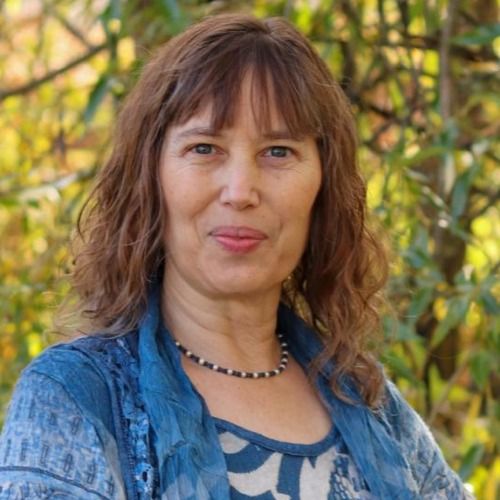
S3EP17-Stephanie Whitford-Stephanie's Life on Ritalin — Addiction, Withdrawal & How I Rebuilt My Brain
What happens when a child grows up on Ritalin, and what does it take to find your way back? Stephanie lived that story. She was medicated from a young age and believes it dulled her natural emotional development and left her with both a psychological and a physical dependence. Today she’s a self-described “wellness adventurist” who guides leaders back to clarity, regulation, and purpose. In this conversation, we talk honestly about the tradeoffs between a quick pharmaceutical fix and the slower work of healing from the inside out. Stephanie shares practical, non-pharmaceutical tools families can start using right away. These include tyrosine-rich foods like turkey, chicken, eggs, and pumpkin seeds; fish oil and targeted supplements when diet falls short; and cutting back on refined sugar and artificial dyes. She also walks through a simple practice of ten slow belly breaths that teaches kids to calm their own nervous systems, and Kristina shares how a classroom bell can become a cue to pause and breathe. We also look at the bigger picture: early school starts, packed schedules, and constant stimulation that push kids into a box and make a pill feel like the only answer. For families considering stepping down from medication, Stephanie is candid that symptoms can feel stronger for a while before they ease, and that patience and small, steady changes matter more than any big overhaul. We also talk about why any medication changes should happen with the support of your child’s doctor.
A gift from our guest - Nervous system reset mediation: www.sunkissedfire.com
The mediation is located near the bottom of the page.
Bringing Education Home is an educational podcast brought to you by Kristina and Herb Heagh-Avritt.
If you enjoy the show, we'd love for you to leave a rating or review on your favorite podcast app!
Please let your friends know they can listen for free on Apple Podcasts, Spotify or their preferred podcast app or online at Bringing Education Home.
Sponsored by Vibrant Family Education - creating Happy, Healthy and Successful kids
Follow us on these socials:
Facebook Group - The Family Learning Circle
Facebook Business Page: Vibrant Family Education
Support Bringing Education Home
Copyright 2026 Kristina & Herb Heagh-Avritt
This podcast is hosted by Captivate, try it yourself for free.
Transcript
I now have the pleasure of introducing Stephanie Whitford.
Stephanie, known as the Wellness adventurist, is a holistic consultant and empowerment expert.
She is certified as an international Master's Addictions Coach, Ayurvedic Health Counselor, Advanced Breathwork and Somatic Healing practitioner, personal trainer and corrective exercise specialist, yoga and meditation instructor, sound healer and leader of worldwide transformational wellness adventures.
Specializing in therapy, therapeutic, nutrition, metabolic health recovery and healing lifestyle practices, Stephanie helps business leaders, high performing executives and change agents elevate their performance, expand their impact and cultivate freedom, peace, purpose and sustainable success in a fast paced world.
I missed a little bit of the punctuation in that, but it is amazing.
Your bio.
Thank you so much for joining us here today and we're really looking forward to this conversation.
Stephanie Whitford:I'm really glad to be here with you.
Thank you for having me today.
Kristina:I love your bio.
It just shows your passion and your, you know, drive for making sure that things are good for many, many people in lots and lots of different ways.
And so that's actually why we have you on the show today is that you want to recount and tell us a little bit about your experiences growing up and how some of the things that you and your parents did, what happened with you growing up, has impacted your life now.
And so this is one of those very, very important discussions that whenever we talk about it, it is our experiences and things that we really want people to be aware of.
And we have to give the medical disclaimer on this one.
If you have a medical condition, if you have something that you and your child need to check out, or please check in with your practitioners and also take our experiences, take what we're going to talk about today into consideration when you're making those big choices for your child.
Herb:Yes, we are not medical professions and we have our own biases around a lot of that.
So these are our opinions.
And again, do your own research, follow your own hearts.
Kristina:So Stephanie, today we're talking about you as a child and the passion that kind of helped you get where you are today to tell us a little bit more about what was like the pivot point of, oh, I want to move into this more holistic space.
I want to be in the other area instead of maybe the traditional way of doing things.
Stephanie Whitford:Yeah.
So for me, it came through my own personal experience and my journey really to start with, of going through being heavily medicated as a child on Ritalin from a very young age and then growing up with that, experiencing effects that it had on me and all of the other things that came from that.
The, the, the problems.
There was also great stuff that came from it.
The, the ways that it had an impact that was difficult to deal with, and how it also kept seeming to feed me into the medical system of, if this isn't working, then take another pill for this, and if that doesn't work, then add on another one for that.
And then, you know, then it just is like a whole cocktail of things.
And inside, I was not doing so well with all these things that were supposed to me be helping me to do well.
And I just knew that there's.
There has to be another way for me.
And so that's what brought me into the holistic healing and taking a much more natural approach to things.
And, and just when I began to see how beneficial they were and how much they were changing my lives, I was just.
You know, I think we all have gone through an experience where something profoundly changes us, and we just want to share it, you know, and.
And so that's how it really became my life purpose.
The me search, the me.
Like, the research in me became what.
What I started sharing with others.
That embodied wisdom.
Kristina:Yeah.
Herb:So I'm in a couple of different healing groups, and one of them is called being true to you.
And it's really interesting.
There are so many parents that are like, my child's not doing what I want them to do, so we're going to do this so that you can fix my kids so that they act how I want them to.
And so one of the things that we really kind of try and stress is like, you need to get to know your children because your children's behaviors might not be something wrong with them.
And would you like to expand on that and how that worked with you?
Stephanie Whitford:Yeah.
So my personal experience really rings true to what you're saying.
So every time that I would take my Ritalin, I essentially was internalizing a belief system of, take this pill, stop being yourself, and if you ever start feeling like yourself again, take another pill.
And if you ever behave like your natural self, you need to take another pill.
And if that isn't working, then we're going to need to go back to the doctor and get a higher dose.
And so I deeply internalized, you know, stop being myself, perform in ways that other people want.
There would.
There were many times where, you know, I'd be on the medication and heavily medicated, and the feedback from the teachers and other people would be that she behaves really well, she's quiet in class, she's getting along with the other students and you know, she's not causing a fuss.
And, and so it was, it was really rewarded.
And I can even remember there were some times where, you know, I would accidentally take an extra dose.
I mean, if you've ever been on medication, there's sometimes where like you take it and then you forget you did and so then you do it again.
So like even, even more heavily medicated.
And then I would get the feedback of, wow, Stephanie, you are so focused today.
You're doing so well today.
And I' my gosh, you guys have like any idea, like you don't know, but it, but it didn't matter as a kid.
You're like, oh good.
I'm like, I'm being the good girl.
I'm doing what I'm supposed to do.
And so the, the feedback and the lessons that get internalized, at least for me, speaking for myself, is that, you know, performing the way other people want, want you to do will get you love, will get you acceptance, it will get you taken care of essentially.
It will get you noticed.
And that when that isn't happening, you know, things are not, not rewarded.
You know, it's especially the exuberance as a young child, the curiosity, the questions, the way that we want to learn and explore.
It can be, children can be very intense.
Children can be overwhelming.
And if it.
I fully understand that can be really challenging for parents when, when the child is just such a sponge and wants to learn about everything and hasn't yet learned how to regulate themselves.
And so, you know, their emotions are just naturally expressing in the big ways that children naturally express themselves.
And if parents aren't in a supported environment or if parents haven't learned how to self regulate or how to express their emotions or you know, mature in their emotional maturity, it can be incredibly challenging for when, when the child begins to express their stuff.
Herb:So I see this as one of the problems with our current education system as well, is because they want cookie cutter kids.
They want people sitting in rows lined up and if you show any individuality outside of that, then, oh, she's not fitting into the pattern.
Something's wrong.
We need to drug them, we need to change them, we need to fix them so that they're these perfect little boxed up kids that, that act the way we tell them to, that do what we tell them to, that don't, you know, that don't have this.
So.
And again, I lost my question in the middle of that.
But that's, that's one of the Reasons that we do what we do is so that parents can realize that there are other.
That there are other options besides taking to the kids and medicating them into, into that box.
Stephanie Whitford:Yeah, I think, you know, speaking specifically to Ritalin and stimulants, they get that release of dopamine going really strong, which will get the kids to focus.
And in, in some of the systems in school, many of the things that kids are doing, they might think that it's repetitive, it's boring.
They're kind of like, I don't know why I'm having to do this right now.
And it's definitely like a systemized thing.
And the medication can help you to focus in those places, but it's not really beneficial for all that open creative flow that, that we really need it' for.
Like you mentioned putting things into a box and like that institutionalizing of things.
But that creative way of really living, like living life out on, on life's terms, like maybe like a hunter gatherer type, you know, mentality where, like, we gotta focus on this for right now and then we take a break and we just let things go, you know, it doesn't really foster that type of living.
It's, it's, it's trying.
I think it's trying to shift things to a regimented style of things rather than a creative flow that.
Not that of way life naturally wants to move through.
Kristina:I want to focus on the other side of that because we've been talking a lot about behavior.
You were able to sit still, you were able to focus, you were able to, you know, do what the teacher was asking you to do.
But how did the academics go?
Were you really flourishing and acknowledging and understanding the academics or were you just kind of getting by?
Did it impact the academics as well, that learning?
Stephanie Whitford:It did impact the learning.
So I would say for myself, like, naturally I had a fair amount of intelligence, you know, and it helped me to sit still and focus more.
So I think it was able to turn off the aspects of me that may have been that, like my anxiety and my emotional dysregulation from whatever it was I was experiencing outside of school.
It could kind of shut that off so that I could focus in school.
I could help to bypass that.
It definitely had its benefits in that, in the, in the academic area, in my focus in class and being able to focus on things that maybe I didn't necessarily like that much.
Kristina:Yeah.
Stephanie Whitford:But as far as my natural intelligence, I, I learned that I didn't need the Ritalin after a very long Time.
And you know, I thought of like, so taking the pills.
Like I thought I carried such a deep belief that I have take the.
I need my medication to focus, to be able to work, to be able to study, to be able to do anything worthwhile.
Like I have to have it.
And then when I, when I finally got myself out of that, I, I was continued to be in school and academics and I proceeded to prove all of that wrong.
I was like 4.0 student and like really excelling.
And it was, it was a way that I got to reteach myself that I didn't need it in order to be successful.
But because I was started taking ritalin at age 5, I never grew up in any sort of.
I never grew up without it.
So I had no reference point.
I just knew that I was supposed to have it and if I wanted to be successful, I needed to have it.
Which, you know, there's a psychological dependency around that and also a chemical dependency that developed.
Kristina:And that's a huge thing.
Whenever you get both of those things going, the psychological and the physical dependency is like, wow, that's, that's a big one for you to come out of it on the other side for you as, you know, a teenager, adult.
I can't, I don't remember exactly what you said to find the way out.
Herb:Yeah, the, the, the current education model that's actually starting to really expand and show up is, is in, in where we're.
So children do better if they don't start school until around 7 or 8.
The lap between 5 and 8 is the last couple of years that the creativity really opens up in your mind.
So the, the, the, the conspiracy theorist, blah blah, blah is that's why they set school at age 5 is to wipe out that creativity and to stop that and to, to make kids more, more in that box going forward.
And so you being put on Ritalin at 5, it's like to me that just sounds devastating.
And as someone who is in ayurvedic medicine now and into the nutrition and into the whole, how would you respond to that and to not to letting your kids stay natural until 8, 7 or 8 before they start going to school?
Stephanie Whitford:Yeah, I 100% recommend it.
So I think so at such a young age, your children are just barely beginning to understand what their emotions are and just barely beginning to understand what it means when this emotion comes up.
How do I learn to regulate it?
And being able to go through the natural messy, uncomfortable processes of learning that within themselves and at least for me When I was taking the medication, that was a way to circumnavigate that, that was a way to like we control the emotions through the pill rather than we work with the emotions and manage them through relationship, through interaction, through learning how to self soothe, how to manage your emotions when something comes up.
Instead it was, it was thwarted that that ability to learn and self regulate was cut off by the medication.
And at such a young age, when so much is being wired together in your brain, when it is connected with the chemical substance, all of that stuff fires and wires together and that's where your deepest development formulates and as it forms and at such a young age, that is going to be so deeply rooted that that is going to be a stronghold that is going to be one heck of one to unwind.
So it's going to take a lot of courage and a lot of willingness to like probably go through some deep stuff to unwind it.
Herb:And how did you get off of the medication and how did you unwind, unwind that?
Because it sounds like you took that on yourself or were, were did they medically take you off of it slowly or was that a self decision?
Stephanie Whitford:That was a self decision.
It was a self decision that my, my life had reached a point where I just, I was like, I cannot do this anymore.
And I was being, I was being told by people that were close to me that I would need to be on some sort of a medication for my entire life.
So like, like that, that's just the way that it was going to be, that this is not the case anymore and I'm so much better.
Herb:So yeah, someone who I took very great distrust of, of the medical.
It's like, man, I was going through some deep stuff and I would go talk to the doctors, it's like, dude, this is not good.
And I wasn't on any medications at that time.
And they're like, oh yeah, you're messed up.
Here, take some vitamin D. Here, we'll put you on some antidepressants.
Like no, that's, that's not want.
I want to get better.
I don't want to take medication.
Stephanie Whitford:I was getting worse and worse and worse on the medications.
It was, it was not, it was not a long, it was not sustainable.
And yet I was told that it was supposed to be something I would do for my entire life.
Kristina:Yeah.
And it's one of these things again.
It's like, you know, yes, we have to trust our doctors, we have a relationship with them, but at the same time trust your own Instincts know when you're like, no, this doesn't make sense to you, to me.
And ask those questions, especially for your children who don't know how to ask the questions, really kind of dig in with them around this when you can.
Right.
Herb:And if antidepressants work, there wouldn't be millions and millions and millions of people on them forever.
It should be a short term thing to help you out of the down part.
And so it's like, it's, it's like a. Yeah, I'm not going to say.
Kristina:It, but yeah, we're not going to.
Stephanie Whitford:But yeah, yeah.
And, and I think also it's, it's very empowering to learn different ways to go about working with, you know, maybe your depression or your add.
And so when I got into the nutritional aspect, especially nutrition for mental health, I learned about using amino acids.
You know, we get our amino acids from the food, the proteins that we eat, and, and those translate into making neurotransmitters for us or, you know, serotonin and dopamine.
So serotonin, that's going to help you to be happy and your dopamine is going to help you to focus, you know, the, the reward systems.
And learning that I could take it as a simple supplement if I needed extra help with that, or I could only focus on which foods I'm eating, proteins I'm eating, to give me those.
And it was, it was absolutely life changing.
I mean, and it was so simple and it didn't require a prescription and it also was rebuilding my own neurotransmitters.
And in supporting me in, to this day, like, I'm just like, oh my gosh, it's a night and day shift and it's so, it's so simple.
Kristina:Let's give our parents a little bit of help here.
Can you give them two things right now that you would suggest that if they have a child that maybe is a little bit, you know, attention deficit or acting out or super hyper, what are maybe two things that they could have with them in the house or they feed them kind of regularly that would give some of those things that you were just talking about, some of those amino acids or some of those natural supports.
Stephanie Whitford:Absolutely, yeah.
So if you want to take a food first approach, you're going to be wanting to make sure that they're getting plenty of tyrosine.
So tyrosine in your foods, you're going to be finding that in things like turkey and chicken, like poultry is going to be one of the, like the big want so turkey, chicken, eggs are going to be super great.
And you know, animal, animal protein sources are going to provide the highest levels of that.
So if you are, you know, a vegetarian or not doing animal sources, you're going to be needing more amounts of these plant based substances to like, you know, pumpkin seeds, our soy are going to be good sources for that as well.
You're just going to need more of it.
And then if you were wanting to go a supplemental route, you know, we know that our foods are often nutrient depleted lately, so have taking an additional supplementation, something as simple as, in fact like I've got my bottle right here of tyrosine.
So tyrosine is the direct precursor to dopamine and also supports your thyroid.
But as far as attention, you know, tyrosine is an excellent supplement to take to support dopamine, which is when, if you're taking a stimulant medication, it's going to flood your body with the dopamine.
And then also, you know, fish oil, excellent for helping to support children with adhd.
Herb:I, I think what you take out is probably even more important.
So you take out the refined grains, you take out the, the tree nuts, you take out, you take out the center of the grocery store because the dyes, the sugars.
Yes, it's, it's like, it's like are there's like 180 chemicals that, that are foods that are in our foods that are illegal in most of the rest of the country because they know how horrible it is.
And so again, conspiracy theory is if you, if you make people sick, then you get to give them drugs for the rest of your life.
And the pharmaceuticals make a ton of money.
So going back to a natural diet, getting fresh vegetables, we actually are like 95% carnivore diet right now.
So we mostly eat me.
And the, the amount of positive changes that have been, that have happened in our life is just unreal.
So it's like we're kind of going to be there for quite a while.
Just it's a boring diet.
But oh my gosh, it feels so much better moving through the day in.
Stephanie Whitford:A world that is moving more and more and more to artificial ways of living.
You know, we're just seeing a rise exponentially of all these problems that come along with it.
And so it does, you know, coming back to nature is, is so important.
And also, you know, in nature, nature goes as it's at its own pace.
And we are trying to circumnavigate nature's pace to something Much faster.
personally believe also that:So, and we're, you know, everything we're doing is like, you know, a TikTok video here, something over here, you know, multitasking.
Oh my gosh, like pay attention to all these things.
And so isn't, doesn't that also completely exhibit what ADHD is like all over the place, fast paced, you're moving from this thing to the next thing.
You're not, you know, you're not super focused and, and yet that we're telling children like you have a problem here when the children, the child, it might be just exhibiting something that is in alignment with, with what society has going on.
Kristina:Right.
Yeah.
And what they've been exposed to all the way from young ages.
Right.
So we can, we can go into the whole technology thing and that's one of my soapboxes.
Herb:I don't want to get on 60 hour work week.
But you talk about that.
Kristina:Yeah, the 60 hour work weeks, right, are like you were saying, are.
Our life is so busy, we as adults have 40 to 50 hour work weeks, etc.
But when you look at your child's schedule and you notice how many activities and things they're doing besides school and they end up having basically a 60 hour work week.
What are we doing to our kids already at this young age?
Herb:Oh, they're sitting still.
We have to make.
Oh, you're sitting.
You can't sit still.
You have to go do this.
Oh, you're reading.
You can't, you can't be idle now.
Let's go do this.
So they pack their kids days so full that they never have a moment for themselves and it works out to be like over a 60 hour workweek for the children.
Stephanie Whitford:And it's overstimulation.
And when children are over, when anybody is overstimulated, your ability to focus goes out the window.
Your ability to learn and take in new information is drastically diminished.
So we're just kind of feeding the problem that there's a feedback loop, like do more of this.
And then like, you know, and then we're not able to retain as much.
We're not able to develop as well.
Herb:And yet here's a pill to help with that.
Kristina:Yeah, go we.
So we've touched a little bit about supplements and nutrition and we've talked about how busy we are.
Go a little bit more into like maybe what is it?
No I think it's somatic.
It's the meditation, the breathing.
What else can families do to help their children?
Maybe when they're bouncing off the wall and we want them to calm down instead of just saying calm down, what can they actually have their child do physically help calm down?
Stephanie Whitford:Yeah.
So something as simple as breathing to your breath is one of the fastest ways to regulate your energy and process your emotions, because all your emotions are, is just energy in motion.
And your breath regulates how the motion of energy moves through you.
So when you change the way you breathe, you shift your energy.
So something as simple as teaching your child diaphragmatic breathing, which means you're breathing low into the belly, that deep belly breath, long, slow, deep inhales, long, slow, easy exhales.
This is where they say, take 10 deep breaths as a way to regulate.
And it is so incredibly valuable.
And so teaching your children something as simple as just sit and take 10 seconds, slow, deep breaths.
And what you're also teaching them as you, as you teach them to breathe with their diaphragm down low into the belly, is that every time you take that deep belly breath, your diaphragm is pushing up against your vagus nerve and stimulating your vagus nerve.
And when you stimulate the vagus nerve, that helps to stimulate the parasympathetic nervous system, which is calm down, find some rest, and digest and take things more easy.
And a lot of times we are breathing shallow and tight high up in the chest, and when the breath is moving there, it's not stimulating the vagus nerve as much.
And so we need that deep belly breath to regulate a slower, easier pace in the body and in the energy system.
Herb:Christina.
When the September 11th children came through Christina's class, I ended up in her classroom almost every day.
So I had left my job at that time.
But they were a difficult batch to handle.
And one of the things I was like, very much into all of this stuff at that point, still am, mostly.
And we set up these random bells that would ring throughout the day in our classroom.
And the short bell, they would all just stop what they were doing, close their eyes and be like 15 seconds.
And they would take a deep breath.
And the longer one was about a minute.
And they would, like, have a different kind of a breathing thing.
And then the longest one was like a minute and a half, and they would stand up and wiggle a little bit and then take a deep breath.
And the differences in her class with randomly, this happened like two or three times an hour.
The.
The class would just come down and then, and then it would come down.
So it was almost like breathing the energy of the whole class throughout the hours.
I was like, oh, oh, oh, oh.
Breathe down.
And so, yes, love what you're saying.
So having random bells or breathing practices for your kids and your kids love this stuff.
Stephanie Whitford:It's like, oh, yeah.
And breathing really teaches them how to, like, it teaches them how to regulate their energy, which is their emotions.
And it takes practice.
It takes practice and it takes being the more that they can sit and stay with those deep breaths and just sitting with them, the more that they learn that they can sit with the intensity of the variety of emotions that are moving through them as a human being and to be able to be able to increase their resilience and their capacity to be with those bigger emotions and also to watch how the emotions will rise and fall and that it's not always going to be super big all the time, but it will come and go.
And it's very simple.
But that's what makes it so powerful and effective.
And it's immediately accessible with them.
Their breath is always with them.
Kristina:It is it, yeah.
And this, that thing of like, wow.
And we don't pay attention to it enough, the breath.
Right.
I actually was just recently talking with another person who's like, you know, if you're only breathing in your chest, you're not actually getting enough oxygen to your brain.
Right?
Right.
So everybody, no matter who you are, at least once an hour should take those five deep breaths and try to either relax themselves or bring more oxygen into your brain and your body so that your body can function the way it was meant to function.
Herb:I, I, it's kind of funny because you, you take your first breath and then you take your last breath and your body changes.
Every cell in your body is, is replaced like every seven years.
Some of it's replaced every month.
But your breath is something that you have with you your whole life and you never stop doing it until you do, and then you're done.
So, so there's this one thought that, that you're your breath and everything else.
So, so you're a body carrying a breath around and it's not your breathing, it's, it's, this is around your breath.
And so if you focus on your breath and whenever you get stressed out and anything's going on, if you can realize that you're breathing in the moment, then everything can come back into that center and help you be, be you for a little while.
Stephanie Whitford:And to speak even more Deeply to that.
I love what you said.
Yes.
And if we start teaching children to pay attention to their breath, it brings them present because the breath is always in the now.
It helps them to be embodied in the present moment, which is very important.
And if the children pay attention to just how the breath is naturally coming and going, they can learn so much about themselves.
So your breath is directly linked to every thought you have and every emotion you have.
So whatever you're thinking about is creating an emotion or energy that moves through you, and it has a unique breath pattern to it.
And so children can start to learn on a very intimate level and deep level about themselves just by paying attention to the breath.
Like, if the breath is coming in really big and full, they're probably excited about something and they want to be present to something.
Or if the breath is coming in short and sharp and fast, they're probably angry or frustrated about something.
Or if the breath is, like, held up tight, they're probably anxious.
They're holding their breath over something.
Like they can't quite relax.
Or maybe if they are, they're barely breathing, they might be depressed or like, like, you know, holding themselves back and not fully showing up.
And so when they can start to learn about the different breathing patterns that just start to move through them, they can start to notice where they are at in any given moment on a very subtle, deep level.
And when they better know themselves on a very subtle, deep level, they can better utilize the tools they're learning to give themselves what they need to either take themselves more to a relaxed state or wherever they want to go to, or ease off and remove them or take themselves out of a state that maybe isn't serving their.
Their best and highest in the moment.
And it's in those subtle places where the most powerful things in us lie.
Kristina:Absolutely.
I love that and hope parents are listening, Caregivers are listening.
Everybody who's out there is like, listen to this and do it for yourself as well.
Because we as parents, we get caught up in a lot of those same traps, and then we don't really pay attention to ourselves.
And then we have our anxious and our feelings and our things.
And then, of course, that dysregulates our kids as well.
We've got to be the regulation for our kiddos.
So help them by helping yourself.
Herb:Yeah.
Stephanie Whitford:And notice noticing how your breath is like, as a parent or a caregiver, noticing your breath, paying attention to the subtleties of it.
Because if you notice if it's short and sharp and fast, or if it's kind of anxious.
Maybe that is something that leads you to have a reaction, action around something quickly.
So if you can notice that ahead of time, maybe you can pause and take those deep breaths and move yourself into a more calm state so you're more responsive and less reactive.
Herb:Yeah.
So an interesting thing that we notice when we would take my mom places where she has friends, and it's like when they get together, they all start comparing, what, oh, what medication are you on?
What is your blood pressure?
What is this?
What is that?
And they start talking about these myriad of medications.
And the funny thing is my mom says, like, oh, yeah, I take.
I take magnesium and calcium.
And they're like, what you.
What about your blood pressure?
She was like, my blood pressure is fine.
So.
So it's like one of the things that we do is like, we don't want to be on that.
We.
And again, my mom is actually probably a lot healthier than most of these people who are taking handfuls of medicines every day.
So if you, if you take it young, it's like it just becomes normal.
And one of my, One of the greatest sayings is, if you don't eat your food like it's medicine, you'll be eating your medicine like it's food.
And so the handfuls of.
And even, even some of our dear friends is like, we go, and it's like, oh, I.
This, this pill for this time.
And they're just taking like, injection for.
Kristina:This and that, injection for that.
It's like, oh, my goodness.
Herb:And again, we're just on something.
Stephanie Whitford:It creates one more thing that the body has to recover from.
And it's.
And some of these can be really hard on the liver.
You know, I know for me, with the medication I was on, you know, for so long in my life, it.
At such a big dose, like, my.
I. I have to really care for my liver, you know, because it, It's.
It's really been trying for me.
It is.
Kristina:Exactly.
Stephanie Whitford:But we do recover.
We do recover, and it's amazing what we can do when we give ourselves the nutrients, the time, the compassion, and the space to recover.
Herb:Yeah.
This vehicle that we're in is one of the most amazing things in the world.
The ways it's designed to heal itself and to recover from injury and to help fix our brain.
Unless you're interrupting that process.
Your body is designed to get better and to make you feel better.
Kristina:But it sounds like you have to make big shifts.
Like, I have to, like, throw everything out and start all over.
Do we have to make big shifts or can little shifts at a time make the difference?
Tell us about that.
Stephanie Whitford:Oh, little shifts at a time.
Absolutely can make big shifts.
It's like it's, it's one breath at a time, one day at a time.
You, you learn one thing at a time.
And, and, and this all adds up, up.
So it's, you know, you do, if you do like one thing, make 1% improvement in your day for an entire year.
And then you look back, oh my gosh, like, what a huge difference.
Just doing one, like 1% improvement a day or one thing that is going to improve your, your life a day just really adds up over time.
So it's, it's the, it's the compounding of things and it's those, it's the, it's the subtleties.
It's those small, subtle little things that we do repeatedly over time that end up having some of the biggest differences.
Herb:And, you know, one change a week, one change a month.
But when you do that one change, you do it consistently every day.
And then when you get that down, you make one more little change.
So you don't have to make that 1% per day, but when you make that 1%, stick with it until you can add the next 1%.
Kristina:Yeah.
Stephanie Whitford:And I think also speaking on the, on the, the other side of it, so, you know, for me, the taking the Ritalin and that stimulant and that, that essentially that drug, every single day, every single day, repeated, repeated, repeated, repeated, repeated is what led to the dependency, is what led to the habituation, is what led to addiction.
It's, it, it takes, it takes root in the subtleties, in the, oh, just here and there or I'll do that.
But repeat, repeat, repeat.
And pretty soon you're like, I don't know why I'm having such a hard time letting go of this.
I don't know why I can't function without this.
You know, it's is.
But I think the word is, it's insidious.
It takes root in the, in the small, subtle ways.
Kristina:Yeah.
Based on your experiences, based on what you know now.
I mean, we know hindsight is:But at the same time, what do you really want to tell?
If you could go back and talk to your parents, what would you want them to know or think about?
What do you want our parents and our guardians today to know and think about based on your experiences and how things have changed in your life.
Stephanie Whitford:Yeah.
So from my experience, I think that there can definitely be a time and a place for trying and using these medications to help out.
But I also would really want parents or my parents to know that if your children are taking these, if you ever try to ease off on the dose or take a break from it, expect that there's going to be withdrawal effects that will show up in your children that aren't fundamentally, the child is the withdrawal effects of.
Of the medication.
And it will typically show up as a worsening of the effects of the symptoms.
And it's because there's the withdrawal happening.
Also, maybe the child has, you know, the child like, is learning to regulate and with.
And it's going to appear worse when that medicine isn't there.
But also remembering that a lot of those medications are meant to control energy, control the behavior of things, and energy cannot be destroyed.
So while the child is being medicated, that energy is just.
It's not fully being expressed.
It's actually being suppressed.
And so when the medication is not there, all of it's just going to start to come out because the child actually finally has a way to release it.
So expect to just see a magnification of these things and that like, given the time and the space, it will, it will ease off.
So I mean that.
I think that's a really important tip because for me, whenever we would try to back off on it, you know, of course my symptoms would worsen and then it was like it was shut down immediately and usually met with a higher dose of medication later on.
So that.
That's a big tip.
Kristina:That's a big one right there.
And people forget about that.
Right.
It's like one of the things I talk about with kids that coming home from school, sometimes they come home from school and they completely melt down.
And the parents are like, why is my child coming home and melting down?
Because all day long they've been being good.
They've been trying their best to not disappoint their teacher and you and things.
And so when they get home to their safe space, they can't hold us together anymore.
They're little beings trying to understand all this.
So they just melt down, expect that, embrace that.
Give them the tools to help them fight that or not fight that.
But, you know, like I said, embrace it and figure out how.
What to do with it.
Stephanie Whitford:Yeah, yeah.
And in my situation, I wasn't really even given room for that.
It was like I was medicated.
Like all, all the waking hours it was like, yeah, we, they.
We had it down to a science.
Kristina:Yeah, exactly.
Oh, my gosh.
I want you to make sure that you tell everybody right now how they can get ahold of you.
If some Stephanie has given you anything at all, which I know she has, to increase your curiosity about working with her or finding out more about what she knows, give them that place to reach out to you right now, please.
Stephanie Whitford:Yeah.
I would just love for everybody to take what I've said today to just let my experience be information and do it.
Do what works for.
For you with it and then also let me be a resource for you to reach out to.
You can find me on my website.
It's www.sunkissedfire.com.
You can email me at sunkissed fire gmail.com.
My name is Stephanie Whitford.
So I'm online.
You can reach out to me.
You can find me on social media, LinkedIn, Facebook, YouTube.
Kristina:Exactly.
And you also have a free gift for our audience.
If they look down in the show notes, they're going to find a free gift down there.
Do have.
Can you talk about that for just a minute?
Stephanie Whitford:Yes.
It's a free nervous system regulation meditation.
So it'll help to reset your nervous system and it's.
It's a wonderful tool to take a break, you know, unwind things and then be able to come back to your day more productive and empowered and focused with clarity.
Kristina:Thank you so much for being here today.
Thank you for sharing your experience, your wisdom and some.
Some really goal really great gold nuggets for our families and audience who are listening today.
There anything else that you had written down off to the side?
Oh, I want to make sure I say this and we haven't gotten to it yet.
Stephanie Whitford:I think we got to it all and I really appreciate you guys holding the space here.
I know what we shared was vulnerable and open, so I appreciate the opportunity to do that and I hope others find value in it and that it can also create space for other people to be able to feel that they can open up and share about what they're going through.
So I know a lot of this stuff gets wrapped up in shame and we need to be able to be able to openly express what we're going through.
Herb:Yeah.
So I would also like to thank you.
This is kind of how I wrap stuff up, but I really do mean this.
You're actually out there doing stuff to help the world.
You went and you fought your dragon and getting off of some of these medications is tremendously difficult.
I'VE had to get off some medications myself.
So I understand.
And it does.
It is shameful that.
That I couldn't do it myself or that I can't believe I got stuck here.
And you're sharing that story.
You're sharing the struggle.
You went out and you fought that dragon.
You come back to your village and now you're sharing the wealth that you got.
And that is the hero's journey.
And you are a hero because you're not only fixed yourself, but you're now reaching out into the world and you're helping other people.
And that is a rare thing.
So thank you for being on our show.
Thank you for actually making the world a better place instead of just talking about it or complaining about it, but actually doing it.
So thank you.
Stephanie Whitford:Yeah, thank you.
And you know what I also do is I think I teach people how to go and learn to give their dragon a hug and say, hey, dragon, you're my dragon.
Learn to love your dragon.
Kristina:I love that image.
That is so awesome.
Everybody go hug your dragon today.
Tell them that it's okay.
We'll work it out, we'll figure it out.
Exactly.
Thank you again, Stephanie.
Audience, what time it is?
It's time to like, share, review, make sure that you are, you know, letting people know around you who are maybe struggling a little bit.
Maybe this exact conversation came up around their child.
Give them the resource, say, you know what, there's this podcast called Bringing Education Home and they talk about all these different things that help families up level or face challenges or maybe even create a space that a new conversation gets, can get started.
So do us a favor and like share and review.
Herb:And another way you can help get that out is if you are going to share it with somebody, leave a comment, put an at and do their name.
And that increases engagement and that helps it also get to other people out there who might.
Not necessarily.
It just, it puts us in the algorithm and it gets us out there more.
So if you are going to share it, leave a comment as well and help more people besides even the ones that, you know, need it to possibly be able to see.
So.
Kristina:All right, everybody, that is it for today.
Thank you for being here.
We appreciate you, the audience, we appreciate our expert guests.
Thank you again, Stephanie.
Herb:Thank you, Stephanie.
Kristina:And bye for now.
Herb:Bye for now.