Episode 18
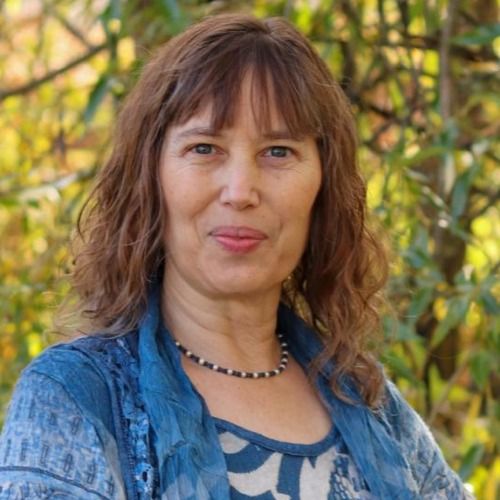
S3EP18-Sharon LaFlamme-We Unpack Trauma — How Breaths, Bell Rings & Cozy Parents Save Kids' Nervous Systems
What if the key to calmer kids starts with a calmer you? Sharon joins us to talk about the autonomic nervous system and why learning to work with it, rather than against it, can shift how an entire family handles stress. Sharon’s work is rooted in somatic experiencing, the body-based approach that recognizes trauma isn’t only a story we tell. It can stay stored in the body until breath, movement, play, and connection give it a way to release. Drawing on her own healing journey, she explains the ventral vagal system, the part of us wired for safety and social connection, and how children build it through co-regulation with the calm adults around them. That’s why putting your own oxygen mask on first matters so much. A regulated parent becomes a steady place for a child to land. We talk about small, practical shifts families can start using right away: checking in with your breath throughout the day, pausing for eye contact, letting kids move, play, and get messy outdoors, and staying present with a child during a meltdown instead of reaching for a screen. Over time, these simple habits build resilience. We also look at the bigger picture, from school systems built to produce factory workers rather than free thinkers to the collective stress children absorb from the world around them. Through it all, Sharon reminds parents to let go of shame and start small, because every calm breath and steady presence ripples through the next generation.
Guest Bio - Sharon Laflamme is the founder and facilitator of Creating Serenity Now LLC and a certified Somatic Experiencing® Practitioner specializing in trauma resolution and nervous system regulation. With a lifelong passion for understanding human behavior and healing, she integrates somatic work with holistic modalities including yoga, meditation, Reiki, nutrition, and functional wellness. Her work is deeply informed by her own healing journey, allowing her to guide clients in transforming trauma into a sense of safety, integration, and vitality. Sharon specializes in supporting individuals with childhood trauma, addressing the complex physical and emotional effects of nervous system dysregulation. She holds certification as a Kripalu Yoga Teacher and an Associate’s Degree in Chemical Dependency. Sharon is also the creator of the online course Making Friends with Forgiveness: The Art of Letting Go. She is a member of the Polyvagal Institute, a summit presenter, YouTube creator, podcast guest speaker, and serves on the board of the LoveMakers Foundation.
A gift from our guest: This is a guided Somatic Experiencing® meditation https://youtu.be/QRAsSIB15Xo
Bringing Education Home is an educational podcast brought to you by Kristina and Herb Heagh-Avritt.
If you enjoy the show, we'd love for you to leave a rating or review on your favorite podcast app!
Please let your friends know they can listen for free on Apple Podcasts, Spotify or their preferred podcast app or online at Bringing Education Home.
Sponsored by Vibrant Family Education - creating Happy, Healthy and Successful kids
Follow us on these socials:
Facebook Group - The Family Learning Circle
Facebook Business Page: Vibrant Family Education
Support Bringing Education Home
Copyright 2026 Kristina & Herb Heagh-Avritt
This podcast is hosted by Captivate, try it yourself for free.
Transcript
I now have the pleasure of introducing Sharon Laflamme.
Sharon is the founder and facilitator of Creating, Creating Serenity Now, LLC and a certified somatic experiencing practitioner specializing in trauma resolution and nervous system regulation.
With a lifelong passion for understanding human behavior and healing, she integrates somatic work with with holistic modalities, including yoga, meditation, Reiki, nutrition, and functional wellness.
Her work is deeply informed by her own healing journey, allowing her to guide clients in transforming trauma into a sense of safety, integration, and vitality.
Sharon specializes in supporting individuals with childhood trauma, addressing the complex physical and emotional effects of nervous system deregulation.
She holds certification as a Kripala yoga teacher and associate degree in chemical dependency.
Sharon is also the creator of the online course Making Friends with the Art of Letting Go.
She is a member of the Polyvagal Institute and Summit presenter, a YouTube creator, podcast guest speaker, and serves on the board of the Lovemakers Foundation.
Welcome, Sharon.
It is a pleasure to have you here today.
Thank you.
Thank you so much for joining us.
Sharon LaFlamme:Thank you for the invitation.
I'm thrilled and honored to be here.
Kristina:Yep.
Sharon LaFlamme:We.
Kristina:We met in one of our podcasting networking circles and I knew it was time to have Sharon on the show and really to dive.
You know, even though she says in her bio and stuff she works with individuals, adults, we know that we can bring this down to a level to help our parents bring it down even lower to our kiddos so that maybe, just maybe, they won't grow up with as many traumas and things stuck in them as we have and won't be in therapy for as long when they get older.
Right, Sharon?
That's our goal for today.
Sharon LaFlamme:Yes.
Yes.
Let's support every family in the world to help have the most healthiest, well balanced people, because our society really needs it.
Kristina:Yeah, absolutely.
Let's start a little bit more with that passion.
We have a great bio, we have an understanding of who you are, but can you think of one pivotal point along your journey is like, you know what?
I really need to make sure I do either more of this or I do this differently so more people can understand what I do and how to work with me.
Sharon LaFlamme:That's a good question.
Because I have evolved in my healing, and so what shows up for me ends up showing up and why I need to either teach or work with clients, which is partly because I worked with my partner on this course as well, because so much of the work has to be done by you yourself, which is why I take the education part, because I don't think People understand that our behavior is really d. Created by our autonomic nervous system.
The way we think, the way we feel, the way our emotions show up, it's all autonomically regulated.
If our body is in a safe place, we feel, sense, and feel and behave completely different than if we're in a unsafe place and depending on the degree of safety.
And so educating, for me, has been is the answer, because I started a YouTube channel years ago because I wanted people to have an understanding of how much power they have over how they feel and how their mental state and their emotional state and their physical wellness is.
Is by this autonomic nervous system.
And so, for me, educating has been like, one of my most powerful passions.
And then also supporting people through this, because when the childhood trauma stuff I learned going through my own somatic work in therapy, that there was such a really big change in how I felt.
When we get that root cause, I could show up in my most authentic self instead of the self that I had created to feel safe in the world.
And so I feel most honored that I can work one on one with some people that would gently and compassionately find their nervous system and.
And start working on things that are so deeply wounding and so difficult to get through.
And it's my honor and pleasure to support people moving into those states of becoming their most authentic self and freeing themselves from the fear and survival energy that they've been living under.
Kristina:Absolutely love that.
And I know Herb has some questions coming, but I want to also get a definition out there, just an understanding, explain somatic for me, and how that kind of relates to what you do in the body, because that's a term that I think some of our audience maybe doesn't know.
So I want to make sure that they have an understanding through the conversation of what we mean whenever that word pops up.
Sharon LaFlamme:So somatic is a Latin term for the body.
This.
The body is a soma.
So that's what that is about.
And the.
The work was created by Peter Levine, but that is because the wounds, the energy has been stuck inside the body.
And.
And so that is this where this soma of the body hides those wounds and energy and the trauma that stuck.
Herb:Yeah.
One, A famous saying is the issue.
The issues are in the tissues.
And I believe that was coined by Gus Gabor.
Mate.
Not sure, but I've heard it from him a lot.
Sharon LaFlamme:Yeah, he says it a lot.
I thought it originally it was Bessel, but Van der Kolk, but yes, absolutely.
And.
And in other places that we talk about too right.
The energy centers of the body.
We are a complete, whole intellectual, innate body of spirit and mind and body, and it's really stuck everywhere.
But as you were saying, the autonomic nervous system, when it's dysregulated, it affects every single aspect of who and what we are, how we show up, how we're even able to learn.
So when I was with somebody in a networking and they said, you know, oh, my child said, my.
My tummy hurt before going to school, I said, well, that child's tummy's hurting is saying, I'm not safe going to school.
You know, there's something happening.
And the stomach is the second brain of our body and it has more neurons than any other part of our body.
And that little kid tunes into, oh, I don't feel right because the body is saying, I'm not safe.
Herb:So how do the issues get stuck?
How does the energy get trapped in the body?
What is the process of that?
Sharon LaFlamme:So when we're born and we're just a baby, we have no ventral vagal nervous system.
So there is autonomic nervous system and the central nervous system, the spine and all that is there at three weeks old in the.
In the embryo.
But the autonomic nervous system, just like our brain, when we come out, we have no capacity to calm ourselves because we have no ventral vagal nervous system.
Which Stephen Porges Polyvagal would say, that's our social engagement system.
So when you start to see that baby starting to smile and look at you, that those neurons have been starting to get laid down and built.
So they have a ventral vagal nervous system.
But the ventral vagal nervous system has to be built by a loving caregiver that gives us all of our attachment needs, or most of them, at least 80% that you're being taken care of, you will start to build this ventral vagal, which gives you the capacity to feel.
And so we get traumatized because it's either too much too fast and our little systems can't handle it because we don't have the capacity or it wasn't built, or we were too young, or it went on for so long that it just traumatized the system.
And the system never built the wiring to be able to release it because we are a beautiful instrument.
If we were all to be able to live like we were meant to, we would have.
Every feeling comes up.
It's all energy.
It rises up and it completes.
And that's what the caregiver helps complete it, because it goes into the body.
So the baby's crying, crying, crying, and that caregiver comes, and now it can complete and come down and release out of the body.
But if it doesn't get a chance to release, it gets stuck.
And that's where we work with the biology of the body to work on that.
Herb:So that's for infants and stuff.
But there's a lot of stuff that happens in, like, the teenage years, especially like in high school, that people hold on to for years.
And even as young adults and even as older adults.
So how do.
How do.
How do the.
How does it get stuck in you as you get older?
Sharon LaFlamme:So the ventral vagal has to be wired.
And because we live in a toxic society with generational trauma, a parent can't give a child a good, healthy nervous system if it didn't have a good, healthy nervous system, if it didn't have the capacity to help that child relate.
So it depends on where you start out.
Like, if you had your secure attachment as an adult, you probably can process all that and do really well.
But depending on.
It takes about 17 to 20 years for the ventral vagal to wire, Just like it takes 25 years for this to wire.
And if it's not being wired in the most healthy way, it doesn't have the resilience or capacity to move energy through.
That's like plugging in your washer, dryer or oven into the little wall socket.
It's like.
Which is how we get disassociated, which is how we get into dorsal response, which is a shutdown freeze state because it's too much and we can't handle the energetic load.
So we have to find ways of doing it.
Babies will start to bring up their knees to chest and curl in because that's a way of suppressing the energy that is overwhelming.
Kristina:Yeah.
Herb:So one of the ways I tend to explain that is if something's going wrong and you clench and you.
Even as an adult, it's like, oh, I don't like this feeling.
And then you hold on to it and you try and not react to it.
Sharon LaFlamme:That.
Herb:That embeds it in your body.
But if you.
If something's going on and you can, like, who.
I'm angry.
And you shake it out and you let it go.
But the feeling of trying to resist it and push against it is like, I don't like this feeling.
Keep it away.
That.
That doesn't let it flow out of you.
And that's how it gets stuck in you, is how.
Sharon LaFlamme:Beautiful.
Beautiful.
That's absolutely True.
Because not only we are just traumatized by our own experiences.
We learn very early, often, gee, if I'm angry, Mommy and daddy don't like that.
So I have to suppress it myself.
And we learn real early to stop that completion because nobody showed us how it's okay to feel it.
And so yes, this is uncomfortable.
Nobody showed me how to get rid of it.
And I think I need to push it away, which is really not healthy as we know.
Herb:Yeah.
Because you're not really pushing it away.
You're just stepping it up inside.
Kristina:Yeah.
Sharon LaFlamme:And it's going to show up and auto me own or all kinds of other issues.
It always shows up.
There's a whole list of ways unhealed trauma shows up in the body.
Herb:Explosive reactions is like the biggest one.
People like you say something and then they suddenly blow up like really big.
And they call that the trigger.
It's like, no, the trigger is this little thing.
The big blow up is all of that energy that is stuck inside of you.
And so my understanding of somatics has a lot to do with breathing.
And how does breathing help that stuckness?
Sharon LaFlamme:Breathing is one of the autonomic nervous systems capacity to work.
Right.
Because I wanted to just find my list because my brain doesn't remember our autonomic nervous system.
And I like to compare it to infants because an infant comes on board with the autonomic nervous system of sympathetic or dorsal.
So you're either aroused and upset or you're sleeping or you're breathing or you're peeing and pooping and you have a chemical balance that's all being done autonomically.
And it does for us as well.
That always stays.
So I think I'm going to lose what you asked me.
Herb:The somatics of breathing.
How does that help?
Sharon LaFlamme:Breathing is one of the one things we have control of and our autonomic nervous system has control of.
So when we start to recognize our breathing because it'll always tell us how we're feeling.
Shallow, fast breaths, we're anxious, we're upset or stressed or somewhere.
And so I like to invite people to set their timer on their phone so they can check in.
How is my breath right now?
Every hour?
How's my tension level?
Right.
How is my organs feel?
How's the temperature in my fingers and toes feel?
How am I right here?
Because the body will never lie to you.
It'll always tell you how you're feeling.
And if you're anxious and that's your body saying, I'm not safe and your breathing is a good indication of where I'm at.
Can I have deep, full belly breaths?
Because I'm safe and open and I'm okay at this point?
Herb:I.
Sharon LaFlamme:Or am I somewhere up and pedal to the floor in a guest, you know, in my car, and I'm so sympathetically aroused that I don't even know what's.
I'm out of my head at this point because we do lose that.
But we can help support our autonomic nervous system if we start working with the breath.
I will tell you people that have a lot of trauma that can be very traumatizing to try to control a breath.
So I invite people to just notice the normal organic breath before you start trying to play with it and get in touch with it so that the body knows, oh, she's paying attention to me.
Oh, okay.
And then.
Then you can start breathing more on all the different breath work that you.
I mean, I have a whole channel with just breathing playlist and play with your breathing to help support.
Usually we're trying to calm a nervous system down because it's so highly sympathetic, meaning I am so uptight and stressed right now.
I can't work.
And we want to bring that down with things that work because not all breathing works for people.
It's a process of building that wiring that we talked about.
The ventral vagal wiring will help bring the breath into a deeper place.
Once we start building that, too.
Kristina:I want to go back for just a minute to the place where you were talking about how we learn as little kids.
Like, oh, if I get angry, mom and dad get upset, so we start stuffing it right, or we start trying to control that.
Does that mean that parents should let their kids have raging, throwing fists when they're angry and upset?
How do we do this so they can release it but not be those terrors that we don't want.
Want to be tearing up the house or embarrassing the family or, you know, causing issues for other people.
Herb:What?
Kristina:How?
Give parents healthy outlet.
Herb:What's a healthy outlet?
Sharon LaFlamme:I work with a number of parents.
Right now, we have to recognize what this behavior is because they don't know they're responding to an experience, and they do not have the ventral vagal to have the capacity to calm themselves or even sometimes understand what's going on.
Or we have a.
We have a very little ventral vagal, which means we might be calm, but we're going to be like gas pedals to the floor because these little people don't have anything in between.
That's what the ventral vagal is, is those nuanced ability to slowly rise up or slowly go down.
So if a parent greatest resource, which is why I have so much out there, is if I'm grounded and I'm safe, my nervous system will come into, I will bring that person in and I have to recognize their behavior isn't about me.
Because usually parents want to just stop the behavior.
That's how we all get traumatized.
Stop the behavior.
Do stop it right now.
Calm down.
Herb:Has anybody ever calm down to cry.
Sharon LaFlamme:About by being yelled at?
I bet no.
But if they recognize, oh this behavior, they need me.
And if they can stay calm and, and they've built their work, which is what I'm helping people do, is you, you as a parent, your greatest resource is having this regulated nervous system so that whenever you bring anyone within your space and it does, it can be six feet away.
We can walk into a room and feel the tension, right?
So that child will automatically start coming down as soon as it comes into this safe place.
But if you're wound up and you're upset with it and you, then nothing's going to happen.
But if you can ground and you can be regulated and you can breathe like we talked and that child will start to come in.
And that's what builds the ventral vagal nervous system, by the way, each time that happens.
And then, because as soon as we are overstimulated into this state, we lose our capacity to think.
All people at all ages.
But then you can then talk to them.
Did you like, like that feeling?
Does that feel, you know, like they're calm and they can realize, did I like the way I behave?
Did I like the way I feel?
Did.
And then they can process a little mentally once they're calmed down.
But really they have to be regulated by their co, their parent, their co regulating parent.
And, and that's where it all comes from.
Kristina:I just want to put an example in here because I saw it with our family oftentimes, right?
So the boys would be acting one way and then one of us would walk in the room and then all of a sudden their behavior would change, they would start acting differently.
It might be a little bit more calm or they might have started a fight with each other, whatever.
But thinking back now, I'm like, oh crumb, that was one of us coming in in either an out of control state ourselves or coming in as a calm state.
That just brought a little bit of difference into the room.
Herb:Yeah, the biz, the big buzzword or the professional Word for that is CO regulation.
And it's, it's kind of like bringing a flashlight into a dark room.
You can't have too much darkness that a flashlight won't bring more light in.
And so being calm in a tense situation is like bringing a flashlight.
The co regulation.
The person who is the calmest has the most impact on the room and it helps bring the energy levels in a way up in the proper form.
But it brings the tension down by, by having that lightness in the room.
Sharon LaFlamme:And I'd like to bring a little switch to that as well.
Because we've talked about co regulating and building the nervous system in a calm state.
But the exact opposite happens too.
If we aren't calm, we co regulate that tension to that person that no matter what age they are, they feel that and their bodies are feeling it and they have no way to cope and complete it.
Kristina:Right.
Sharon LaFlamme:Because we're always co regulating.
Kristina:Yeah, yeah.
You know.
Oh golly.
And it brings me back to my classroom days as well.
Right.
Whenever I was in the classroom, there were some days that, you know, things were fine.
And then other days when things seem chaotic, things seem.
Things feel.
Felt stressful.
And it was amazing how a lot of.
Of course depended on me as the teacher because the kids were looking up to me.
But then also the different kids that came in or the different adults, the assistants, et cetera.
Right.
So if I had an assistant come rushing in the room because they were late or whatever, whatever, all of a sudden it's like a little ticking, like do we need to be concerned about something or.
Oh no, we're okay again.
So yeah.
Just being aware and that parents, this doesn't mean that you're doing it wrong.
It doesn't mean that you are to blame for all of whatever, whatever is happening.
But if you can bring an awareness to what we're saying in this conversation and just make little changes, I love it.
You and your family.
So Sharon, talk about that a little bit.
I love little changes.
Sharon LaFlamme:I love what you're saying because we, we have to recognize what, what our child needs.
Right.
Like my boys want to be outside in nature.
That's what helped them and a lot for me too.
I love it too.
But we have to know what they need.
Do they?
Because when we build this social engagement, ventral vagal nervous system, this is our connection connecting to our safe co regulating people and other people, but also to ourselves.
And so we want to build that connection.
So whatever that child enjoys doing that's in play is one of the most Important things we can do.
And I see schools are taking away the playground stuff, which is one of the best things for a nervous system to get out that energy, right.
And to help regulate and have fun.
Because we don't have fun until we're in our safe place.
This is when the child comes out.
We're in what's called parasympathetic.
And we are building that part of the parasympathetic with this ventral vagal.
But when we can play and be open and safe and calm, this is when our life feels fulfilling and honest and we can be authentic.
And we need to have spaces in time in our life.
People fill kids life with all this stuff.
But these kids need time and space to be and to.
And maybe they like to read, maybe they want whatever it is that they're doing.
I don't recommend these things due to a lot of what it does to the brain.
Light, the brain, the whole.
It disconnects us from a face because you can make a big difference.
And the social engagement system is all about making safety.
And there's signals of safety that children can recognize.
You don't have to say a word, but I look them in the eyes with a soft face and soft eyes, and I smile and I let them know that with that, you don't even have to say a word.
But you can transition a person's ability to feel safe and take them down from a defensive, anxious place by softly talking and slowing it down.
And then I know people are using it.
I bet you did too, Christina.
The pause in the classroom, just pause, Silence.
Oh, that suddenly, like, oh, I got my attention.
And those are some of the signals of safety that can rewire and change a person.
Herb:So we are at the, at the.
Well, this is September 12th.
Yesterday was September 11th.
Something really bad happened a bunch of years ago on September 11th.
And the children that were born at that time, when they came through Christina's classroom, they were very dysregulated as a generation.
There was like two or three years where those children had a great deal of trauma incoming.
And her class was a little overwhelming.
I spent a lot of time volunteering that year in her class.
And one of the things that I introduced to her class was a system of bells.
And she randomly had three different bells that would play throughout the day.
The short bell was a short breath.
Whatever they were doing, they would stop and take a breath for 10 to 15 seconds.
The longer bell, I think they stood up and it was like a 32nd where they would pay attention and Then there was like a minute bell where they would move and breathe and do something different.
And so that's like that pause as well.
Another thing I did is I brought a bunch of gem about crystals, crystal gem crystals that were little, round, little balls.
And as the kids calm down and settle down, they would be able to hold that in their hand and the bells would ring and that calm that classroom down so much and helped with the regulation because otherwise they were just like at any minute, they could explode all over the place.
Sharon LaFlamme:I can definitely see that.
And we're talking generational trauma here, because those parents couldn't regulate themselves.
Therefore the children.
And it's exponentially like the nervous systems are.
The children's are way worse than the parents.
But I'm glad you brought that up, Hugh, about motion, because that's the other thing.
Expecting kids to sit in a chair.
When we're energy in motion, a stretch, a walk, standing.
Like when we were going through somatic experiencing training, we were allowed to do whatever our body needed.
If you wanted to lay on a bean bag, if you want to sit in a chair, if you wanted to stand up by the window, wherever your body's always asking for what it needs, we tune in and we listen.
But moving is one of the most healing things we can do if we're doing it right.
Like, you know, we're not hurting ourselves.
Kristina:Right, Exactly.
Herb:You know, current studies show that children really shouldn't be in school until they're about 7 or 8 anyway, because that last between 5 and 7, their brain is going through a creative growth.
And by putting them in classrooms and making them do certain things, you're actually limiting that.
So the, the 5 to 7 being out moving, playing, getting their hands, getting dirty, getting grounded, that.
That helps so much prevent later traumas because they're.
They're getting that place where they can drop that energy instead of storing it that early.
Sharon LaFlamme:And I agree with it.
The first three to four years, your little brains are in theta.
They're highly susceptible to learning, and they're highly susceptible to getting dysregulated and messed up too.
And yeah, I question why we have kindergarten and stuff.
Now that I'm understanding on a different level, I think, oh, this isn't such a good idea for these kids development physically, mentally, and emotionally.
Herb:But it makes great factory workers.
Sharon LaFlamme:Oh, it does, it does.
It's all by design.
Herb:Takes away their creativity, makes them know how to sit in lines, take orders, follow directions, and just drop all of their complaints and just.
Yeah.
So that's why we help people school.
Sharon LaFlamme:They fall right into place.
Because I don't want to be humiliated, embarrassed.
I don't want to be punished.
I don't.
I don't.
I. I have to be a good.
And another example of traumatizing people, children.
Kristina:And it's one of those things that, you know, parents might be listening to this say, well, but I have a choice.
I have to go to work, et cetera, et cetera.
It's like, awesome.
We understand that that's part of life, that's part of our society right now.
If you don't actually have a choice, then of course we need to put them in school.
Herb:But how do we regulate them?
Kristina:How do we regulate them when they get home?
How do we regulate them on weekends?
How do we help them build these strengths so that when they are at school or they are away from us and have dysregulating experiences that they can handle it themselves?
Do you have one or two tips for parents on that?
Sharon LaFlamme:Yeah, I have a perspective, and I think I already talked about some of the tips, but, yeah, so we can endure a lot.
We can endure a lot of stress if somebody's holding our back.
So if I know I'm going to come home to mom, and if she's safe, I'm going to start crying if I had a bad day.
That's when we let it out, when it's safe.
But we have to hold it in when we're not in safe places like schools or whatever.
But when we get home, you being, again, the regulated parent, and that's safe.
That child can regulate itself just because it's come home, it's crying in mom's or dad's arms, and it can let go of all the buildup that it had that day, and that is also building the ventral vagal capacity and resilience.
So the next day at school might be easier to handle, but as long as I have a safe place to land and I can let this out, that is good.
And that reminds me of the little thing I had.
I made a little thing about it.
It's, you know, mom and dad are home, the kids are playing.
Oh, no, hide under the bed.
They're not safe parents.
Right.
Mom and dad are home.
Kristina:Yay.
Sharon LaFlamme:And they come because those are safe parents.
And I can't wait to be with you.
And I'm fully loved unconditionally and accepted and safe.
And I know that I'm safe in your space.
And building that is the tool that gets anybody through going out there into that place.
Outside and dealing.
Herb:So when your kids come home and they melt down, hug them, love them, be there for them, let them regulate, be calm inside.
So it's not feed them, put them on a game, shut them up, it's let that out.
Sharon LaFlamme:And I've just been working with somebody to recognize that this isn't about you.
This is about them needing to do what they need to do.
And once they regulate, they may want to talk to you about it.
And again, if you are that safe person and I've been talking with somebody, they're divorced and a lot of people are and I said it has to be safe for you.
They don't have to worry that you're going to go back and tell daddy or fight with daddy or whatever it is.
You have to.
They have to trust and know that I can be vulnerable enough to tell you how I really feel and I won't be in trouble or punished or you're going to go back and tell somebody and I'm going to get in trouble.
Herb:And that will strengthen your relationships.
Not only will it be healthy for the kid, but it'll make them want to come to you more when things go wrong.
Kristina:Yeah.
Sharon LaFlamme:Yep, yeah.
And you and your capacity to build that child's nervous system, autonomic nervous system.
So it has capacity and resilience to work throughout all life.
Stressors and strains and joys and loves and you have to have yours to give them that.
Kristina:Okay.
And this is a great place for you, Sharon, to tell people.
How do they get a hold of you?
How do they work with you?
Maybe they know in their adult life that they don't have it all put together yet and they were looking for someone like you to help them put this together so they and their family can grow closer.
Give us that information and tell us just a little bit about what maybe a specific program you have that helps get people get there.
Sharon LaFlamme:Thank you for that.
The best way to reach me is my email.
Probably Sharon at Creating Serenity Now.
So that is what I suggest.
But I really want to let people know that my YouTube channel has so much free resources that you could check out.
And then our online course, we do the foundational work.
It's not information.
Information doesn't lead to transformation.
We want to build nervous systems.
We have the basic foundational somatic work that if you didn't get it at home from your caregivers and co regulators then we can do it.
But you've got to put the work in.
It's a self paced online course filled with the work that you can do to start loving yourself and having healthy relationships, but it's also going to build those foundational skills if you follow through, as well as looking at some of my stuff on my YouTube channel.
And then only work with people that you feel safe with.
Because the work won't get done if you can't be totally open and safe.
Because then we just close up and keep that in like we've been taught to do.
And so your body will tell you energy never lies.
Okay, so listen to.
Once you start building these foundational skills, you can feel if somebody's safe and you can feel if I'm comfortable with somebody.
And people might lie and manipulate, but your energy won't.
Which is why connecting with yourself every hour on the hour, building that connection internally with you, you can start really feeling energy and connect again to people that are safe.
Kristina:Awesome.
Thank you so very, very much.
And of course, all of Sharon's contact information and the things that she's been talking about is down in the show notes as well.
So just click, click down below and click on those links and get a hold of Sharon.
Is there something we haven't talked about today that you wrote down on size?
Like, oh, I really want to make sure we talk about this today.
Is there something else or some final words for today?
Sharon LaFlamme:I think the thing that's showing up for me today is most people don't understand that there's a different way to live outside of the box that we've been living in and the victim mentality that we've been living in and the severe stress.
Just like that group of kids from 9 11.
I don't know another way to live, but there is a different way to live where you feel safe and you feel held and you feel grounded.
And if you work on getting your nervous system there, your life will be totally different.
And you all have that capacity.
It's your healing, parasympathetic nervous system.
We all have it, but we have to build it.
So you're all capable of making life changing events happen and loving yourself.
I think that is the most important thing in the world, that you can unconditionally love yourself.
And we're all capable of that too.
Yeah.
Herb:So our show is so much about family and about helping kids.
And one of the things that we always come back to is so often is that you need to put your face mask on like the airplane thing before you help the ones next to you.
So this, this work, it's.
It's meditation, it's yoga.
It's breathing, it's self regulation.
And that the reason they call it work is because that is some of the most important and hardest work.
But the most rewarding that you will ever do in your life is to get your face mask on, to get yourself regulated, to deal with the darkness inside of you.
And you can't ever get rid of it, but you can look at it and understand it and let it flow.
And so thank you for being here.
Sharing the information that you're sharing is so needed, especially right now as we move into this technocratic world with so much technology and so many things getting so much easier that are distracting us from us.
And, and you now are at the vanguard of a revolution of bringing people back to themselves.
You spent the years fighting that dragon, fighting the people who don't understand, saying you're crazy, but you held on to it because you knew how important it is.
You fought that dragon.
You have this gold and you are bringing it back to the community and sharing it.
That is the hero's journey and you are a hero and you are making a difference in the world.
So thank you so much for being here today.
Thank you so much for what you do.
Thank you for being you and for actually making a difference.
Sharon LaFlamme:Thank you and, and you do.
You both too.
Kristina:You're very welcome and I'm so glad we got together and did this show today.
Audience, it is time for you to make sure that you are doing your part in all of this.
Right?
This show.
Bringing education home is for you.
The families, the parents help other people by sharing it because if they can find their gold nuggets and put them in place and make their family more calm and secure, then all of our families around the world will have that ripple effect.
So please do your best to share and talk to people about what's happening.
Find the experts on here.
Find people like Sharon who will help our families up level and be stronger and raise those happy, healthy and successful.
Herb:And make sure you leave a comment if you're going to share it at the person, tell them what it was you liked about it.
And that increases the algorithm and the distribution so it doesn't only go just to the person you're sharing it with, but it helps more people find this information about being human, about being real and about education.
Not just being about the stuff you learn, but about making the world a better place.
Kristina:So until next time, take care of yourself, take care of your family and bye for now.