Episode 19
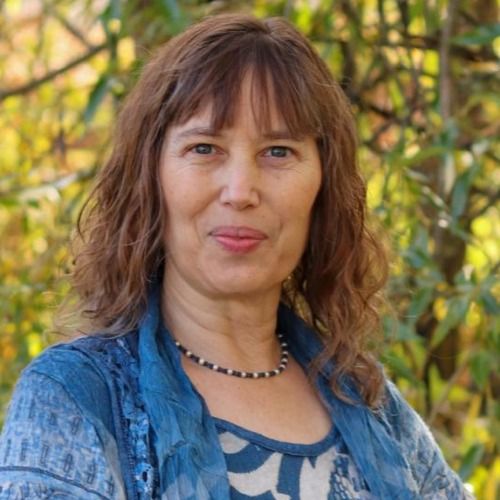
S3EP19-Laura Burkey-We ditched “try” and “problem” — how Laura rewired her words to raise resilient kids
We learned right away that tiny tweaks to everyday language can totally rewire family dynamics — swapping one word can calm a nervous system or light up a kiddo, and Laura Burkey calls that magic Word Resonance. I mean, we brought Laura on and she blew our minds with stories (and etymology nerdgasms) — like how “enthusiastic” literally points to the divine coming through, and “power” simply means “able,” which reframed everything for us. She gave us concrete, parent-friendly nuggets: avoid saying problem, try, how, and hard (yikes), and instead invite play, encourage feeling, actually hear your child, and talk to them — even do “report cards” where kids grade our parenting (brutal but brilliant). We dug into practical swaps — stop “trying” and decide to do or not do, swap “hard” for an ease-scale, and when someone asks “how?” ask “what are some ways?” so the body doesn’t freak out chasing a single needle in the haystack. I loved the real-world parenting hacks — one-on-one play dates, dance parties, giving feelings vocabulary, and modeling emotional regulation so kids grow into resilient humans, not shriveled little emotion-avoidance robots. Bottom line: words aren’t just grammar — they’re tools, energy, and parenting superpowers; we left the episode with way more than a few golden nuggets, and honestly I want you to listen again and start playing with your language ASAP.
A gfit from our guest: Want to go deeper into this topic and actually experience what can change when you change the words shaping your family?
Join Laura for a 90-minute live online experience called "Connected and Respected: The Empow-WORD Parent".
This experience is for parents who want more than temporary cooperation.
Laura will take you beneath the familiar definitions of the words discussed in this episode so you can recognize what those words may actually be creating in your thoughts, emotional state, tone, and behavior. She will also introduce four additional words that can dramatically enrich your family’s connection and rapport.
You will uncover one repeated sentence that may be shaping the atmosphere in your home, learn how to replace limiting picture metaphors with ones that support the relationship you want, and choose a Word Theme your family can begin experiencing and living together.
This is not another presentation filled with parenting information you may understand but never use.
It is an opportunity to experience your own words differently. Once a word is deeply understood, it can never influence you in quite the same way again.
The regular value of this experience is $220. As a listener of this podcast, use the code Empow-Word Parent! to receive $100 off, bringing your investment to $120.
Connected and Respected: The Empow-WORD Parent is offered live online throughout the year. To receive the current schedule and complete registration information, email Laura directly at coachingthatchanges@gmail.com.
Laura Burkey is a Thought-Behavior and Communication Coach, speaker, and the creator of Words That Work™ and Word Resonance™. For three decades, she has helped individuals, couples, parents, and professionals understand the powerful connection between the words they use, the emotional states they experience, and the behaviors that follow. Laura helps parents recognize the everyday words and phrases quietly shaping their family interactions. By making small but precise changes in language, parents can become more intentional in how they lead, listen, set boundaries, respond to strong emotions, and preserve connection, even in difficult moments.
Bringing Education Home is an educational podcast brought to you by Kristina and Herb Heagh-Avritt.
If you enjoy the show, we'd love for you to leave a rating or review on your favorite podcast app!
Please let your friends know they can listen for free on Apple Podcasts, Spotify or their preferred podcast app or online at Bringing Education Home.
Sponsored by Vibrant Family Education - creating Happy, Healthy and Successful kids
Follow us on these socials:
Facebook Group - The Family Learning Circle
Facebook Business Page: Vibrant Family Education
Support Bringing Education Home
Copyright 2026 Kristina & Herb Heagh-Avritt
This podcast is hosted by Captivate, try it yourself for free.
Transcript
I now have the pleasure of introducing Laura Burkey.
Laura is a thought, behavior and communication coach, speaker, and the creator of Words that Work and Word Resonance.
For three decades, she has helped individuals, couples, parents and professionals understand the powerful connection between the words they use, the emotional states they experience, and the behaviors that follow.
Laura helps parents recognize the everyday words and phrases, quietly shaping their family interactions.
By making small but precise changes in language, parents can become more intentional in how they lead, listen, set boundaries, respond to strong emotions, and preserve connection even in difficult moments.
Welcome, Laura.
It is a pleasure to have you here today.
As a child of the Gen X generation, this is an incredibly important topic, especially to help us change our language and how we talk to our children.
So thank you for joining us today.
Laura Burkey:Yeah, thank you for having me.
Thank you.
Kristina:I was very excited whenever we did our pre chat because even in that short conversation, Laura helped me with a few of the words that I was, like, kind of struggling with, like, how do I present this?
Or how do I talk about this?
And it's amazing how just a few words can make such a huge difference.
So, Laura, tell us how you got into Wordsmithing isn't the right word, but how do you.
How did you get into this passion of words and changing and.
And looking at the emotion around it?
Laura Burkey:Yeah, so it was revealed to me.
So this was not.
I. I've always been interested in words, and I've always been a communicator.
I'm kind of a natural linguist.
I can pick up word languages easily.
So I just like language.
I like words.
I like communicating.
And so it showed up already in my life as really early, like evidence that this is something that I am carrying through into this world.
But not until I was probably about my fifth year into my coaching practice, I started to notice a pattern with when people would use certain words and very mundane, normal, everyday words.
So not buzzwords and trend words, but just really mundane words.
And I would notice whether that word would kind of, you know, it would empower, it would energize, it would embolden them or if it would kind of start to quiet them or deflate them, you know, And I just.
And it didn't matter.
It didn't matter if you were the CEO of a company or if you were driving a cab in New York City, which I've had both of those kind.
It was like, wow, there's something here, because the words are doing the same thing no matter who's using them.
So then I started paying, you know, closer attention.
I started test Driving with myself and then.
And kind of, as they say, the rest is history.
I. I got.
I jumped right in, buckled up, and I really.
I mean, I'm on that ride presently.
And so that, that's.
I hope that answers what you've asked.
A good little picture of.
Kristina:Yeah, yeah.
Herb:I really admire people that can like, find something like that and follow through.
I'm a polymath.
It's like, I go to a certain point of really deep knowledge, but then it's like, next, next, next.
So I have like this wide variety of stuff, but not the depth of knowledge that you do.
And I know that that's part of my personality and I'm working on certain things to go deeper into depth.
So I'm again, really interested in hearing this because, like, when I said that, it's like one of the first things that I thought of is like, all parents back in the 80s was like, oh, money doesn't grow on trees.
And it's like, you got to work hard for your money and those kinds of thoughts.
It's like, even now, that just comes out so easily.
And I know that that prevents me or that hinders me from opening up to greater wealth.
Kristina:Yeah,.
Laura Burkey:It's true.
And I have to say this herb, that I also would.
I would describe myself as a polymath also.
But here's the difference about the word thing, because.
And this is what's in word resonance.
You use that term because that's a term that has come up and out of this work.
Because I am so tickled, curious, excited.
I am so excited.
Enthusiastic.
And enthusiasm comes from.
So this is an example right here of what I do with words.
I've always been described as enthusiastic, always.
And back in Gen, I'm a Gen X.
Back in the 80s, you know what that meant?
Hyper spastic.
I was a colicky baby.
They didn't have ADD back then.
And it was like, oh, Laura's got a lot of energy, Laura.
Herb:Just too much.
Laura Burkey:Right?
So enthusiasm was always the word.
Always the word.
And so as I grew up, I'd be like, I'd hear that.
And I was like, yeah, I know what that means.
It felt like an insult, or it felt like a nice way to say something.
Right.
So then I get here, here we are five years into my coaching practice, and I decided one day I'm going to just put out a survey to my clients and had about 12 I sent out and I was just like, you know, wanted to see what am I doing well, what am I not doing well, you know, And I started in coaching when coaching wasn't an industry.
Like, I was one of the coaches who really put this out on the streets.
So I didn't know.
And I've never had a business.
I didn't want a business.
I just wanted to help and support people.
So I make the survey, I put it out, and I get the answers back.
And I'm so excited because I've worked so hard to be a smart coach, a brilliant coach, say amazing things, really change their lives.
So I couldn't wait to get the feedback, you know, thinking, oh, I'm going to hear all this stuff.
And I put questions in there that would give me potentially compliments so I could hear what I'm doing well, but also would give me where I'm getting some constructive feedback,.
Kristina:Critiques or criticism.
Yeah.
Herb:And all your clients started saying how enthusiastic you were.
Laura Burkey:That's exactly right.
And when I heard that, when I read that, I'm.
I actually deflate.
I'm like that word.
Herb:That word for me is potential.
Kristina:That's later.
Herb:Potential is.
Is my critical.
That seems like such a great word.
But it hurts me because all my teachers would be like, he is so smart.
He has so much potential, but he's not reaching for anything.
He has so much potential, but it's like, I'm getting A's.
I'm the smartest person in the class.
What more do you want from me?
What is it?
I'm not.
So that word potential was one of those things that I could never reach.
And so, yeah.
So as soon as you start, it's like, oh, all of our comments came back as enthusiastic.
And I was like, oh, so that thing.
Kristina:So what flipped?
So.
Laura Burkey:He was so.
So then I read that and I was just like, oh, so they like my hyperness, they like my energy, like you.
So then I go home.
So that happened.
So whatever put them away, it didn't destroy me.
It's just like, oh, okay.
And I did get some good feedback.
Fine.
I go home soon after.
I lived in California at the time.
I came back to Illinois, home for the holidays.
And my.
She throws down a manila envelope on the kitchen table.
She's like, oh, Laura, you'll get a kick out of this.
Open this.
I open up the manila envelope.
It's a big one.
And there's all my old report cards.
All my.
From kindergarten, first grade, second grade, all the way through college.
Not every single one of them.
So I'm going through and I really pull out the early day ones.
The early, like kindergarten, first grade, and on our report cards, there's like, S for satisfactory, U for unsatisfactory.
And then on the back they could write, I mean, the smallest box to write, like one or two or three things about Laura, that quarter, then the second quarter, her notes, the teacher's notes, or whatever.
Guess what word was on my report cards at second grade and third grade?
Kristina:Enthusiastic.
Laura Burkey:So when I saw at that time, I said, what is with this word?
Herb:Right?
Laura Burkey:And so Herb listened to me because I highly recommend you do this and anybody else who resonates with what we just are talking about.
I went to the dictionary and I read what the definition is.
And then luckily, luckily, luckily, the dictionary that I looked at also had the etymology, because that's where.
That's the ground.
That's my playground.
It's not the definition, the dictionary definition.
I read the etymology, and here's where that word comes from, which means the origin.
What.
What was the experience that made this.
This experience has to have a word.
What's the word?
Kristina:Yeah,.
Laura Burkey:That's what I do.
So the Latin is en thos, which means in God.
God within.
Kristina:Okay.
Laura Burkey:So when one is enthusiastic, they are as enthusiasm looks.
I say thrushing with the energy of the divine.
Of source of God.
Divine intelligence coming through you, and you are letting it come through.
And this is what it looks like.
That changed everything for me.
And that because I'm a linguist, because I'm a word person, I'm a language person, I deal with this, with people and mindset.
I'm like, oh, my.
There.
Oh, wow.
Okay, that.
That was.
The door opened, and then I started paying close attention, and then I could really hear what's happening.
And then I've only just built and grown that.
And that has become my complete angle.
When I listen to people, when I talk to people, when I raise my children, that has become the angle.
I'm very careful what words I use, because most people compreh what the word's meaning is.
I deal with what the.
How you're resonating with the true intent, the origin of that word, which is locked into our.
Our.
Our kind of our conscious intelligence, not just our little conscious mind.
So I hope that you track that, because I get so enthusiastic when I talk about it.
So that is how this all happened.
And.
Herb:Yeah,.
Kristina:So.
Herb:That.
That word potential for me, it destroyed me for so long, and now people seek me out for that.
And again, like, it shut you down, and now people seek you out for that.
So the same thing with me and potential is about energetic power.
And so again, It's a divinely thing because it's a pool of power from source that has, has the capability of rising up.
And so.
Yes, that I, I completely understand where you're going with this.
I absolutely love this conversation.
Kristina:Okay, so I have to jump in here as, as the parent person, it's like.
So we're using these words in the hopes of lifting our children up without realizing at times that we're actually pulling them down.
Laura Burkey:Yes,.
Kristina:We can't be blamed for because we're trying to do the right thing.
But how do we kind of balance this?
How do we kind of be careful about the words or whatever?
Can you give us a hint of how to kind of navigate this path?
Laura Burkey:I'm going to give you two very specific examples.
Okay.
And remind me, I've said this because.
And I'm going to tell you what they are because.
Because I can then tend to go down, you know, a path and then.
Okay, so the first thing is there's four words that I absolutely made sure that I did not, as a parent, I did not use those with my children.
Kristina:Okay.
Laura Burkey:Unconsciously.
Because if you know you're using them, you, in a way, you are, I don't want to say in control, but you, you have it.
You know what you're doing.
But if you're most people, the brain automates everything.
So even the words you're using in this money doesn't grow in trees, you know, all that kind of stuff.
So there's four words that.
I raised my children and I did not use these words.
And my kids, I just became an empty nester.
I am a brand new, three weeks in empty nester.
I have a 18 year old and I have a 20 year old and they, they're thriving.
They are very, they're grounded.
They know who they are, they respect me.
We are connected.
We are solid for the rest of our life now.
Solid.
Now I can't say I had that experience with my parents, nor really my whole family.
And I wish that for all families.
And that's also a massive passion and mission of mine.
So four words are.
I never used the word problem.
I did not use the word try, I did not use the word how and I did not use the word hard.
And I.
Those really came from my coaching.
I learned what those words do to everybody.
Everybody.
Unless somehow somebody knows this and they're not using them, then they're not part of the everybody.
But those words are immediately cutting you off at the knees.
Kristina:Okay.
Laura Burkey:When you, as many, if you want to ask specific Questions, I'll explain very briefly how the that happens and then just the other thing and then you can decide where you want to go with this.
The other thing that I would do is I would use.
So I know that and here's what I'm.
I'm here to do.
So this is what God has me doing.
And so now I understand why.
30 Years as a coach, one on one, so I could see what I see.
And then why as a little girl was I so enthusiastic about.
I wanted to say big words, I wanted to know what words were.
I always liked to talk.
I took communication courses.
And now I know why.
Because what we've been doing with words and no shame, no bad, no blaming, no nothing.
But what we've mostly done, we humans, we've evolved with words being very neck up, we're there.
It's all about the mind, it's all about the thinking and it's all.
And so what that's done is cut us off from two other intelligences that we have.
Our heart intelligence, our gut intelligence, which are it's way surpass the conscious mind that we run on.
And so what I believe, word resonance.
And what I am, I'm only illuminating it because your body already knows your body.
When I said hard, your body felt it.
Oh, I know what hard is.
Yeah,.
Herb:I was going to talk about that too because I stopped using that word intentionally and I switched it over to the easy scale because.
So if it's hard.
No, it's really, really not easy.
It's very not easy.
Laura Burkey:Yeah, that's.
Herb:Good, you put it on the easy scale because then what you're focusing on is the ease of the action instead of the difficulty of the action.
And.
Laura Burkey:Here's where.
Herb:Easier.
Laura Burkey:And here is exactly how it's working.
Like the actual mechanism.
Why is it, why when you just say it's really, really, really not easy or I just say it's easy because notice what happens if I say, hey guys, I'd like you to come over tomorrow and help me, you know, build a fence around my property.
It's going to be hard work.
Now your body already responded.
Your body already.
Now if I say come on over, it's going to be easy.
Now your head might be like baloney.
It's going to be easy.
No, no, it's still hot summer weather and it's the three of us as far as I can tell.
But if you just allow the body, let your body, let that land in the body, the body will relax, the nervous system relaxes, which means it stays open.
It stays in capable mode.
It stays in able mode.
Which, by the way, the etymology.
Most people announce, this is what I'm going to be doing.
But so the word power, there's another word.
Just what did your body do?
Right.
When I said power, honestly, when I said power, what did your body do?
What was the hit?
What was the what?
Something.
Herb:A little more intense.
So a little more focus, a little.
A little more energy.
Laura Burkey:What about for you, Christina?
Kristina:It almost made me pull back a little bit.
I don't want people with power necessarily.
Laura Burkey:Exactly.
Lots of people.
Because the way we commonly use the word power is authority, force, control, influence.
That's how we mostly use it.
And it's okay.
I'm not telling people not to use power in that way.
But let's go back to not only the etymology, but what happened pre the etymology.
Because before a word was a word, it was an experience.
So here's what.
Here's what power actually means.
Able.
That's what it means.
Able.
So you're powerful, Christina.
You're powerful, Herb, and I'm powerful.
Why?
Because we're able to.
And if.
Even if we think, well, I'm not able to erect a fence, I've never done it.
Are you able to learn how to do it?
Yeah.
Then there's your power.
You have power.
And if you even just now know that, because you can't know that I just told you that power actually means ableness or able or ability.
Now you'll.
When somebody else ever says power, you're going to be like, that actually means able.
You'll still let them tell you, oh, he or she's got a lot of power.
Or if you, you know, you'll still hear it that way, and you can engage in that conversation, but you'll know it actually means table.
And then even just for yourself, you will actually start to notice, and it will condition itself or flex itself.
Naturally, I have a lot of power because I'm able to do so much.
Herb:Yeah.
That's about hierarchy as well.
So the people at the top of the hierarchy now, sometimes nepotism takes that away.
But in a true hierarchy, you move up with your capabilities.
And the more ability you have, the higher up you go and the more power you have.
So that's why I was.
So I didn't have a negative connotation for power.
Maybe that's because I'm a guy and we understand that a little.
A little more.
And so it's like, if someone is more powerful than I am, I don't See them as.
I see them as, like, wow, they, they can do a lot more than I can do.
Laura Burkey:Yeah.
Herb:And I can get there if I apply myself.
So that's how I kind of see power.
So, yeah.
Just the definition and the way people and different people can view the same word.
Like, again, potential.
Still.
Still not quite all the way there for me.
Laura Burkey:I'm going to deep dive for you what I call a deep dive.
I'm going to go look into that word and I'm going to.
I'm going to get back to you on what you know, just to see if, like, you can't.
Well, not to see, because I know you will.
You will connect to where that word, the original intent of that word, what was the original experience of potential that then it became a word.
So, so those words.
Oh, yeah, it's Christina.
Kristina:So say those four again.
That we should.
Herb:Try.
There is no try, do, or do not.
Laura Burkey:And it's true.
And so most people, again, neck up.
They're like, yeah, I, I, I comprehend that.
I know what that means.
And then you know what they do?
They go on still using the word try or if they don't say it, they're still thinking it or their body's still doing it.
So here's the thing.
It is true.
Don't try.
You know why?
Because here's what trying is it.
Trying feels like exactly what it is attempting or just hanging.
I'm not really doing it, and I'm not really not doing it.
I'm just kind of almost like a baby who's in one of those little bouncy things.
Like you put them in a harness and like.
But then you lift their feet off the ground and so they're just in the harness, but they can't do anything.
That's what trying feels like.
So, so when you really say, I break up with you, the word try, I break up with you, please, goodbye.
And we are out of a relationship.
Here's the, here's the ability, the power you now have.
I now walk around my day, hour to hour, and my phone calls and my emails, and I either do or I do not.
I either do this or I do not do it.
And that to the nervous system.
Kristina:Calms down.
Laura Burkey:Oh, okay, look at this.
I am, in a way, feeling in control, feeling regulated, owning my life, shaping it the way I want, and not letting external, you know, things come at me and tell me how.
And so that's.
That is a, that's an immense benefit to stop saying try now.
People are going to say Try.
You're not bad.
You're just super conditioned to do it.
So then just back up and go, okay, wait, I'm not going to try to bake cookies tomorrow.
I'm going to bake cookies tomorrow.
Or I thought about baking cookies, but you know what?
It's hot outside.
I'll get the hot kitchen hot.
No, I'm not going to bake cookies.
And that is freedom.
But if you say, today I'm going to try to bake cookies tomorrow, your body goes, well, are we, are we not two?
It says, but I have an exit, so I don't really have to commit.
And now you're still waffling, you're still wavering.
That isn't great for the nervous system.
And then guess what?
You do that 12 other things in a day.
You'll do that with 12 other things and things that will go on for a year or five.
Herb:Yeah.
One of those things that you can't unsee or unhear.
It's like when I walk around, if there's something on the ground and I, and I try to pick it up, if I miss three or four times before I pick it up, it's like I'll laugh at myself.
I tried to pick it up four times and then I picked it up.
So I didn't try five times.
I tried four times and I picked it up on the fifth.
So I will laugh at myself like, ha, I tried and now I'm going to pick it up and I stop trying and I pick it up.
So the try is a failure.
And so because you didn't get done what you needed to done, you just, you just tried and trying harder.
It doesn't matter until you actually do it.
Laura Burkey:Yeah, yeah.
Kristina:The four words we should try to avoid.
Laura Burkey:Okay, yes, This is really important.
How so?
The thing about how is, and especially because I had spent, I mean, my whole coaching career, 30 years, I was helping people figure out, you know, and this is even pre.
What I know about words, how to hit their goal, how to be successful, whatever it was.
Right.
And the thing is, is again, I'm talking about resonance.
I'm not talking about meaning.
I'm never talking about definition, meaning.
I'm talking about the resonance that your body has or energy has with the energy of the meaning of that word or what we, how we've been taught that word.
When somebody says, oh, so you say you're going to start this business, well, how are you going to do that?
Notice what your body does like, or even if you by yourself sitting, you Know, on your bed by yourself.
And you're like, okay, tomorrow I am going to.
I'm gonna, I'm gonna, I'm gonna become a vegetarian now.
How am I gonna, how am I gonna doing that, do that?
The way the body will kind of feel is like, well, I gotta go find the answer.
Gotta go find the answer to me is the equivalent of, you know, that whatever if it's a Disney or if it's childhood fairy tale about, you know, the, the princess who sleeps on many, many mattresses and there's a pe at the bottom or a needle in the haystack, your body experiences.
There's a huge haystack about how to become a vegetarian, and I gotta find that needle in the hay that's gonna give me the answer.
That's what it feels like.
And so the simple switch out is, well, what are some ways I can become a vegetarian?
Because the way I'm gonna do it and the way Herb's gonna do it, two totally different ways.
It's.
It doesn't have to be the same way.
So the way I'm going to do.
Well, one way I could do it is, let me just start slow.
Herb might say, the way I'm going to do it is I'm going to go empty all the cupboards, all the cabinets, all the refrigerator, and I'm bringing all.
Yeah.
And you know, and guess what?
Herb:I'm going to eat all the vegetables of the cow and get my vegetables from the cow.
Laura Burkey:Yeah.
But both of us could have success.
But the old way of thinking of it was this is what the whole self development.
This is how the self development movement started in the 80s.
How to all, how to books, how to start a business, how to do this.
And hey, I'm not throwing shade on how to books.
I'm just saying we became conditioned to think, I don't have the answer.
I don't have the way it's out there, and I have to go find it.
And so don't.
Herb:Biblically, it's like you leave the how to God, you say what you want and you move towards that.
And you don't worry about the how because the how is going to develop as you go.
And biblically, it's like you, you tell your father what you want and, and then you expectantly look for, for it coming to you.
And the how is handled by.
Is hand, the house handled outside of you, and you just move towards what you want.
Laura Burkey:Oh, and think about how many times the word way is written in the Bible.
Do a Google Do a search.
Do a search.
That word is used a lot in the Bible because this is the way.
The Father is the way.
You know that.
Because that word is.
I may have a whole article on it.
I have a whole article on really?
So many spiritual traditions talk about the way.
So, so, okay, so we've talked about hard.
I'm sorry, We've talked about try.
We've talked about how the word hard.
Oh no, hard.
We did.
And try.
Oh good.
And how.
And the last word is problem.
Kristina:There you go.
Laura Burkey:This one I was completely.
This is, I mean this could have been a radio station playing in my house as a child all the time.
It was always, this is a problem.
That's a problem.
That's gonna be problem.
Oh no.
That apparent.
We don't want a problem.
We don't want a problem.
That's always all my parents ever said.
Kristina:Okay.
Yeah.
Laura Burkey:And so I'm going to say two things.
I'm going to be practical and then I'm going to be a little bit more esoteric about it.
So.
And I love a good story.
So when I was back like somewhere early in my coaching career, I'm living in California, I go home for the holidays every year.
And so my mom is total Martha Stewart.
She wants it all done very, you know, table set up and the food, she was so good at it.
And I've got three other sisters, so there's four of us.
And my oldest sister, my mom really, really kind of took the helm every holiday to just put it all together.
And so I'm standing at the sink in the kitchen and I'm pairing carrots and potatoes and that some an easy mindless job.
And I'm just doing that.
And then they're about 10ft over, standing right in the doorway of the dining room looking at the beautiful Martha Stewart dining room table, trying to figure out how the seating and where are they going to put the dishes or whatever.
So this is just a wonderful thing, right?
We've got Christmas season planned.
This is a, this is seemingly a problem free zone because we've got the abundance to have a Christmas dinner all family in all that stuff.
Right.
And then my ear hears this word.
Yeah.
But the problem is.
Well, we could do that.
But the problem is this, well, if we put a chair over there, then the problem is the drapes.
Okay.
But if we do this to kids and they're gonna get, there's a problem of tripping and I could all.
And I'm like,.
Kristina:Oh my gosh,.
Laura Burkey:They're, they've said problem like 36 times in this conversation.
And, and because of where I was in my training and my development in my, in my own evol, I'm like, okay, well there is no problem.
And here's why there's no problem.
First of all, everything that you're talking about and looking about, you're standing under prosperity, abundance, gratitude, love.
I mean, you're standing there.
So, so, okay, so just think about that.
But the second thing is this.
If in studying the universe now, I am no quantum physicist, I'm not a physics student, I've certainly dabbled in red.
Like you said, what are we?
What are we?
Polymath.
Polymath.
So the polymath view is this.
Well, this universe keeps expanding.
I know that much.
They discovered not that long ago the universe actually keeps expanding.
Okay?
Which means everything that happens is added into the universe.
Right?
Every single thing we do say create whatever is added into.
Okay, okay.
So again, because I talk about word resonance, which means your body's, your body's resonance with the word.
So when somebody says, well, this is going to be a problem, whether it is your, the water pipe under your kitchen sink busted in the middle of winter and it's negative 11, whether that is what you say, oh, this is a problem, honey, get out of bed, this is a problem.
Or if you think putting a nine year old next to the drapes at the dining room table at Christmas time is a problem, it doesn't matter.
The body is going to respond to problem the same way.
Which means, and here's my, here's my simple math.
When you use the word problem, you view something as a problem.
You think problem or you feel problem.
What you actually are experiencing is loss.
Kristina:Yes.
Laura Burkey:The body thinks, oh, something, like something, something.
Kristina:Change or go away.
Laura Burkey:Yeah.
And nothing.
Exactly, Christina.
And nothing can go away.
So that right there for me, that did it for me.
I'm like, oh, yeah.
So it just, it actually can't even be possible because everything adds to it.
So there can't be loss and loss, any kind of loss.
You lose your keys, you lose your sunglasses, you lose a race, a 5k race.
The body experiences loss, believe it or not.
If you really whittle it down as death, that's why they don't want to lose.
Because it's not, not literal death and they know it.
But there is that same kind of like gripping, oh my God, like I'm going to lose this.
And so, so problem is a problem.
To say problem is a real problem because, because it doesn't exist.
You're not going to die.
And.
But this is what you're doing to your system.
And so here is the switch out.
And.
And the Bible will tell you this.
This is how I got the switch out.
Everything.
This conversation, whatever happened five minutes before this conversation, whatever's going to happen three hours later this evening, a flat tire, or you get a bouquet of flowers at your doorstep and you don't know who it's from.
Everything that comes to you in the universe, a thought, a material item, an experience, a circumstance, a person, is a lesson, a blessing.
Blessing or a gift, that's what it's presenting to you.
And the Bible does it.
Every single moment, you are being presented with a lesson, which is why we came here.
A blessing, which you never know a blessing until after it's happened.
Or a gift.
And most people feel good to receive a gift.
Kristina:Yeah.
Laura Burkey:And you.
And sometimes you get a gift, you're like, what is this?
Or when am I ever going to use this?
And then like, years later, you're like, wait a second.
Aunt Martha bought us that really weird, weird gizmo.
And then you go get it.
You're like.
And you use it.
So.
So that is how.
Kristina:Apple Cor.
That was one of the weirdest things that her picked up off the shelf.
Like, oh, my gosh, that thing is so ridiculous.
What are you doing?
And we use it all the time.
The pineapple corer.
You twist it down through the pineapple and then out pops this beautiful spiral.
Pineapple is awesome to eat.
Laura Burkey:Yeah.
So those.
Herb:Are the four words.
Yeah.
Kristina:The.
Herb:Full version of that is the universe is working for your favor.
So everything that happens to you is for your benefit.
And so it's either for your benefit or it's not.
And if it's not, then you got a problem.
So if you don't have a problem, then the universe is all for your benefit.
So looking back through my life, it's like some of the worst things that ever happened to me led to some of the greatest things that ever happened to me.
So now, even when I'm in the middle of something that feels dreadful, it's like, wow, I wonder what's going to come from this.
How is.
How is this benefiting me?
Or if it's something that happens again and again, it's like, what lesson am I missing that I haven't got this time that I have to go through this again?
Kristina:It.
Herb:Was like, you know what?
I'm actually at a higher level.
So I am looking at this lesson differently now.
And the next time it happens.
I'm actually up here and I can handle it differently.
Kristina:It doesn't mean it's not going to hurt.
No,.
Herb:It doesn't.
Kristina:Seem or feel horrible at the moment.
But right.
If we can put that layer of there's a reason there's something coming out of it on top of that, then.
Laura Burkey:Well, he did it perfectly.
That's exactly what you said.
And how you, how you work that out, you know, in your mind is exactly right.
So.
And then I'll say this everybody.
Part of the self development movement, I think it, it kind of sometimes blatantly right like right in your face.
And it still does like blatantly and then often very kind of under undertones of like the goal is to reach a completely problem free wrinkle free life experience.
And, and the thing is it's for parents who are listening to this who have 1, 2, 3, 4, 5 children or remember being a child themselves, pain is always indicated or growth is always indicated by pain.
And the simplest way to understand it, the simplest way is when you know, you bring home your, your tiny little, your brand newborn.
Kristina:And.
Laura Burkey:You buy, you buy the box that's like, they're called swaddlers or like 0 to 3 months and then crazy at the fourth month it is time to get, let's buy the bigger box and get the bigger pamper.
Because if you didn't keep increasing the size of the know it goes from like whatever they call them, like swaddles to then you know, infant to then baby to toddler to pull ups, whatever.
If you didn't do that, the child's gonna experience redness.
And that's how they even give us feedback.
They're uncomfortable to keep wanting to pull off the diaper.
They've got like little red marks around their legs and their torch because they're like, this isn't uncomfortable.
It's not bad.
It's.
You're growing.
So that is what pain in our life or discomfort that that is part of this.
It's like that's a good sign because you are growing.
And most.
We are inherently meant, we inherently came here to grow.
So we all do want to grow now.
It doesn't mean people aren't resistant, people aren't tired, people have, are pessimistic and they start to have a different idea about that.
But it really is what you came for and it's the most natural thing.
Herb:And there are parts of your brain that are actually designed to keep you from changing because it's like, oh, I'm 56 years old now.
So this, my actions have kept me alive for 56 years.
So changing something, first I have to let go of something within me and that's, that's the internal death that people talk about.
You have to prune off the branches and then your brain has to accept that changes like, but there might be a bear over there, there might be a lion or there might be something that hurts me.
So the anterior cingulate in your brain is actually designed to keep you from changing.
So there are structures in your brain that, that protect you by making change uncomfortable.
Laura Burkey:Yeah.
Yeah.
Well said.
Kristina:Yeah.
So we have those four words that we are not using.
Four.
Probably a whole bunch more that maybe we should be using.
We don't, we don't like shoulding on ourselves.
But at the same time, if there's something out there that's really going to be a game.
Herb:More appropriate,.
Kristina:Then can you give us one or two of those?
Maybe?
Herb:Yeah.
What are some.
What are.
You got the big four.
What are the big four good ones?
Laura Burkey:The big four good ones are more mindsets.
Use these as a mindset, use them as a theme, use them as a construct versus use them on your tongue.
And you know, so that's what these four words are.
Okay.
They're all four letter words.
Kristina:Oh, we're gonna have.
Laura Burkey:So yeah, so this is where you get to use four letter words and actually live it out.
Okay.
So the four letter word.
The one is play.
And here it is.
If you want your children to respect.
And now we're going to get to like this is important and this is serious to me.
If you want.
My parents did the best they could do they, I mean my God, what they sacrificed and what they did and I, and I really unfortunately only really keep getting more and more clear in my 50s and they're gone than when I was 22.
My kids are knowing it now in their 20s.
I mean they're plugged in and keyed in a little bit more as to who this one is instead of they won't know until I'm gone.
And then they.
And then we can't enjoy that or they can't know me or we can't connect and respect.
Okay.
So.
So playing with your child, that means literally go out in the backyard and play ball.
Which I did with my children every single day after school.
They were two years apart, two grades apart.
So sometimes for there's a period of time where my son would come home or first and my daughter come home second and I'd have.
I always had one on one dates with them.
But play, play with them individually.
Play, be playful.
After dinner, we put music up really loud and we call it our dance party.
And mommy would unload and load and do all the things and then they would run around the house and kind of burn off.
The steam and bath and bed is soon after.
So play is really important because that is honestly, you will connect far more with your child at any age.
Playing with them 2 years old, 12 years old, 22 years old, you'll connect way more.
Resonant feeling, emotional bonding.
And that's where you can even talk about important things.
On a bike, ride, on a walk, fishing.
Then come in here, sit down.
We need to talk.
We got to talk about something, right?
So play.
Herb:In education.
Play.
People learn more through play.
Children learn more through play.
You learn more on the playground than you do in the classroom in most cases.
So even as you grow up, it's like when you start playing games with other adults and, and how to go through life, it's like that's where the most important experiences and the most growth happens in your life.
So.
Laura Burkey:Yeah, and one reason we know, I mean there's probably many, but one reason for sure, and it's a big one and it's an obvious one, is you're relaxed.
So you.
So all you can when the system is relaxed, you can access.
You can access, right?
You can be more resourceful with your creativity, with your thoughts, with your thinking.
But most of us are living not relaxed.
Kristina:And.
Laura Burkey:So we're in like traffic gridlock.
Our whole system is so then nothing's happening.
Or we're like this, which means I can't receive anything.
I cannot, I, I can't receive anything.
My child can't receive me.
I can't even give something in this state.
Kristina:My hands are closed and tight and clenched,.
Laura Burkey:Right?
My fee.
I had fists.
Yeah.
The other four letter word is feel.
Okay.
Herb:That's something we weren't allowed to do as Gen X kids.
Laura Burkey:No, you weren't.
And your parents didn't think they were allowed.
And then of course, we weren't even allowed to talk about them when we're allowed to have them.
And so here's the thing about feeling how, what I want to say about feeling.
So one is if you would start because this is the, this is the human's evolution.
This is, we're evolving.
And I believe this work is part of that, that we are not going to be so head and mental mind dominant because look what it's doing to us, okay?
And Also then what's evolving is technology and look how much we're taking in.
That's way system overload.
Okay.
And we are losing touch with now.
A lot of people aren't because there's also this awesome movement of the kind of conversation we're having.
This is a huge human having, thank God.
But this wasn't happening when we were growing up.
And so when you see your.
Especially for parents, when you see and especially for your younger children, but then your older ones.
But I always say start early.
So anyone who has younger children be doing this right away.
I did this.
Everything I'm saying I was doing when my kids were literally 2 years old, 3 years old and on.
When you see them feeling they're stubborn, they're mad, they're angry, they're resistance.
Don't think in your head, what do I do about this?
Or why is my son or daughter doing this?
What should I be doing?
In a mental way, you should first.
And here's the simple hack, here's a simple way to remember this.
When I was little and I ever looked or felt like that, what was I feeling?
Get require of yourself before you do anything mental and intelligent and smart, identify first with, okay, what does that feeling look like to me?
Does that look like fear?
Does it look like panic?
Does it feel like pain?
Because then where you come from after you answer that question or you just give literally a two second pause and just notice my son is crying, like in a way I don't normally hear, but.
Herb:You better stop crying or I'll give you something to cry.
Laura Burkey:Precisely.
Precisely.
And then you know, and then all you do right there is you definitely aren't going to have connection and respect.
You're, you are, you're not going to cultivate it when that's your attitude and that's the sad part is our parents wanted that, but they had no idea and it doesn't matter.
So anyway, so.
Kristina:That's why we're having this.
Herb:That's why we're having.
Kristina:All of this.
Herb:So many coaches out there right now are working with somatics and breath work.
It gets you out of your head and into your body and what are you feeling?
And then people have these amazing like weird and freaky out reactions because they're just not used to feeling.
Kristina:Connect more because you're in that feeling mode.
Herb:So yeah, once they start connecting, connecting and feeling and then that lessens up.
Laura Burkey:Yeah, well, and even just the do unto others as you'd have done unto you, like, you know, for the parent who still wants to say, you better stop crying.
I'll give you something to cry about, you know, that kind of thing.
It's like, well, wait a second.
So we know as an adult and a parent and a homeowner and somebody who's got a job or doesn't have a job at the moment is looking for a job.
We know the extraordinary stress you're carrying around every day.
And so would you like your spouse every day to be like, you better get up and get going, and you better come on, make our life work?
Or would you rather be like, how are you feeling today?
And how can I support you today?
Kristina:Yes.
Laura Burkey:Are you feeling okay and grounded?
Do you need some encouragement or do you think you got it and you just need a good old pat on the back?
You know, like, so it's good for everybody at all times.
So feel your child.
So let your child have feelings.
Wonder what is the feeling they're having.
You know, wonder about it.
And then.
So one thing I did with that as far as.
So wonder about it, because that reduces that.
That stops you from just being executive functioning and irritated and short and impatient.
The second thing is, is I would tell my children, though, I would say when my, my son would come down or my daughter and like a.
We called it crunky, like a cranky mood, but it was like, unfriendly.
It was unkind.
It didn't feel like, hey, that's, that's.
I see that you maybe didn't sleep well or you don't want to go to school today.
So I see you're kind of cranky or you're just going through ages and stages.
This is a stage where, you know, kids have that.
Where it's like, wow, weird personality for a while.
I just simply said, it's okay, you know, that, you know, if I, if I ask them what they felt, and sometimes they're like, I don't know.
I'm like, it's okay if you don't feel good or whatever.
So here's the thing.
You can go in your room and have that feeling for as long as you want, but what you can't always do is you can't come into a room and like a paintbrush with paint on it and splattered all over the walls.
Like, you know, you can't do that.
You kind of same thing with your feelings.
You can't come and then bring everybody else's mood down to where yours is or as frustrated and, you know, you know, you decide as a parent what you think Your child can handle in understanding these kind of things, you know, but that's feeling is another four letter word.
Play is the other one.
And then hearing, hearing, like hear, hear is different than listen when your child is talking to you.
So now I'm going to give a bigger word because it's not a four letter word.
But this is really important.
Most people use the word understanding wrong.
Like, honey, sweetheart, Mommy doesn't understand you.
Daddy wants to understand you.
What they're really saying, the adult or what they're wanting the child to do.
I want to understand you.
Tell me, tell me why this or tell me why that.
They're only operating from the head.
But guess what?
But that's comprehension.
When your child says, all the kids at school make fun of me and I'm afraid to go back to school, you have two choices.
Are you going to say I understand you or are you going to?
Well, if you understand them, that means you can you resonate with that.
You relate, you know, the feeling of fear of rejection or being the outcast.
That's understanding.
Because understanding is feeling.
That's just the short math under otherwise it's just comprehension.
Do you understand that?
So people use the word understand when they really mean comprehend.
I can comprehend that my son is going to school and he's feeling this.
But like, if you've never been bullied, you've never been rejected, you can't understand unless you can.
You can go to a moment in your own feeling pool where you're like, when did I ever feel like he's feeling?
When you click into that now, you understand, otherwise you're just comprehending and it's not the same thing.
So hearing will get you to understanding.
Pardon me.
Kristina:And the thing that popped into my head right there is that, okay, you, you can say you understand, but for me it was like immediately, okay, but what's underneath that?
Why is he feeling that way?
Why did he just say that?
Is it because he's being bullied or is it because he's feeling not confident in what he's doing?
Those are two big different things about that statement.
Laura Burkey:Yeah, it is.
And helping your child in a moment like that, it would be like, well, so you know, how does it feel?
And if they don't know how to say it, we'll say, well, what, what's happening when you go to school?
Tell me something that's happening that starts to make you not feel.
And then you can give them words not okay or safe.
And actually feeling okay is the same for all of us.
It's universal and actually, sorry, every other feeling it does.
You can lose a cat and you can have your house burned to the ground and you can be sad about both.
And guess what?
Sad is sad.
The person who lost a cat versus the house that burned down is not.
Oh, they have way more sadness than the one who lost a cat.
No, sad is sad, happy is happy, joy is joy and understanding is understanding.
Which means I feel what I can feel this because I know that feeling.
And if you can't say that when your child is upset or they're acting a certain way, if you can't, then go find out.
Why are you coming to your room every day?
My 14 year old daughter.
And not looking at anyone, not talking and just going in there and I don't see you until the next morning,.
Kristina:Right.
Herb:So one thing I kind of want to say about feeling that I think is important is all feelings are valid.
You are going to feel the way you are going to feel.
But you shouldn't base all of your actions on how you feel.
There's a lot of things that you're not going to feel like doing that you need to do anyway.
So there is, there is feeling and then there is taking that a little too far.
And right now in our society there's a whole lot of people who use feelings to make decisions over, over evidence, over so many other things.
And so while feelings are very, very important to you and to your growth, it's like that, that can't be everything.
But it is incredibly important to be able to say them, to be able to express them, but then still to be able to do what's right and what's needed.
Laura Burkey:I completely agree with you and I'm going to use.
And I don't know how we are on time, so you're gonna have to indicate, you know, but like, so this is.
Why start as early as you can with this stuff because everything, so you have to demonstrate this because you are the biggest teacher.
Your modeling and all of that is the most important thing.
And so everything you do is being cataloged.
The child isn't thinking this, but trust me, when they become 20, 30 and 40, they're going to do the exact same thing.
Unless they, you know, unless it like, especially if it's like no matter what it is good or not good, effective or ineffective.
But let's use this classic example.
Your child, your child tries to ride his bike or her bike, right?
Ride the bike, you know, tries the first day, super excited, they got the brand new bike, they got it for their birthday, they go out in the yard and then they start riding it and doing the thing or whatever, and then immediately fall and then they run into the house crying, I'm never getting on that again.
And spin their knee a little bit or whatever.
Now, there's many ways.
There's many different ways a parent is going to respond to that.
Here's two classic ways.
One is, oh, honey, it's okay.
That bike.
You don't have to ride that bike.
Can I get you a cookie?
Well, let's put on.
Let's put on a Disney film, okay?
And the parent just wants to soothe the child, not understanding to the point that Herb's making.
You are cutting your child off at the knees.
In their life and in their.
In their power, their ability by doing that.
It's not effective.
It isn't smart.
Well, my dad.
Well, I'm not going to do what my dad did.
My dad made me get up there and I was crying and he was so scared or whatever, but he kept making me.
I'm like, but do you know how to ride a bike?
And have you.
Whenever you didn't get the job, did you keep going and getting other jobs?
You know, like, it built resilience in you.
So you, you really have to.
You do have to have some foresight in thinking about that.
Because I do see a lot in some of these younger generations where their parents have, unfortunately, they have favored.
I want my child to like me and I want my child to not feel this big bad world that we live in.
But it's not a big bad world when you have a failure, which I don't even believe in failure.
Failure is just learning.
Misspelled.
If you fell off your bike, that means you still got more to learn.
We're going to learn this.
We're going to figure out balance.
We're going to figure out whatever.
So.
Herb:Further attempts in learning, failure.
Fail.
Further attempts and learning.
So we are getting close to time.
So what is the fourth word real quick?
Laura Burkey:The fourth word is talk.
Talk to them.
And here is.
It can mean anything.
It can just mean when you pick them up at school or you pick them up after overnight with a friend's house and you ask, you talk to them, how was your time?
But guess what you also do.
Here's what mommy or here's what daddy did while you were gone, and you share who you are so that they see you as another human being, that they know my mommy or daddy has a.
Has fears or they have things that they've overcome or they're not always confident.
They sometimes wonder if people, you know, understand them or, you know, have dreams or whatever.
Because we also weren't raised that way.
We didn't see our parents as human,.
Herb:Supposed to be seen and not heard.
There's another big Gen X saying,.
Laura Burkey:So talk to your kids, tell them who you are and find out who they are.
And to that I'm going to add this too, because this is what I was thinking when I thought about the word talk for this episode.
I'm so glad I did this.
But when my kids were probably now at about 6, 7, 8 years old, I started to ask my children for report cards for me.
I started to create a report card and I would write, you know, so maybe the first one I ever did, I was like, listens is kind, is crabby.
Whatever, whatever.
I would, whatever.
I can't remember.
And I just said, will you give mommy a grade on these things?
You know?
And so.
And then they're very elementary, young way they did.
And then I started to say, because they were accustomed to this and I was doing around their part report cards at time when they got report cards, I had to get a report card.
And I'd say, okay, so Mommy, it really, really works to be a good mom.
She so I like to listen to you or I want you to feel that you're respected.
Would you grade me on a scale from 1 to 5 or ABCDF grade me on how well you think I'm doing or not doing on that.
And they would do that and that I'm a quite.
I am.
I have confidence.
I probably appear to have more confidence than I do, but I have confidence, but I just have so much passion that that's mostly what you see.
And I really just want to do the best.
And so anyway, so I.
For me even to do that, like, oh, my God.
Because kids are honest,.
Kristina:Brutally honest.
Laura Burkey:So I'm like, as much as I really want to learn and I want to get this accident, I'm like, what am I going to hear?
I mean, I had the same nervousness that a lot of kids, you know, can have about report cards.
And my kids were so compassionate and they were so gentle and honest and it was a wonderful, wonderful thing.
So I would say I would really love parents to begin doing this.
Kristina:Oh, my gosh, Laura, we can go on and on and on.
Unfortunately, we are out of time.
Yes.
Thank you for being here.
Thank you for all of these golden nuggets.
Audience, make sure you have go back and listen to this because it was just so chock full of so many different things that you can use in your words, in the way you act, in the way you talk with your children every single day.
Thank you, Laura, for being here.
Herb:Yes, thank you for being here.
It is so important that we do talk to our children this way, our children this way.
You thank my youngest son doesn't talk to me anymore.
So this is part of the reason that we do this.
And so you went out, you got this information.
You are now out presenting it to the world.
You are making the world a better place.
So many people just talk about the problems and you are sharing what you learned and that puts you out there and that's the hero's journey.
You went out and you fought the dragon, you came back to the village and now you share the wealth and so you are a hero and you're out there and you're doing the work.
So thank you so much for doing what you do.
Thank you for who you are and thank you for being on our show today.
Laura Burkey:Thank you guys.
It was a pleasure.
Kristina:I want to make sure we say it out loud.
How can parents get a hold of you?
If all any of this at all resonated, what's the best avenue to get to you?
Laura Burkey:So I.
My website is under new construction because I am really switching from this one on one coaching model that I've done for 30 years into what I call impact empowered.
And so I offer so, so one just in the link you'll have my email address.
Email me, email me if you want information.
I have this.
I think you're gonna put a link to the empowered parent.
I will go a bit deeper into how to begin to speak and think and use words the way that I've, you know, started to show here in this conversation.
Kristina:Thank you so very much.
Absolutely.
Make sure you go visit those show notes because all of our guest wonderful information is there.
Thank you again, Laura.
Thank you audience for being here.
You know what to do, like share, review and make sure that you're sharing with this with other families to uplevel and be happy, healthy and successful.
Herb:And make sure you leave a comment about what you like.
If you're going to share it, do an at the person and tell them what you like about the show and that will increase our engagement and that will help more people see these amazing shows.
Kristina:All right everybody,.
Herb:Bye.
Kristina:For now.