Episode 23
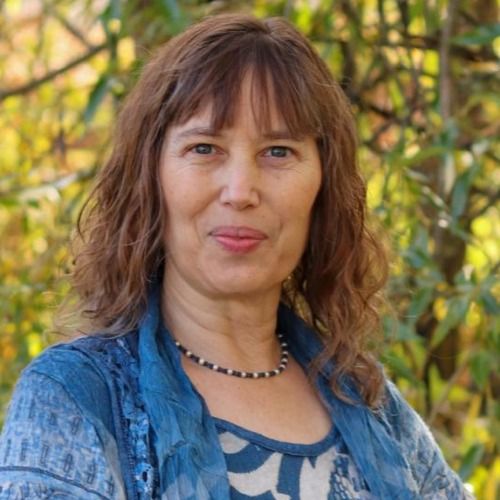
S3EP23-Andrea Delgado-Play, Connection, and Raising Kids to Their Highest Potential
What if reaching our highest potential starts with connection, not curriculum? Andrea Delgado joins us with more than 30 years of experience as a music therapist, educator, mental health consultant, and parent coach. Andrea shares how her love of the performing arts and watching the Challenger launch as a young child sparked a lifelong curiosity about creativity, problem-solving, and human potential. She also opens up about a painful turning point as a mother: realizing that giving her children every opportunity mattered far less than taking the time to truly connect with them. That lesson is at the heart of her “connect before correct” approach, and she walks us through it step by step. Notice what your child is doing right far more often than what they’re doing wrong. When things go sideways, pause and calm yourself first, name what your child is feeling, give them space to settle, and then offer choices so they can take ownership. She also shares why play often opens the door to the conversation you were hoping to have. We also talk about befriending failure, and Andrea explains why great leaders throughout history held on to play, creativity, and spiritual practice, and why noticing our kids’ small steps matters just as much now as it did when they were babies.
Andrea Delgado is a graduate of California State University, Northridge, where she earned a bachelor’s degree in music therapy. She is board certified and holds additional certifications in dementia care, activity director, hospice and palliative care, grief, Healing Touch, trauma-informed yoga, childhood mental health and development, and physical therapy. In addition, she is a certified mental health consultant specializing in families, infants, and early childhood. She also holds a master’s degree in education from Grand Canyon University. Andrea has created and led music therapy programs in hospitals serving children and adults, as well as in hospice, acute and outpatient rehabilitation centers, developmental centers serving children with delays, and adult wellness programs. She has also taught in public school systems in Los Angeles, California, and in rural Kenai, Alaska. As a consultant, Andrea has supported early childhood educators and families in discovering meaningful strategies to build resilience and joy in both classroom and home settings. Throughout her work as a consultant, educator, and therapist, she emphasizes the use of individual passions and preferred interests to inspire and motivate people to achieve their personal goals. With more than thirty years of experience, Andrea has applied evidence-informed music therapy and educational interventions to support individuals with diverse medical, psychological, and emotional needs in achieving developmental, educational, and wellness goals. She is an advocate of multiple-intelligence theory, growth mindset, real-world learning contexts, problem-based and integrated curriculum structures, and, above all, the development of strong attachments among caregivers and within family environments. She believes in the power of a holistic approach to health, academics, and overall wellness. Andrea currently serves her community in several ways. She consults with Tykes and Teens Behavioral Health Agency, where she empowers teachers and families to build healthy relationships and develop resilience following trauma in both school and home environments. Through her private practice, she coaches parents in creating routines that foster leadership and success, drawing on practices demonstrated by great leaders throughout history. Andrea also promotes wellness in her community by teaching ballroom dance with her husband and creating music and dance socials where people of all skill levels can build friendships and experience joy through connection, music, and dance. As a speaker, Andrea advocates for balanced lives that include rest, movement, meaningful relationships with friends and family, time outdoors, time to dream, and hope in the Divine.
A gift from our guest: Please visit my website at : https://raisingroyaltyconsulting.com There, you can download my free book: Connection Before Correction: The Five Minute Shift That Changes Everything! It takes one of the most important effective keys from my book and gives you concrete ways to do it with your child immediately! Easiest and fastest way to stop challenging behavior and build meaningful connection with anyone!
@consultingraisingroyalty08 on Instagram
Bringing Education Home is an educational podcast brought to you by Kristina and Herb Heagh-Avritt.
If you enjoy the show, we'd love for you to leave a rating or review on your favorite podcast app!
Please let your friends know they can listen for free on Apple Podcasts, Spotify or their preferred podcast app or online at Bringing Education Home.
Sponsored by Vibrant Family Education - creating Happy, Healthy and Successful kids
Follow us on these socials:
Facebook Group - The Family Learning Circle
Facebook Business Page: Vibrant Family Education
Support Bringing Education Home
Copyright 2026 Kristina & Herb Heagh-Avritt
This podcast is hosted by Captivate, try it yourself for free.
Andrea Delgado bursts onto our mic with the kind of eclectic résumé that makes me whisper, “teach me your ways.” I tell the story of how music therapy, musical theater, and a childhood marked by watching the Challenger tragedy all braided together to make me obsessed with creativity, problem-solving, and human potential. We riff on how I morphed into education, mental health consulting and parent coaching—not because I chased a trend, but because I kept asking, “How do we ignite the highest potential in real humans, not curriculum widgets?” Expect anecdotes about homeschooling vs. public school, discovering that connection often trumps curriculum, and that leaders—presidents, artists, activists—kept play and spiritual practice alive to fuel their grit. We also get candid: I confess the parenting mistakes I made (yep, I thought extracurriculars would buy connection), how my kids once wanted to leave home, and what actually saved us—showing up, listening, and practicing micro-interactions that matter. The tone is warm and funny; I drop nerdy research (polyvagal nerve, Juliet Funt’s “white space”) and pop-culture bites (Clinton on the sax, Einstein swimming) to make big ideas feel practical, applicable, and oddly delightful. If you want inspiration with a side of practical humanity, this one’s for you.
Transcript
I now have the pleasure of introducing Andrea Delgado.
Andrea has spent more than 30 years supporting children, families, educators and communities through music therapy, education, mental health consulting and parent coaching.
Her work centers on building strong relationships, resilience, joy and environments where children and adults can thrive.
Andrea believes individual passions and interests can be powerful tools for learning, more motivation and personal growth.
She advocates for strong caregiver attachments, growth, mindset, real world learning, and a holistic approach that recognizes the connection between emotional, physical, educational and spiritual wellness.
Whether working with parents, teachers or individuals, Andrea encourages balanced lives that include meaningful relationships, movement, rest, time outdoors, creativity, hope, and opportunities to experience joy and connection.
Welcome Andrea.
It is a pleasure to have you here today.
Thank you so much for joining us.
Andrea Delgado:Thank you for having me.
This is a real privilege to be a part of your show.
Thank you so much.
Kristina:You are very welcome.
And it was a great connection whenever we talked in our pre chat about, you know, we are very similar in the approaches of that growth mindset and really want to make sure our kiddos have those connections and then helping parents and educators make those connections and make sure our kiddos are doing what they need to do.
So tell us about the passion.
Why this portion of your life?
Why coming on podcast why supporting parents?
Where was that turning point in your life?
Maybe when you were younger, maybe when you were a little bit older.
That said, you know what, I want to get out here and do this work.
Andrea Delgado:Well, it's interesting because I started in the performing arts and I love the feeling, the exhilaration of not just being in the limelight, but the effect you have on the audience when you can uplift them.
And that connection I experienced from an early age, roller skating and then getting into musical theater.
And then later I also experienced the space shuttle Challenger outside my kindergarten room, watching it go off as everyone was with the school teacher on board and then of course, watching it explode.
And that was such a moment for me because as you learn, that could have been prevented had someone in the science field had the imagination and foresight to think of dynamics and the dynamics of the unusual cold Florida weather that day was a reason the old rubber rings were not functioning appropriately, which was part of the major contribution to the explosion and the tragedy.
And so that was a turning point for me because from an early age I was looking at how can we connect imagination and what makes us human to our highest potential, which, you know, sending anyone into space, that's the highest potential.
It takes a team of creative thinkers to think way outside the box and problem solve what's never been done before.
And so from an early age, I had this love of the performing arts and the imaginative, out of the box creative creativity that it brings with the out of the box imaginative possibilities that science and engineering and physics bring.
So I really pursued both.
And as you can tell, I became a music therapist because that gave me the training to look at how we can use music very intentionally to ignite the highest potential in a person despite disabilities and illness.
And then I morphed into education.
I had four children.
Some were gifted, some were special needs.
And so it really was important to me to look at how can I use this to help them academically, how can I use that to help them find meaning in the academics so they even want to learn?
And then that morphed into mental health because I realized that any approach to highest potential starts with a very holistic awareness of who you are as an individual.
How are you feeling mentally, how are you feeling physically?
What gives you hope when you feel like giving up, what drives you when everyone else isn't driven, you know, and how.
Who's your cohort, who's your social support system?
And so that.
So all of it really comes down to this passion to ignite the highest potential in any person.
And in my recent work as a mental health consultationist, I found that it starts in the home and that bridge between parents and teachers.
And a lot of times when teachers find something that's working, that partnership.
And a lot of parents, as you and I both know, are choosing to homeschool.
And they're doing that because they want their child to have that highest potential.
And school isn't igniting it.
You know, it's cookie cutter.
It's become like this or else.
And it just stifles children's creativity, curiosity, and even motivation to go above and beyond.
They start doing the bare minimum.
And so I really wanted to create an easy way that parents could confidently say, okay, here, there's so much information out there, but here's something simple to guide you in what it takes for you yourself as the parent to feel good and be a leader in your highest potential.
So you even have something to give to guide your children and help ignite it in your children.
So that's a long winded answer.
But as you can tell, I'm very passionate about a lot of life.
Kristina:And it's important because a lot of us think that, you know, people who come and work with parents only have like one route.
Maybe they were teachers, maybe they were healthcare providers or something like that.
But knowing that very background and how you weave it together and give that, like you said, outside of the box viewpoint to help parents and families is really important, especially in this day and age when we know our children are learning differently.
They aren't always fitting into the public school system.
They aren't always fitting into a curriculum where you have to sit down and do the workbooks and do the hands, you know, the handwriting and all of that kind of stuff.
So this kind of perspective and experience is super helpful when you're helping with parents.
Andrea Delgado:Yeah, I mean, I do a lot.
A lot of what I do with parents when I'm coaching them is kind of take a pause.
And before we even think about academics, we think about the person.
And, you know, we think much more about all the research says, for that matter, that integrated curriculum is what works.
In other words, none of us in life, you know, just do math or just write and read.
We always do something very intentionally, using everything we've ever learned.
So, you know, if we're gonna somehow figure out how to repair our own toilet, that's not working, you know, what does that require?
Well, it requires reading or listening and paying attention to maybe a YouTube video.
Maybe it's being brave enough to go outside your comfort zone and use some tools you never used before to repair it.
You know, maybe some math skills so you have the right tool with the right size, you know, maybe some communication skills, because you got to ask the guy at Home Depot, this didn't work, and I'm not sure why, but blah, blah, blah.
And so the reality is, this is what.
What all of us need.
We need a much more holistic approach if we're going to be a leader, if we're going to be ignited to our highest potential.
And so it's not academics.
It's.
It's, why am I learning this and why am I wanting to learn it?
And then as I experience it, how can I apply it in a way that, you know, it brings me joy?
Because there's always going to be something that doesn't bring you joy in life.
Like, there's always going to be that task that seems super challenging.
And yet if you have that inherent reason for learning it, you push through it, or if you have that person next to you that cheers you on, that says, hey, I've been there.
Trust me, you're going to get through this.
You know, you persevere.
And that's where I'm going with it, is it's just unfortunately, you know, even Howard Gardner, we know the research, all of us have multiple intelligences.
We all can not just think logically, which is a lot of what reading, writing, arithmetic are all about.
But a lot of us are creative.
We are great at communication and interpersonal skills as well as knowing ourselves, intrapersonal skills, athleticism, even just the ability to survive in the environment is considered intelligence, which I think, unfortunately, with our more acidified areas is going.
But, you know, we need to tap into all those intelligences in our children and in our parents so that they feel confident in just being themselves.
Because when they're the most themselves, that's where their highest potential is.
That's where their talent is.
That's what's going to contribute to society.
And unfortunately, organized systems, you know, they have a hard time with that because it's not efficient.
But we all know diverse teams work, so why not?
We know it can be.
In fact, I was actually just researching this.
Juliet Fundt advises Fortune 500 companies to create what she calls white space.
And anyway, it's time for employees to stop their work and simply relax, connect and imagine and create.
And companies like Cisco, Pepsi Cola that have done this, they actually saw not just greater creativity and productivity, but profit.
So it just goes to show you that when we have a moment to just be ourselves, we can actually do better than the average person.
So I just find that really exciting.
Herb:I so wish I had had someone like you earlier in my life, because we left California when I was 8 years old.
And so I know even before we left California that the school system had truly already wiped me out.
There was nothing in it for me.
So I started reading and I would sit in the back of the classroom and read because there was nothing in school for me.
The only way I ever got things improved or done at work is if nobody knew I was doing it until I was done.
Because if anybody ever found out what I was doing, they would stop me.
But then once I was done and I implemented it, everything worked so much better.
And then it became invisible.
And then they would forget about me because of the way I thought.
So it's like, yeah, I never strove through school.
All of my jobs were in trying to keep myself secret so that I could play and do the stuff that I wanted to do.
Because so, yeah, there was never a sense of pushing.
It's like anything I wanted to do, I knew I could do it.
The very seldom do I ever actually try and get information before I start something.
And I just figure it out as I go.
And so the idea every once in a While it does.
But, yeah, wow, I wish.
It's like sometimes it's like, wow, if someone had been able to talk to me like that, because I saw things differently.
I had my cosmic egg cracked open when I was a kid, and so I saw the world differently than everybody else and can't even begin to explain it.
But that holistic approach was something that was totally missed.
And that's why we actually try and bring so many people on to talk about that.
And I kind of lost my question in all of that.
But once I started to be pushed, it's like I had no idea how to be pushed.
I had no idea how to rise up to that challenge.
I could either do it or not.
And learning became something that was very irritating to me.
And then I would just bully my way through it and make it work, which is its own kind of a skill through life, doing that.
Andrea Delgado:And I think a lot of people have the same concern, like, oh, if I let my child be themselves, how are they going to function in society?
I mean, that's.
Even my mother.
She.
She chose to homeschool my sisters and I for several years.
And even her way of instructing us, we did.
We.
We had all the regular curriculum, but then she added to it.
And I remember as a kid just feeling, like, worried that I wouldn't fit in that.
That my.
What did my friends think of me?
And, you know, would I be able to ever go back to regular school again and be able to function?
I had so much anxiety about it because the world at large gives you that pressure.
But the reality is, it's not about homeschooling versus school systems.
It really is about wherever the child and the parent and the worker is feeling.
Like the interactions you have in that environment are building you up and allowing you to express and create and do what you got to do.
So there are phenomenal situations in our system.
There are great companies to work for, and they are lousy ones.
There are great teachers, and there are lousy teachers.
There are great parents, and there are lousy parents.
And it's a matter of those interactions.
It's a matter of.
Everyone asks me, you know, you know, if you.
Because I focus on leadership, I focus on igniting the highest potential in you and your children.
So they ask me, okay, so is it a matter of going to this school?
And, you know, we all get caught up in working in the right sort of industries, you know, like a lawyer and a doctor.
Well, that's.
Oh, you know.
But not so sure about plumber, right?
Or Pool maintenance.
And yet it's.
It's.
What I tell them is it's none of that, because you can go to a great private school and have terrible connection with children, and that child, even if it's in a great environment, will not thrive because they're not interacting with the environment.
So parenting is the same way you can give.
And I was there.
I had given my children, I thought, all they needed.
You know, I was in the wrong marriage, but in my head, that was worth it because he could help provide my kids what they needed, which was all the extracurriculars that I thought they needed.
The better school, even though it was public school, was the better school, which meant driving farther.
It was help as far as making sure they were part of extracurriculars and pickup and all that music, you know, instruments, buying, renting them, that's expensive.
I mean, it was everything.
And yet they told me one day, and this was another turning point for me, that they wanted to leave my home.
They were done.
They wanted to leave with family and go live with family out of state.
And I was devastated.
I mean, I thought I'd done everything right here.
I was a music therapist and an educator, and I knew what I knew.
So I was doing everything I possibly could do.
So what was wrong?
I wasn't taking the time to interact with my own kids.
That's it.
They weren't benefiting from me.
They were benefiting from that teacher at school that was taking the time to talk to them.
They were benefiting from the friend at school, good or bad, that was taking the time to talk to them.
And that was hard.
And so I started a whole journey.
That's where my book came from, where I researched the greatest leaders from history, sports, entertainment, music.
And whether you look at Shaquille o', Neal, Michael Jackson, Gandhi, or even, you know, oh, gosh, Elon Musk, all of them, they didn't have it perfect.
In fact, they just had key interactions in their life that helped them stay on these habits that helped them achieve when everyone else would give up.
And, you know, and I've healed with my kids since I've happily married.
I've found my own two feet.
But I can tell you that it came down to interacting with my children, interacting with my co workers, where I felt like I could voice myself, voice what I needed, voice my truth, and just believing in myself in a way that I could create the life I wanted, not be suckered up into pushing, pushing, pushing and doing more and more because none of the leaders I researched did that.
In fact, all of them never gave up their hobbies.
They all kept playing.
They all had something fun in their life.
Like, you should.
You should research some presidents.
Every president, right before they make a big decision.
They're not just doing something spiritual like their version of prayer.
They are doing something fun.
I think Bill Clinton was known for his saxophone playing.
A lot of them did woodworking.
It's just interesting.
But that the play helps us stay human and innovative and think outside the box.
Herb:And.
Andrea Delgado:And it just gives us that pause, just like spirituality does, to remember there's always a different way of thinking about something and a different way of accomplishing something.
Herb:Einstein had some of his biggest breakthroughs while he was swimming laps.
And, you know, some of the things that you were talking about, it's like, by the time I was 8 years old, if you had used the word potential on me, you.
You were just cut out of my life.
Because everybody would say that to me, and I could not stop.
Understand it, even as a young kid is like, oh, he has so much potential.
But then they would always say, but he's not doing anything with it.
And it's like, well, challenge me.
And then by the time somebody challenged me, it's like, it's not worth the effort anymore.
Yeah.
So.
Hope you're.
Andrea Delgado:You're starting to say that again.
Oh, I love how you brought up, you know, how.
How they looked at you as not rising to your potential.
You had so much potential, but you.
We're kind of apathetic, for lack of better term.
And that happens to a lot of parents.
They get frustrated.
They get worried that their children are not doing enough, being enough, rising to their potential.
And the advice that I give them is always, always connect before.
Correct.
So if you connect with the child where they're at, and just love on them.
And actually, the research says five positive descriptive compliments for every one command or redirection.
And parents, like teachers, are notorious for telling kids what to do, but that's considered a negative withdrawal for all of us.
We all hate that.
But when someone actually notices what we're doing right now and it's okay, it's like a deposit.
It makes us feel great.
And the more positives we get, the more likely, just like a plant, the more likely any of us are willing to stretch and go a little bit more uncomfortable to rise and do maybe something outside our comfort zone.
Herb:Yes and no.
Because I was getting all A's.
I was the smartest kid in class.
I was an athlete.
I was always like, top of the.
And he's doing all of this, but he's still not accessing his potential.
And, you know, I gotta say another thing.
It's like both of my sisters left home in high school and went to live with relatives in larger towns because the town we grew up in had had 600 people.
There was 55 people in my high school.
There was 11 people in my graduating class.
So my sisters left town to go somewhere bigger, to try.
And that was the best time of my life.
When they were gone and I had my parents to myself, I kid you not.
Kristina:It was back to connection.
Herb:It was an amazing.
Kristina:There we go.
Herb:Of being able to find, I guess, find myself.
And I spent so much time out in the woods, in the trees, playing in the creek, building dams.
So it's like I spent more time actually by myself and alone out in nature than I ever did with people.
And I got more out of that because I found God out there and I found life out there and within people.
People always let me down.
And when I was out in nature and in the world, that never happened because God is always there.
Andrea Delgado:I love it.
My husband calls it tinkering when he's out in the nature and just dreaming up ideas.
And he says that less and less people are doing that these days.
They're looking for the YouTube video to tell them the answer.
But one thing that came to mind when you were saying that is my mother is very similar to that.
She's a brilliant woman, like you, you know, just ahead of her time.
Intelligent, but always preferred animals over people.
Always kind of felt judged by people and kind of has a hard time, to be honest with you, both having close relationships.
You know, she.
She kind of keeps people at a distance, doesn't always let people in.
And it's interesting because Michael Jackson, Shaquille o', Neal, Gandhi, you know, when we think of great leaders, they had this skill set of taking people as they are and trying to kind of light them up, light up the little glimmer of good that was in them and choose to see that.
And so I think that's what helps when we interact with our kids is, you know, teaching kids that we don't have to necessarily imitate everybody out there or even agree with everybody out there, but.
But recognize that everybody has that glimmer of God in them and that we can learn from that in when we interact with them.
And the more that we choose to behave like that, it's funny how you have this protection and that people respond differently to you.
Whereas with Other people, they might kind of respond in their lowest animal, kind of rude self.
And so.
And that's kind of what leaders are really good at doing.
They're really good at bringing out the good in people.
And so I have a feeling that when you do choose to interact with people, I have a feeling that both of you do that.
Herb:Oh, yes.
Kristina:Oh, yeah.
Herb:So it's kind of weird because that which, that which made me get bullied and that which made me an outcast as a child, people seek me out for that now.
And when I interact with them and I show them how amazing what they are is, what they are doing is.
It's like the lights that shine in their eyes, the smile that comes across their faces, just the, The.
The growth that happens in them, it's like that just absolutely thrills my heart and it brings joy and life to me watching other people come alive where so much of their time, they don't have that.
And so, yes, and so that's.
That's why we do this, is.
That's why we.
We talk to the parents.
Because it's like, look at your kids.
Look at how amazing what they do actually is.
And even the things that irritate you, it's like, no, step back, because what is irritating you is a problem that you have with inside of you.
And so let that go.
Do.
Do your own work and look at what they're doing and how they're interacting with life and just be absolutely amazed.
And once they start seeing that, then their relationships with their children just bloom and it makes it so much easier.
Kristina:I want to go back to that connection we were talking about a little bit earlier, and you were talking about more compliments or more connection before a correction or whatever.
But does that mean that you just say five things nice to your kiddo, then you, like, have them change what they're doing or tell us about that a little bit more?
Because sometimes we start counting.
It's like, okay, there was five nice things, even if maybe we didn't really mean them, or maybe it was just kind of extra flowery because we wanted that.
Herb:And they also talk about the sandwich, how a couple of first and then the correction, and then it's like you do a couple more positives on a positive way to deal with it.
Kristina:Can you give our parents some practical suggestions?
Because we don't want to say things that are untrue.
But at the same time, sometimes, especially when we're in that moment, it's like, I can't think of anything my child's doing right right now?
Andrea Delgado:Well, you know, they might be looking at you.
They might be at least in the same room as you as opposed to walking and slamming the door on you.
They might be, you know, they might have done one thing that day that you asked them to do.
So in the heat of the moment.
I get asked this a lot.
A lot of teachers do the sandwich thing with parents, and parents are so smart.
Like, they, they know it's coming and it doesn't, it doesn't work.
I mean, they're just.
It.
It doesn't.
So, so the goal with this positive five to one idea is, first of all, it's a consistent thing.
It's something throughout the day that you're.
If you were thinking of in general, how you're interacting with your child in general, you're noticing what they're doing right more often than what they're doing wrong.
And I'll be honest, for most parents, this is very difficult.
So I would say step number one is just start by getting yourself in the habit of noticing what your kid is doing right.
Because even me, this was a habit that I had to relearn.
So I was raised in a very critical, perfectionist type household.
Yes, my family is all very accomplished and driven, but bad at relationships because they're super critical and judgy all the time.
And so this is why I'm saying start with breaking that long line of tradition that exists in so many powerful families.
And start by noticing what the kid is doing right more often than wrong.
Step one, Step two, When they're doing something wrong, just start by noticing how they're feeling.
So when they're feeling frustrated and they just ripped up their homework instead of finishing it, or when they decided to slam the door in your face instead of talk to you about whatever it was, instead of going, you know, no, no, no, you shouldn't do that.
That's disrespectful.
Open the door now or, you know, what are you gonna do now?
Do your homework again, you know, which is obviously how we all feel.
Just first of all, you as the parent, take a pause because it's absolutely human to want to do that knee jerk, you know, comment.
Try not to.
A lot of.
There's a lot of techniques for it.
Deep breathing, looking outside helps me.
Humming my favorite song.
Sometimes I even take a drink of water or eating your favorite snack.
All of these things actually are research based.
They trigger your polyvagal nerve, which is the longest nerve from your ear to your stomach.
And it's responsible for Your anxiety and stress response.
It's the thing that activates to get you to run super fast away from a tiger, but also to chill when you're in a safe space around a safe person.
So activate that.
Then after you've paused, then validate the feeling.
Gosh, you're really angry.
That homework must have really upset you.
Or you really don't want to talk to me right now.
Or, gosh, you know, you're really sad.
You know, you feel like they are not listening to you and they're not hearing what you need, or I'm not hearing what you need.
So just guess the feeling.
And it's usually pretty obvious when they're misbehaving.
Then after number three, then you don't direct them to do anything.
Then you help them calm.
So, you know, if they've closed the door on your face, say, hey, I get it, you need some space, you know?
You know, do you want to listen to some music in your room for a couple minutes?
Do you want me to check back?
Would you like a snack in your room?
You actually encourage whatever they need at that moment.
You encourage the space.
If they're younger, you know, that's where you invite them to go on a little walk with you outside.
Or maybe they boogie and do some dance with you for a moment.
Maybe they do deep breathe with you.
Maybe just read a book and maybe just draw with them.
But you got to get them to calm down, because if you try to correct them and reprimand them in that moment, I guarantee you, first of all, the brain is in a state where it won't process any of it.
So literally, this is just research.
So you're wasting your breath and you're wasting your energy, and it's just going to make you more frustrated.
So don't bother.
So just get them to calm down.
And then once they're calm, then give them some choices.
Hey, would you like some help, you know, revisiting that math problem that's making you frustrated?
You know, I can help you.
Or maybe we can just get a tutor to help you.
Hey, you know, want some help?
You know, revisiting that, friend, that's really making you frustrated, you know, would you like me to arrange a time where we talk to them or maybe we go on a play date and I, you know, so they're.
They're in a space where you can give some choices, but you don't make the decision for them.
It has to be a choice.
They have to have ownership.
And then as far as let's say they've done something really wrong.
It's not that you don't punish them, but punishment, as we all know, is the least effective way of shaping behavior, right?
So the goal is to have them own and understand the root of why they did it in the first place.
That's the whole reason why we bother validating how they're feeling, helping them calm and giving choices.
Because if you don't want them to do the stupid thing again, which none of us do, you have to help them understand what really caused it.
And so that's where they're going to need adults, help, guidance.
Because children are too immature to get there on their own.
We have to kind of support them through that process.
And that's sometimes talking it out.
But usually, in my experience, you have to kind of do something unrelated.
And this is why play and creativity are so important.
If you actually take a moment to play and do something totally, you know, fun with the child, even though you feel the child hasn't deserved it, you'd be amazed at how they initiate coming back to you and telling you how they felt, what they needed at the time, how we can do better next time without you having to prompt any of it.
And if you don't believe me, try it.
But it works.
Herb:You absorb information by doing things right, but you don't learn until you do something wrong.
And I got that a lot in entrepreneurship.
It's like, oh, you do it this way and you don't do this, and you don't do this, and you don't do this.
It's like, well, why don't you do that?
And so we would go do that.
And it's like, oh, that's why you don't do that.
So those mistakes, those angers, those acting out, those are all attempts to learn how not to do something.
And that is, that's probably even more valuable than doing it right all of the time.
Because doing it right all of the time, you get a sense of satisfaction.
It's like, oh, yes, you get this sense of winning, but the learning doesn't happen until.
Until it jumps up and smacks you in the face.
And it's like, oh, that's why.
You know, okay, this is how.
But that's why.
And that why is a lot of times so much more valuable and more important.
Andrea Delgado:Exactly.
And, you know, you just hit the nail on the head because so many people are afraid of failure, and yet we all know the grit mindset's all about being willing to fail.
And so one of the tools in my book, related to grit is how do you befriend failure?
Will you befriend it with a friend?
In other words, if you don't have the courage to fail, then have a team, have a support network where you feel like if you do fail, it's okay.
You got a support system to build you up and try again.
And the reality is when you have.
When you think of soldiers going into battle, you know, nobody feels like going into battle and dying.
So what gets them out there?
You know, because of course, it's not just failing at this point, you're dead.
So again, it's that they're doing it because, first of all, they have a reason.
They want to push past the comfort zone, right?
It's not usually for the good of America or the good of whatever country they're fighting for.
It's usually for the best friend who's next to them that they want to protect.
And so that's what's driving them, right?
So they go into battle because they got that friend that helps them befriend fear.
And it's just we learn so much when we've got that willingness to be willing to fail.
And unfortunately, that's another thing that schools don't always do.
You know, with this grade system, you know, it doesn't.
I hate tests because, you know, one of the biggest things you learn when you get your master's in education is that no test teaches a child anything unless the teacher takes the time to tell the child exactly what they got right on each problem and where it broke down and where and how they got it wrong.
Because that's how they'll keep doing the right thing and actually remembering how to do it and actually learning how to change course and do something different wherever they got it wrong.
But of course, teachers don't have the time to do that.
Herb:And again, an entrepreneurship.
Some of the best ones I worked with teach you to fail fast.
It's like, fail fast, get over it, do the next thing, try it, fail fast, get to the next thing.
Because no entrepreneur becomes successful without multiple failures.
And baseball, it's like you're in the hall of Fame.
If you strike out less than seven times, it's like, so you're going to strike out seven out of 10 times.
And if you strike out less than seven out of 10, even six is like, nobody has a.400 batting average.
That means you're still failing over half of the time and you're still world class.
If you're failing at 60%, it's just absolutely amazing.
So yeah, don't be afraid of failure.
And I still am.
I still have trouble when I mess up.
But then again, those feelings drive me to do better next time.
Andrea Delgado:Yeah, exactly.
I just, it's so inspiring.
I think people are more willing to fail when they don't just have that friend next to them, but they also have this sense of divinity, this divine spirit that gives them extra energy, extra power, extra something to go above and beyond, you know, and when someone.
And that's why, you know, one of my tools that I researched, whether I believe in this or not, but all leaders that have lasting legacies have all had a spiritual practice.
Every single one of them.
You know, you look, I mean, some are more popular than others, but Dr. Martin Luther King Jr. Abraham Lincoln, Gandhi, some of the kings and queens, they all were very, very spiritually minded.
It wasn't just a matter of going to their religious place of worship.
I mean, they were in reading the Bible, meditating and praying and, and it gave them a, a willingness to do something different than what they could have done.
You know, Nelson Mandel is very popular for being peaceable and kind to people who imprisoned him.
None of us would have the capacity to do that without extra something to give us that peace.
Right.
Abraham Lincoln just forgiving the south after they left and had their huge thing during the Civil War.
You know, there's so much went on there.
And Abraham Lincoln took a lot of criticism from people closest to him for showing grace and forgiveness.
But he had a long term mindset.
He had a very spiritual, devout practice where he could see beyond the short term.
And that's another one of my tools is long term thinking and reflection.
Because he could see how a healing would actually be more beneficial than keeping that stance of being judgmental and kind of throwing someone's mistakes in their face.
And it goes the same way for, for you and me and for how we deal with each other and with our children.
You know, sometimes it's a matter of forgiveness and grace and showing them that they can go above and beyond if they just believe in that extra divine part of them that's there.
And they can surprise themselves.
And then of course, making sure you notice when they go above and beyond will even cement it even further.
Kristina:Yeah.
Recognize when they go above and beyond.
Absolutely.
Herb:Yeah.
That also works really well with your spouse and wife.
People talk about starting to take their wives and husbands for granted.
And instead look, when I, when people come to me for that, it's like, well, I look every day for what My wife is doing right and for why I love her.
And then every day my love grows.
so we've been together since:So.
But when things get bad and things get dark and I.
And I forget to look, then things kind of get stale and sour and then it's like, you know what?
I love her.
Why do I love her?
And let's look at that.
It's like, okay, these are your kids.
It's like they're useless for about four or five years.
And then once they start to be able to do stuff, it's like you have to continually re up your relationship.
And if you start to get frustrated or angry with your kids, step back and then start again.
Like you said, look for what they're doing, right, and appreciate the things that they're doing.
Because if you stop appreciating what they're doing right, they'll stop doing it.
Andrea Delgado:And it's just like dreaming big.
You know, a lot of people are afraid of big dreams because they don't have any clue how to get there.
But when you're looking at a child who's, you know, I work a lot with teachers where the child has perceived as challenging, maybe has special needs, and, you know, a lot of the challenging behavior is a cry for help or a skill that needs to be taught that's missing.
And, you know, they come exasperated to me, you know, this kid, I can't, you know, I just want them out of my classroom, you know, and they're honest with me about it and they just are at their wits end and they're like, they don't do anything right.
You know, they're always blah, blah, blah.
They're always blah, blah.
Well, that's when we do some documentation and realize that they're not always blah, blah, blah.
There's moments that they're okay, that they're actually participating and focused and whatever.
And the reality is, how do I get a teacher through that when they're at their wit's end?
Well, we look for the baby steps.
Like maybe they attended a minute, Maybe they attended 30 seconds.
Maybe they just looked at me as opposed to just off in their own little world.
Maybe they, you know, did part of the work assignment this time instead of, you know, none of it.
Maybe they at least sat with their cohort during the assignment as opposed to just totally Ignored and went different part of the room.
So baby steps.
We have to do that with, with all of ourselves, you know, when we're trying to accomplish things that are big, that are new to us and, you know, we have to just give ourselves the motivation to do just little things that kind of go in the direction of where we want to go.
And noticing those steps, you know, we're so good when, when they're babies.
When they're babies, we're like, you know, oh, they finally smiled and it's like, whoa.
And, oh, they finally crawled.
It's like, wow.
And then, oh, they finally walked and it's wow.
But then all of a sudden after that, toddlerhood enters and we're just like, we don't notice it anymore.
We're just noticing tantrums and, you know, they get to school and we're noticing the bad grade.
And so, you know, that's where I'm going with it, is we have to keep noticing the baby step just like when they're a baby.
Kristina:Oh, Andrea, this has been an awesome, awesome conversation.
I absolutely love that you mentioned your book a couple of times.
We want to make sure we get that out there.
And then also, how can parents, if any of this has resonated with them, how can they get a hold of you and possibly work with and what.
Herb:Are you doing right now?
What.
What is it that you are doing with parents?
Andrea Delgado:So I coach parents.
It depends on their need.
But one of the first programs I have is a 10 week kind of course to help them build a new daily routine with very specific leadership and wellness habits.
So they feel good and their kid feels good, and they're learning what works to be successful, not just financially successful, so some of its mindset stuff, but physically healthy, socially supported, hopeful, so some sort of spiritual practice, creative, innovative, doing things that not everybody's doing.
So you're extraordinary because you have the idea that no one else does.
So that's one of the main things I do as a parent coach.
And then I'm also a mental health consultant and music therapist.
So I deal a lot with situations where, you know, someone has anxiety or depression, pain, and they may choose to not necessarily follow traditional paths or traditional paths are not working for them.
But a lot of what I do, you know, with teachers and with families is comes down to these basics of we got to start with what makes us happy and healthy and honoring our basic needs because you're not going to be any good for anybody else.
And leaders knew this unless you do that every day.
And a lot of people in modern society have just gone so far away from what's natural like being outside.
We need to be outside, we need to move.
We're not meant to be in front of a computer screen or video games or television.
We're just not.
And so, you know, even reading is actually more active to the brain than watching television.
So you know, there's just so many things I could say on that.
But yeah, if they want to get a hold of me, I have a website so you can learn more about me and even get a free book called Connect before.
Correct.
But my website is raisingroyaltyconsulting.com and you can connect with me there or you can just email me andreaazingroyaltyconsulting.com and I'll just have a, you know, a free chit chat and we'll go from there as far as, you know, whatever you think you might need.
Some people just want like a resource guide and that's where the book helps the raising royalty.
10 Tools that I described earlier that's available on Amazon.
And if, you know, they don't, if they want more personalized coaching, sometimes it's, you know, as a music therapist I did a lot of work with people that needed extra motivation.
So you know, very specific music for pain or depression or motivation.
So we can play with your favorite music and using that advantageously or just giving you a creative outlet so you can start expressing yourself in a way that makes you more successful in everything that you do.
A lot of people have given up on play and creativity, so you need that.
Kristina:Yeah, absolutely.
Thank you so very, very much.
And of course all of that stuff is down in the show notes, all the connections and everything else will be there for you.
So just go ahead and check that out as well.
Thank you so much for being here for giving us some insights, some encouragement, some wisdom and really encouraging that play and that music because that's something that we do often forget.
Herb:Yes.
I would also like to thank you for being here as a fellow Gen X, the forgotten generation.
We were taught to be so self sufficient and just to deal with our own selves and you broke that mold.
You went out and you fought your dragons, you got this amazing information and now you're sharing it with the world and you're sharing your gold and your golden nuggets with whoever you can and that is the hero's journey and that makes you a hero.
Doing what you are doing, putting yourself out there and still continuing to move forward.
That's an amazing story.
So thank you for, for being on our show.
Thank you for being a hero.
Thank you for being who you are and for being willing to share that.
Kristina:All right.
Thank you.
Andrea Delgado:It's been such a pleasure.
Kristina:Thank you.
Audience, it is time to make sure that you're like and sharing and reviewing.
Help Andrea's word get out there.
Help our words get out there.
Help families who are ready to uplevel and take that next step and have those better connected relationships with their children every single single day.
So please help us out by spreading the word.
Bringing education home is here for you, is here for your family.
Byron, family education is here for you, is here for your family.
So help us spread the word.
Herb:And if you are going to share it, make sure you do it with a comment by doing an at the person.
So that way not only are you sharing it, but you are increasing engagement and that changes the algorithm and then more people even than the person you're sending it to is going to see it.
So make sure to comment as well.
So thank you for being here and thank you for watching our show.
Kristina:All right, everybody, until next time, bye for now.